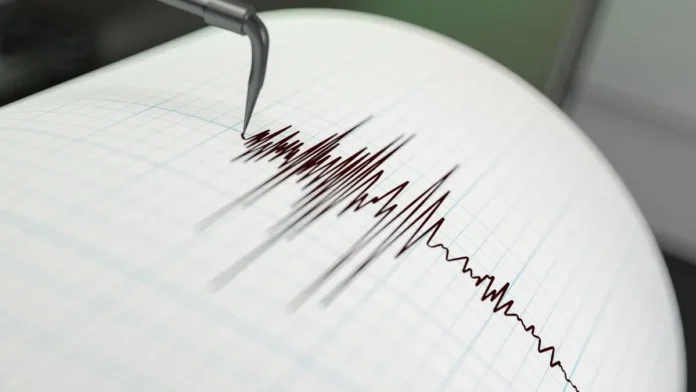

Venezuela was struck by two powerful earthquakes in rapid succession on Wednesday evening, with a 7.2-magnitude tremor followed just 39 seconds later by an even stronger 7.5-magnitude quake, according to the US Geological Survey. The epicentre of the first quake was near the town of San Felipe, roughly 100 miles west of the capital, Caracas.
The disaster has overwhelmed a country that was already grappling with deep political instability and economic hardship, and has triggered one of the most significant international humanitarian responses seen in the Western Hemisphere in years.
Utterly terrifying! 😢
This is during the M7.1 earthquake hit Venezuela today. pic.twitter.com/FK41BFAl8L
— Volcaholic 🌋 (@volcaholic1) June 24, 2026
What Happened
The death toll continues to rise as search and rescue efforts race to find survivors under the rubble of toppled buildings in Caracas and other hard-hit areas. Venezuela’s National Assembly president, Jorge Rodríguez, put the latest toll at 188 dead, 1,520 injured and 157 reported missing.
Acting Venezuelan President Delcy Rodríguez declared a state of emergency, stating that several Venezuelan states sustained heavy damage, with La Guairá, north of Caracas, hit the hardest.
A United Nations humanitarian agency reported more than 100 buildings collapsed in La Guairá alone. Across the country, images showed flattened buildings and collapsed roads in Caracas, while at least 138 aftershocks have been reported, making rescue efforts significantly more difficult.
Photos and video posted online showed levelled buildings, people running for safety and falling debris from structural damage at Simón Bolívar International Airport in Caracas. The airport has since closed.
Why It Matters
The US Geological Survey estimates there is a 44% chance that the death toll from the earthquakes could exceed 10,000 people, and a 30% chance it could surpass 100,000. The figures are based on a predictive model. The agency has issued a “red alert” for shaking-related fatalities and economic losses, describing the disaster as “likely widespread.”
Beyond the immediate humanitarian toll, the economic damage is severe. Preliminary estimates from the USGS suggest the earthquakes could cause economic losses equal to between one and seven percent of Venezuela’s $111 billion GDP.
Context and Background
The twin earthquakes struck a country already in crisis. Venezuela has been grappling with political turmoil following the capture of its leader, Nicolás Maduro, at the beginning of the year by US forces.
The geology of the region made the destruction particularly severe. Vashan Wright, a geophysicist at the University of California in San Diego, told Al Jazeera that the damage was so extensive because Venezuela lies in a “massive strike-slip fault zone” straddling the Caribbean and South American tectonic plates. Caracas is also in a deep sedimentary basin, which further amplifies seismic waves.
The quakes are among the strongest to strike Venezuela in more than a century.
International Response
Two of the United States’ most accomplished urban search and rescue teams — from Fairfax County, Virginia, and Los Angeles County — have been deployed to Venezuela. Mexico’s President Claudia Sheinbaum also announced the deployment of a team of rescuers and health personnel.
The US said it was “immediately deploying search and rescue teams, medical resources, and humanitarian assistance.” Secretary of State Marco Rubio said the US response would be fast and effective.
Venezuela’s interim president announced an initial $200 million reconstruction fund, drawing on resources from the International Monetary Fund, to help rebuild hospitals and housing damaged by the earthquakes.
Humanitarian organisations warned the country faces a compounding crisis. “Even before these earthquakes, nearly 8 million people in Venezuela were in need of humanitarian support,” the UN’s humanitarian coordinator said. “This disaster risks deepening existing vulnerabilities.”
Expert Analysis
Analysts have noted that the US response creates an unusual diplomatic opening. “I think this could be an opportunity, perhaps a catalyst, to propel the relationship to develop in a positive economic direction,” John Deal, managing director of capital markets at the Post Oak Group investment bank, told Al Jazeera.
Energy companies operating in Venezuela have also moved to reassure markets. A Chevron spokesperson said the firm “stands in solidarity with the country and its people,” while Shell, Eni and Repsol confirmed all workers were accounted for. Analysts noted that Venezuela’s energy infrastructure appears largely undamaged.
What Happens Next
Search and rescue operations are expected to continue for several days, with international teams combing through hundreds of damaged and collapsed structures. The closure of Simón Bolívar International Airport continues to complicate the delivery of aid, and the US Department of Defense is working to leverage military assets already in the region to accelerate deliveries.
The true scale of the death toll is not expected to be known for days. Venezuelan authorities have called for national unity as the country begins what officials have described as a long-term reconstruction effort.