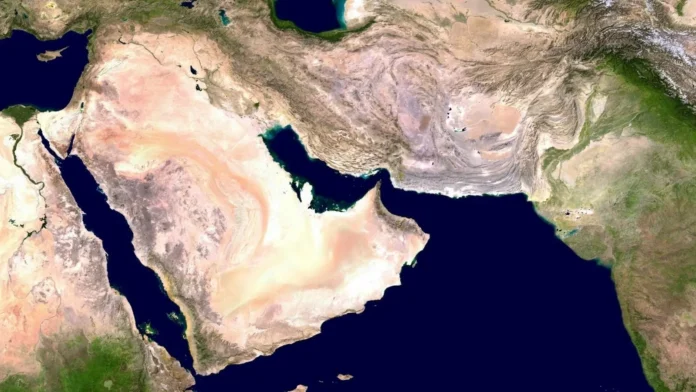

For nearly four months, the Strait of Hormuz — the narrow waterway through which roughly a fifth of the world’s seaborne oil supply flows — was effectively closed. A US-Iran ceasefire agreement signed last week has partially reopened it. But the recovery in oil flows is slow, the diplomatic situation remains unsettled, and the shipping industry is watching closely before fully committing.
What Happened
Shipping traffic through the Strait of Hormuz was largely blocked by Iran from 28 February 2026, when the United States and Israel launched an air war against Iran and the Iranian Revolutionary Guard Corps issued warnings forbidding passage through the strait, boarding and attacking merchant ships, and laying sea mines.
Under the ceasefire agreement, US forces lifted their blockade on ships entering and exiting Iranian ports, while Iran committed to allowing oil tankers to move safely through the Strait of Hormuz. The agreement states that Iran will allow commercial vessels to transit the strait free of charge for 60 days, after which the future administration of the waterway is to be negotiated.
Since the deal, confirmed oil shipments through Hormuz have risen to around 4.8 million barrels per day, according to trade data firm Kpler. At least 20 tankers that had been stranded in the Persian Gulf for more than three months have exited the strait.
Why It Matters
Before the war began, the strait was the planet’s most critical energy artery. About 25% of the world’s seaborne oil trade and 20% of the world’s liquefied natural gas passed through it. China received a third of its oil via the strait. Europe receives 12% to 14% of its LNG from Qatar through the same passage.
The closure caused significant dislocations across global energy markets. US Strategic Petroleum Reserves plunged to the lowest level since 1983. Gulf producers saw sharp drops in export revenue. Analysts at Goldman Sachs have said Gulf oil exports are expected to normalise only gradually, and may recover to around 70% of prewar levels.
The Problem: Mines, Ambiguity and a 60-Day Clock
Despite the deal, significant uncertainty remains. It is unclear how big a threat mines pose to ships transiting the strait. President Donald Trump has downplayed the issue, but Secretary of State Marco Rubio told Congress earlier this month that Iran had mined large segments of the strait.
There is also disagreement over the long-term terms. Iran’s state media has said ships can transit Hormuz for 60 days without paying a toll, after which Iran and Oman will administer the strait. But Vice President JD Vance told reporters that the US expectation is that Hormuz will remain toll-free over the long term.
Nearly 600 ships and 20,000 seafarers had been stranded in Gulf waters as a result of the effective closure, according to the International Chamber of Shipping. While some have begun to move, analysts at Kpler note that oil flows remain well below prewar levels when 15 million barrels per day exited the strait.
Context: A Region That Was Already Volatile
Tensions between Iran and the United States had escalated through failed nuclear negotiations in Geneva and a prior 12-day air conflict in 2025, before the full outbreak of hostilities on 28 February 2026.
The closure of the strait produced some unexpected economic winners. An analysis comparing the quantities and value of oil shipped since the start of the war with the same period a year earlier found that the biggest beneficiaries were the United States, which saw a revenue increase of roughly $50 billion, and Russia, which saw an increase of more than $15 billion. Meanwhile, Gulf producers who relied on the strait for exports saw steep declines.
Expert Insight
Analysts have stressed that the reopening of the strait will ultimately be determined not by governments, but by private industry. Eurasia Group senior analyst Gregory Brew noted that “it’s not Iran or the US who decide that the strait is open — it’s shipping and insurance companies.”
The ambiguity in the deal text has added to industry caution. An analysis from maritime intelligence company Windward found that a total of 12 ships transited the Strait of Hormuz on one recent day, down from more than 21 the previous day, as Iran announced the waterway was closed again, citing continued Israeli strikes in Lebanon. The US military denied that claim.
Secretary of State Marco Rubio, speaking from Bahrain this week, warned that any future disruption would have consequences. He was on a three-day Gulf tour — the first high-level US diplomatic mission since the ceasefire agreement — aimed at reassuring Gulf Arab allies.
What Happens Next
The next 60 days are the critical window. Vice President Vance is leading the negotiations with Iran and is expected to head to Switzerland for further talks. The two sides must resolve details including sanctions relief, Iran’s nuclear enrichment programme, and the long-term administration of the Strait of Hormuz.
Goldman Sachs said Gulf exports are now expected to normalise by the end of next month, assuming the deal holds, compared with the end of August under previous forecasts.
The fragile nature of that assumption, however, is not lost on markets. Oil tankers stranded in the Gulf for months are finally moving — but whether the strait remains reliably open depends on negotiations that have barely begun.