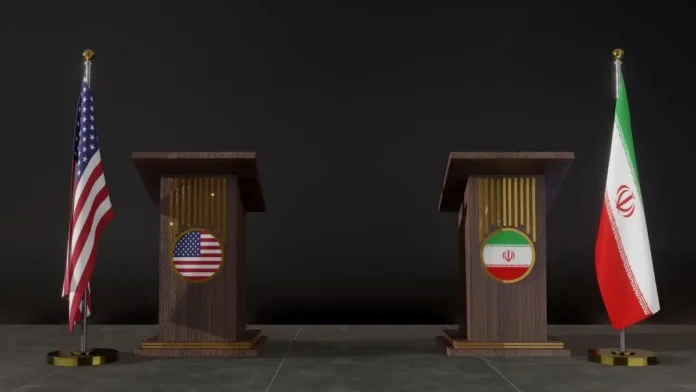

The first round of technical talks between the United States and Iran under the newly signed memorandum of understanding was canceled on June 19 — just four days after the MOU was signed — after Tehran reportedly demanded a guarantee that Israel cease its military operations against Hezbollah in Lebanon before Iranian negotiators would proceed with discussions on the nuclear programme.
The first round of technical talks under the new US-Iran memorandum of understanding will not take place on Friday, the Swiss Foreign Ministry said, as Iran reportedly sought a guarantee that Israel would cease its fight in Lebanon against the Hezbollah terror group.
A US diplomat familiar with the talks told CNN on Friday that they were called off because Tehran is first demanding a guarantee that the ongoing conflict in Lebanon between Israel and the Iran-backed Hezbollah in Lebanon would end.
Four days. That is how long the diplomatic momentum from Wednesday’s historic MOU signing lasted before the first concrete test of its implementation failed. The Lebanon question — which LoudFact identified as one of the six issues most likely to derail the broader agreement — has done exactly that, at the earliest possible opportunity.
Two Different Explanations
The meeting was nixed even though the signing of the MOU on Wednesday set the clock ticking on a 60-day period during which Iran and the US are meant to hammer out a final agreement on sensitive and complex issues such as Iran’s nuclear program.
What is notable about Friday’s cancellation is that the US and Iranian sides are not giving the same public explanation for it.
Vance had said at the press conference, where he railed against Israeli officials’ criticism of the Iran deal and US President Donald Trump, that the planned talks weren’t finalized because it was difficult to get Iranian officials out of Iran. Vance said he thought he would travel to Switzerland at some point this weekend.
Vance’s explanation — logistical difficulty getting Iranian officials out of the country — is a framing that avoids attributing the delay to a substantive disagreement. It is the kind of explanation governments offer when they want to preserve the appearance of a process moving forward without conceding that one side has placed a precondition the other side has not accepted.
The US diplomat’s explanation to CNN — that Iran is demanding a Lebanon guarantee — is substantively different and far more consequential. If accurate, it means Iran is not merely facing scheduling friction; it is refusing to engage in the nuclear follow-on talks at all until its primary remaining demand from the original MOU negotiations is met.
Why Lebanon Is the Sticking Point Again
The Lebanon question was, as LoudFact documented throughout the MOU negotiations, the single most difficult element to resolve. Iran’s insistence that “all fronts, including Lebanon” be covered by the ceasefire was included in the language of the deal announced on June 15. But Hezbollah never formally confirmed its acceptance of any ceasefire terms, and Israeli operations in southern Lebanon have continued.
Trump himself acknowledged the gap at his G7 press conference, criticising Netanyahu publicly: he said Israel doesn’t “have to knock down a building every time somebody walks into it that’s from Hezbollah,” and that Lebanon has been “disrespected incredibly.”
If Israeli operations against Hezbollah have continued in the days since the MOU was signed — which Trump’s own G7 remarks suggest they have — Iran’s position is that the US has not delivered on what it understood to be agreed: a genuine cessation of operations on the Lebanon front. From Tehran’s perspective, proceeding to discuss the far more painful concessions required on its nuclear programme, while Israel continues bombing in Lebanon, would be capitulation without reciprocity.
What US Officials Are Saying
Critics of the MOU signed this week have pointed to its provisions on sanctions relief for Iran, including unfreezing Iranian funds and setting up a $300 billion reconstruction fund. Vance said Thursday that Iran would reap rewards only if it complies with terms set to be hammered out in the 60-day window that he said began on Thursday.
US special envoy Steve Witkoff, part of the US negotiating team led by Vance, told US lawmakers in a closed-door meeting that Tehran would invite UN nuclear watchdog inspectors.
Vance’s emphasis — that Iran “would reap rewards only if it complies” — is a signal that the administration is positioning the cancellation as evidence of its own toughness rather than as a sign of weakness in the deal. The framing that rewards are conditional and sequenced, not automatic, is consistent with the MOU’s structure as US officials described it at signing.
The confirmation that the $300 billion reconstruction fund is part of the signed text — settling the ambiguity LoudFact reported earlier this week between the Reuters ($25 billion) and Bloomberg ($300 billion) versions — is itself significant. The larger figure is now confirmed as part of the actual agreement, intensifying domestic criticism in the US that the terms favour Iran.
What Happens Next
The United States appears to be using canceled diplomatic meetings as a tool to increase pressure on Tehran, political analyst Alexey Zhivov believes.
After the postponed talks, ex-diplomat Greminger explained that this was part of a normal negotiation process.
Two interpretations are circulating among analysts. One holds that the cancellation is itself a negotiating tactic — the US allowing the deadline pressure of the 60-day window to build before conceding any ground on Lebanon. The other, more measured view, treats early friction in a complex post-conflict negotiation as ordinary and expected, not evidence of an unraveling deal.
A massive relief rally over the announcement of an interim peace agreement with Iran has faded, and the next stage of talks has stalled. Stock markets are taking it in their stride, holding near record highs.
The market’s relatively calm response — holding near record highs despite the cancellation — suggests that investors are treating this as a normal hiccup rather than a sign the entire framework is at risk. Vance’s statement that he expects to travel to Switzerland “at some point this weekend” suggests the delay is measured in days, not weeks.
But the substance of the disagreement — Lebanon, again — is the same fault line that nearly prevented the MOU from being signed in the first place. If it could not be fully resolved before the historic announcement on June 15, there is no guarantee it resolves quickly now.
LoudFact.com is an independent global news and explainer platform. This report is based on reporting from the Times of Israel, CNBC, NPR, and Ground.News as of June 19, 2026.