
This is a panoramic account of the world’s most consequential crises as they stand on June 7, 2026 — the fourteenth day of LoudFact’s coverage. It is written not as a digest but as an attempt to hold the full scale of simultaneous global crisis in a single frame, and to ask what it means that all of these things are happening at once.
There is a cognitive limit to how much crisis the human mind can hold at once. In normal times, global media works within that limit by selecting the most acute moment and amplifying it to fill the available attention. The resulting impression is that one thing is happening. In reality, multiple things are always happening.
June 7, 2026, is a day when the gap between the one thing that headline news suggests is happening and the many things that are actually happening is wider than usual. This is an attempt to close that gap.
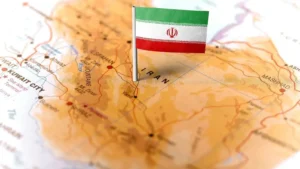
The Iran War: Day 99, No End
The war between the United States and Iran — which began on February 28 when US and Israeli aircraft struck Iranian military and nuclear infrastructure — turns 100 days old tomorrow.
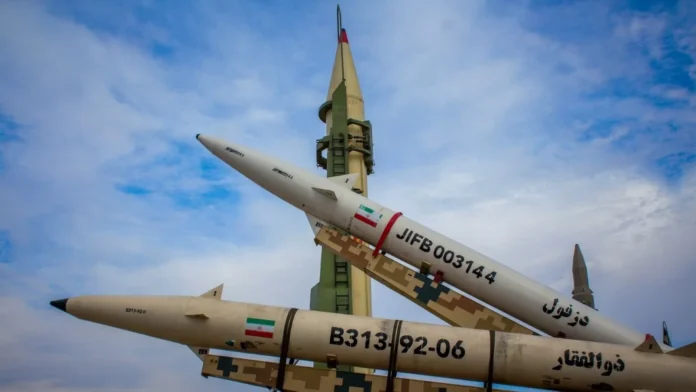
The conflict has not ended. A ceasefire framework exists and is being nominally observed, but was violated by seven Iranian ballistic missiles fired at Kuwait and Bahrain last night. The Strait of Hormuz — through which 20% of the world’s oil passes — remains effectively closed to commercial shipping. Oil has been above $100 per barrel for more than 85 days.
The memorandum of understanding that negotiators have drafted — which would extend the ceasefire for 60 days, require Iran to remove Hormuz mines within 30 days, and begin nuclear talks — has not been signed by Trump and has not been officially confirmed by Iran. An Iranian military adviser to the new Supreme Leader told CNN this week that the negotiations “are at a deadlock.”
The House of Representatives voted 215-208 to end the war. The Senate has not acted. Iran’s team walked out of talks. Iran returned. Iran fired more missiles. Trump claimed progress. Iran denied it.
One hundred days. One waterway still closed. One deal still unsigned.
Ukraine: Simultaneous Bombing in Both Directions
The Russia-Ukraine war, now in its fifth year, is entering a new phase defined by long-range strikes in both directions that are reaching further into each country’s territory than at any previous point.
Russia launched its largest aerial attack of 2026 on June 2 — 73 missiles and 656 drones — killing 23 civilians including two children in Dnipro. Rescue workers pulled the body of a 3-year-old from collapsed apartment rubble. A day of mourning was declared. Within hours, another strike hit another building.
In the same week, Ukraine struck an oil terminal in St. Petersburg — Russia’s second city and cultural capital, 600 kilometres from Ukraine’s border — while Putin was hosting his annual economic forum. He was forced to publicly acknowledge, to assembled international media, that some Ukrainian drones “break through” Russian air defences.
Zelensky wrote directly to Putin proposing face-to-face negotiations, acknowledging that the US is preoccupied with Iran and cannot be expected to drive the diplomatic process. Putin’s spokesman said Putin hadn’t seen the letter. Russia is open to compromise based on the Anchorage framework. Ukraine would need to accept terms it has previously rejected.
Lebanon: A Ceasefire That Nobody Controls
A UN peacekeeper named Milovan Jovanović — Sergeant, Serbian army, serving with UNIFIL — died of wounds from Hezbollah mortar fire near Marjayoun on June 4. He was the seventh UNIFIL peacekeeper killed in Lebanon since March 2026.
Israel and Lebanon reached a ceasefire framework in Washington on June 3. Hezbollah rejected it the following morning, calling it “absurd, humiliating and shameful.” Fighting continued. Israel struck vehicles in Lebanon after the announcement. Hezbollah fired rockets into northern Israel. The Lebanese president said the deal was “the last chance.” Hezbollah said it was a surrender.
The Lebanon conflict is connected to the Iran war by the simple fact that Iran will not accept any ceasefire with the US that does not include Lebanon. And Hezbollah will not accept any Lebanon ceasefire that does not include full Israeli withdrawal. And Israel will not accept any ceasefire without security arrangements. And none of these conditions are currently compatible with any others.
Seven peacekeepers. Seven weeks of ceasefire. No peace.
Sudan: Three Years, 150,000 Dead, Still Forgotten
Sudan’s civil war entered its fourth year in April 2026. The Rapid Support Forces attacked villages near Bara in North Kordofan on Eid al-Adha — killing more than 30 civilians. They returned the following day. A communications blackout was imposed. Starlink devices were confiscated. Local sources struggled to transmit information from the area.
More than 150,000 people have been killed since the war began on April 15, 2023. More than 13 million are displaced — the largest displacement crisis on earth. Parts of Sudan are in famine. A UN fact-finding mission has warned that the Kordofan trajectory could constitute genocide.
Sudan received a fraction of the international coverage given to the Iran war this week. The people being killed in North Kordofan were not trending on any platform. Their names will not be widely known.
North Korea: Expanding in the Dark
On June 3, Kim Jong Un walked through the centrifuge hall of a new nuclear bomb fuel facility and announced plans to expand his arsenal “at an exponential rate.” Weapons-grade material production capacity has more than doubled in five years. The IAEA assessed in April that North Korea has enough fissile material for “dozens” of warheads.
Nobody has a good policy response to this. The US is fighting the Iran war. South Korea is managing an election cycle. China has its own strategic interests in North Korean stability. Every past denuclearisation framework has failed. Kim is expanding because no one has found a way to stop him and the world is not paying attention.
Health: The Crises Nobody Declares
The Ebola outbreak in the Democratic Republic of the Congo — Bundibugyo strain, no licensed vaccine, no approved treatment — has killed more than 231 people and generated more than 1,000 suspected cases since mid-March. The WHO declared it a global health emergency on May 17. The outbreak has expanded to Uganda. Emergency vaccination drives are running. The crisis is real and demanding.
In Bangladesh, more than 528 children died from measles between mid-March and late May 2026 — a disease that is vaccine-preventable and that resurged because nationwide vaccination campaigns had not been run since 2020. Nearly 5 million children were unvaccinated. An emergency campaign vaccinated 16 million in a month. Children died before immunity could be built.
Against these tragedies, science offered a moment of genuine hope this week: an mRNA cancer vaccine for melanoma, combined with Keytruda immunotherapy, showed dramatic effectiveness in preventing recurrence in Phase 2 trials. A Phase 3 study is underway. FDA approval is being sought. The same technology that defeated COVID-19 is learning to fight cancer.
Climate: The Background That Is Becoming the Foreground
The UK recorded its hottest May day since records began: 34.8°C at Kew Gardens, shattering a record set in 1922 by two full degrees. France broke May temperature records. Heat-related deaths were reported. A heat dome settled over northwestern Europe in late May in a way that has no historical precedent for that time of year.
The WMO published its annual climate forecast on May 28: a 91% chance that global temperatures will temporarily exceed 1.5°C above pre-industrial levels at least once before 2030. A 75% chance the entire 2026-2030 five-year average will exceed that threshold. A new El Niño arriving in the second half of 2026 makes 2027 the most likely candidate for the next record-breaking year.
The Iran war has created political pressure in several countries to expand oil and gas production rather than accelerate the transition away from fossil fuels. The political economy of the energy transition is being reshaped in real time by a war that has made energy security more visible than climate targets for governments managing populations paying $4.42 per gallon.
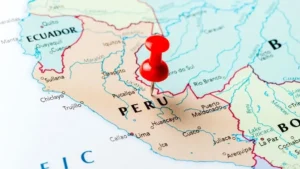
Peru: Voting While the World Burns
Today, 27 million Peruvians are voting. They are choosing between Keiko Fujimori — daughter of an authoritarian who ordered forced sterilisations, engaged in widespread corruption, and whose legacy remains deeply polarising — and Roberto Sánchez, a leftist congressman allied with the imprisoned former president Pedro Castillo.
The polls show them statistically tied. Thirteen percent of voters are undecided. Nine presidents in ten years. A democracy that has survived its own crises in ways that outsiders underestimated.
Peru is voting while the Strait of Hormuz is closed, while Kyiv is being bombed, while a Serbian soldier’s family in Belgrade is receiving a body, while a 3-year-old’s family in Dnipro is receiving a body, while RSF fighters are loading back into vehicles in North Kordofan, while Kim Jong Un is walking through centrifuge halls, while Pope Leo XIV is telling hundreds of thousands of young people that they can change history.
“Do it with love,” he said.
The world is not doing it with love. It is doing it with missiles, with mortars, with blackouts, with ballistic salvos, with record heat, and with the slow grinding machinery of wars that began for reasons that already feel distant and that show no sign of ending.
This is the world on June 7, 2026.
LoudFact.com is an independent global news and explainer platform. This final article in the Day 14 publishing plan draws on the full body of 68 articles published by LoudFact.com between May 24 and June 7, 2026, and the underlying sources cited throughout that coverage.