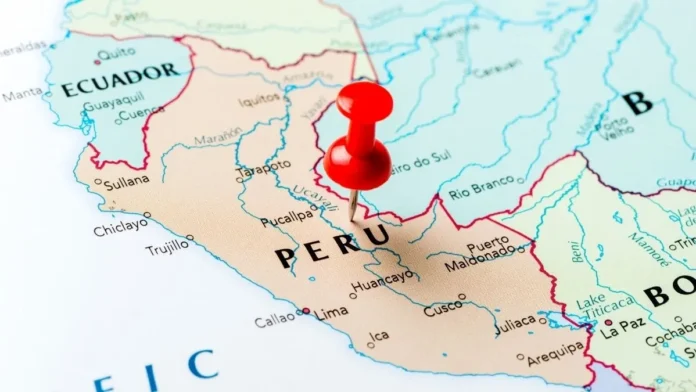

Keiko Fujimori, the conservative daughter of the late former authoritarian president Alberto Fujimori, won Peru’s June 7 presidential runoff, defeating leftist Roberto Sánchez in a tight race to become Peru’s first female president on her fourth consecutive attempt — inheriting one of Latin America’s most institutionally fragile democracies.
After three consecutive presidential defeats — in 2011, 2016, and 2021 — after a period in pretrial detention on money laundering charges, after the collapse of her rival Pedro Castillo’s presidency, and after a campaign that polls described as statistically tied in its final days, Keiko Fujimori finally won.
Peru’s runoff election pits Keiko Fujimori against Roberto Sánchez in a closely contested race shaped by crime, instability, and democracy concerns. When the returns came in on Sunday evening, Fujimori’s strength in Lima and coastal urban areas proved decisive, offsetting Sánchez’s stronger performance in the Andean interior and rural south. Roberto Sánchez conceded late Sunday, congratulating Fujimori and calling for national unity.
Whoever wins the runoff will be sworn in on July 28 to replace interim President José María Balcázar. Fujimori will be sworn in on Peru’s Independence Day — a date with obvious symbolic weight, connecting the presidency to the founding narrative of the republic in a country that has struggled to maintain political continuity.
She will be Peru’s first female president. She is also the most divisive major political figure the country has produced in a generation.
How Fujimori Won
The margin was narrow but decisive, in keeping with the race’s character. Fujimori’s victory reflected several converging factors.
Security as the dominant issue. Peruvian voters consistently cited violent crime as their top concern throughout the campaign. The infiltration of Ecuadorian criminal organisations — primarily fragments of the dissolved Sinaloa-linked Los Choneros — into northern Peru has generated a wave of killings, extortion, and kidnappings that has shocked a country accustomed to criminal violence but not to this scale of organised gang activity. Fujimori’s security platform — combining military deployment against criminal groups, a hardline stance on deportation, and a promise to restore law enforcement to communities where state authority had essentially collapsed — resonated with voters across class and geographic lines.
Urban Lima. Lima, home to approximately a third of Peru’s total population, broke for Fujimori. The capital’s middle and upper-middle class, concerned about property crime and economic stability, voted disproportionately for the conservative candidate. Fujimori’s promise to attract foreign investment, cut regulatory red tape, and restart private sector growth in mining and infrastructure spoke directly to the economic aspirations of urban Lima.
The Castillo discount. Sánchez’s association with former President Pedro Castillo — whose 18-month presidency ended in a failed self-coup and imprisonment — remained a significant liability throughout the campaign despite Sánchez’s efforts to distinguish himself. For voters who had experienced Castillo’s governance as chaotic and ultimately anti-democratic, Sánchez’s background as a cabinet minister in that administration was disqualifying regardless of his personal qualities. Sánchez served in the cabinet of Fujimori’s rival in the 2021 runoff, the currently imprisoned ex-President Pedro Castillo. The association was real and the electorate’s memory of Castillo’s presidency was still fresh.
Who Keiko Fujimori Is
Keiko Fujimori is 51 years old. She studied at Boston University and completed a master’s degree at Columbia University’s School of International and Public Affairs. She entered Peruvian politics as a congresswoman from 2006 to 2011, representing her father’s political movement, and took over the leadership of what became Fuerza Popular after her father’s conviction.
Her father, Alberto Fujimori, governed Peru from 1990 to 2000. Under his rule, Alberto Fujimori undermined Peru’s democracy, engaged in widespread corruption, and ordered gross human rights violations, including forced sterilisations targeting primarily Indigenous women and forced disappearances, torture, and death squad killings. Alberto Fujimori died in September 2023 while serving a 25-year prison sentence for human rights crimes.
Keiko Fujimori’s relationship with her father’s legacy is the defining tension of her political life. She has never fully repudiated it — to do so would be to undermine the political base that has made her Peru’s most persistent presidential contender. She has attempted, with varying success, to reframe her candidacy around a future rather than a past — emphasising economic development, security, and institutional reform.
Whether she can govern as something other than the symbolic heir of her father’s authoritarian project is the central question her presidency will be forced to answer.
What She Inherits
Keiko Fujimori inherits a country with some of the most demanding governing conditions in Latin America.
Institutional fragility. Peru has had nine presidents since 2016. The congressional-executive confrontation that has produced multiple impeachments and one attempted self-coup has not been resolved by any of the constitutional reforms attempted in recent years. Fujimori’s Fuerza Popular has a significant congressional presence, but governing requires coalition management that has defeated every recent predecessor.
Crime and security. The Ecuadorian gang infiltration that drove voter anxiety is a genuine and serious security challenge. Fujimori’s platform calls for military deployment to affected regions and a hardline anti-gang policy. The experience of other Latin American countries — El Salvador’s Bukele being the most cited example — suggests that dramatic security crackdowns can produce rapid reductions in visible violence, but the sustainability and human rights dimensions of such approaches are contested.
Economic management. Peru’s economy has been constrained by a combination of political uncertainty, anti-mining protests, and the global commodity environment. Fujimori’s platform is explicitly pro-investment and pro-mining. Her ability to restart stalled projects and attract the foreign capital she has promised depends on security conditions, regulatory frameworks, and international commodity markets that are only partly within any president’s control.
Pending legal questions. Fujimori was released from pretrial detention and her most serious money laundering charges were ultimately not prosecuted to conviction before the election. Questions about her legal status and the independence of the proceedings that cleared her path to the presidency will be raised by her opponents throughout her term.
What Sánchez Said — and What the Left Will Do
Roberto Sánchez’s concession was gracious in tone. He acknowledged the result, called for national unity, and pledged to serve as a constructive opposition in congress. Whether the broader left coalition he represented will maintain that constructive posture — or whether Fujimori’s presidency will generate the kind of sustained opposition that has contributed to previous presidential collapses — is a question the coming months will begin to answer.
There is mounting concern that new claims of fraud will emerge — especially if Sánchez is declared the winner — given that Fujimori alleged fraud and sought to annul large numbers of votes following her 2021 loss, despite international observers finding no evidence of fraud. As it turned out, Fujimori won — rendering the fraud concern moot in its most acute form. But the fragility of institutional trust in Peru’s electoral system means that future elections will begin from a lower baseline of public confidence than healthy democracies require.
Peru and the United States
Fujimori’s election represents a significant shift in US-Peru relations. US-Colombian relations have been strained under the second Trump Administration amid the Administration’s differences with President Petro. The broader pattern across the region — the Trump administration seeking right-aligned governments — means that a Fujimori government in Lima will receive warmer treatment from Washington than its predecessor would have.
For the US, Peru’s shift to the right offers the prospect of restored counter-narcotics cooperation, support for reinvigorating the East-West pipeline and alternative energy route negotiations during the Iran war, and an Andean ally aligned with US hemispheric positions. The relationship will be one of the new administration’s early diplomatic priorities.
What Happens Next
Keiko Fujimori has approximately seven weeks before her July 28 swearing-in to form a cabinet, negotiate congressional alliances, and set the priorities of her government’s first hundred days. The symbolism of taking office on Independence Day is something she will use. Whether she can transform that symbolism into governing effectiveness is the question that a decade of Peruvian political history says is harder than it looks.
Peru has produced nine presidents in ten years. It is about to inaugurate a tenth. The country’s democratic institutions have survived the strain — barely, and with significant damage. Whether Fujimori can use her presidency to repair that damage, or whether she adds to it, will be determined not by the result that arrived on Sunday night but by the decisions she makes starting on July 29.
LoudFact.com is an independent global news and explainer platform. This report is based on reporting from NPR, AS/COA, CEPR, Britannica, Al Jazeera, and PBS NewsHour as of June 7-8, 2026.