
On the eve of the Iran war’s 100th day, this is the most complete accounting available of what the conflict has produced, what it has cost, and why — despite three months of ceasefire diplomacy — a resolution remains as uncertain as at any point since the April 8 ceasefire was first agreed.
When US and Israeli aircraft struck Iran on February 28, 2026, most analysts predicted a conflict of limited duration. A strike campaign targeting Iran’s nuclear programme and military infrastructure, followed by an Iranian response that would be contained, followed by a ceasefire, followed — over months of difficult diplomacy — by a new regional framework. The model was the 2006 Lebanon war, compressed into a few weeks.
That model has not held. Tomorrow, the war turns 100 days old. The Strait of Hormuz has been effectively closed for the vast majority of those days. Oil has been above $100 per barrel for more than 85 of them. Seven ballistic missiles were fired at Kuwait and Bahrain last night. The memorandum of understanding that would extend the ceasefire and begin the path to resolution has not been signed. An Iranian military adviser told CNN this week that the negotiations “are at a deadlock.”
This is a complete accounting — in numbers, in places, and in human terms — of what 100 days of this war have produced.
The Military Ledger
The opening strikes on February 28 achieved significant objectives. Iran’s Supreme Leader Ali Khamenei was killed. Iran’s air force was substantially degraded. Its navy has been described by CENTCOM as largely destroyed. Significant elements of its nuclear infrastructure were damaged, with the full extent of the damage remaining partially classified. Iran’s ballistic missile production and launch infrastructure was damaged but not eliminated.
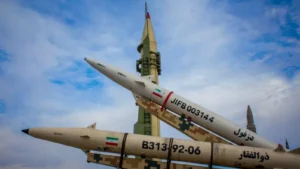
What Iran retained — and has used throughout the conflict — is the asymmetric capacity it invested in as a deterrent against exactly this kind of conventional attack: ballistic missiles, drones, proxy networks, and the physical geography of the Strait of Hormuz.
The ceasefire of April 8 paused the large-scale air campaign. It did not end the military exchange. US and Iranian forces have exchanged fire on every significant day since April 8. The tally across the ceasefire period includes: US strikes on Iranian drone sites, mine-laying boats, communications facilities, and coastal radar installations across multiple locations including Bandar Abbas, Qeshm Island, Sirik, and Goruk. Iranian strikes on Kuwait’s airport, Bahrain’s US base, commercial vessels near Hormuz, and seven ballistic missiles against Gulf states as recently as June 5.
The 24-hour pause in the direct Iran-US exchange ended on 5 June: CENTCOM stated US forces shot down four Iranian one-way attack drones launched toward the Strait of Hormuz and then struck Iranian coastal surveillance radar sites at Goruk and on Qeshm Island, after which Iran fired seven ballistic missiles at Kuwait and Bahrain. It was the second Iranian strike wave against Gulf states since 3 June.
Two Iranian strike waves against Gulf states in three days. That is the operational reality of the “ceasefire” on Day 99.
The Economic Cost: Who Is Paying and How Much
The economic damage produced by the Iran war is large, distributed unevenly, and increasingly structural rather than temporary.
Global oil markets: Brent crude above $100 per barrel for more than 85 days. Intraday peaks above $112. Energy price risk premium built into every commodity priced in dollars. The world was managing a controlled recovery from post-pandemic inflation when the war began; that recovery has been interrupted in every economy that imports energy.
US households: Gas at $4.42 per gallon nationally. Inflation at 3.8% annually — the highest since May 2023. Core inflation at 3.3% — indicating that price pressure has spread from energy into the broader economy. The Federal Reserve caught between stimulating a slowing economy and restraining inflation it cannot address through monetary policy alone.
The Gulf states: Kuwait’s international airport has been struck twice. Bahrain has absorbed Iranian ballistic missile salvos on two occasions. Seven nations in the region have absorbed direct or indirect costs from a war they did not start. Commercial aviation across the region has been repeatedly disrupted.
Shipping: 97 ballistic missiles and 283 drones shot down by Kuwait, US, and allied forces. 116 vessels redirected from Iranian ports. Six commercial ships disabled by US blockade enforcement. Every ship that cannot transit the Strait of Hormuz pays the price of the Cape of Good Hope reroute — adding weeks to transit times and costs that eventually flow into consumer prices everywhere.
Iran itself: The US naval blockade is estimated to cost Iran $500 million per day in lost export revenues. Inflation inside Iran has accelerated. The currency has depreciated. The 87-day internet blackout severed the population from global information. Thirty-one political executions documented in the first 65 days. A succession crisis following Khamenei’s death that has not been fully resolved.
The Human Cost
Numbers cannot capture the human cost of the war, but they can provide its dimensions.
Inside Iran: thousands killed in the initial strikes on military infrastructure, government buildings, and associated facilities. Political executions accelerated. Diaspora families unable to contact relatives during the 87-day internet blackout.
In Kuwait: one person killed in the June 3 airport strike. Dozens injured. An airport struck twice, shutting down civilian aviation that connects millions of people to family, work, and the world.
In Lebanon: seven UN peacekeepers killed since March, from Serbia, Indonesia, France, El Salvador, and Spain. Dozens of Lebanese civilians killed in Israeli airstrikes. Hundreds of thousands displaced from southern Lebanon. A Beaufort Castle seized. A Dahiyeh suburb ordered to evacuate.
Globally: the energy price spike has had the most severe impact on the world’s poorest consumers — those in developing economies who spend the largest share of their income on energy and food, and who have the least ability to absorb price increases that wealthy consumers navigate through consumption adjustments.
The Diplomatic Ledger
Against these costs, what has diplomacy produced?
A ceasefire framework that has nominally been in place since April 8, though violated on most days by both sides. A memorandum of understanding drafted by negotiators that would extend the ceasefire for 60 days, require mine removal from Hormuz within 30 days, and begin nuclear talks — that Trump has not signed and Iran has not officially confirmed. A House of Representatives war powers vote of 215-208 that the Senate has not acted on. Pakistan elevated as a mediator. Qatar hosting talks. Oman as a back-channel.
Mohsen Rezaei, a military adviser to Iranian Supreme Leader Mojtaba Khamenei, told CNN the US-Iran negotiations “are at a deadlock and Trump must break this deadlock.”
An Iranian adviser to the new supreme leader publicly characterising the talks as deadlocked and placing the responsibility for breaking the deadlock on Trump is not the language of a party preparing to sign a deal.
The Connected Crises the War Has Created or Worsened
The Iran war did not occur in isolation. Its effects have propagated through the global system in ways that have created or deepened crises across multiple dimensions.
Ukraine: The diversion of US air defence stockpiles to the Middle East has contributed to a gap in Ukraine’s ability to intercept Russian ballistic missiles — a gap Russia has exploited with escalating attacks that killed 23 civilians on June 2.
North Korea: Kim Jong Un unveiled a new nuclear fuel facility on June 3, timing the disclosure to coincide with US distraction. The silence on North Korea that the Iran war has enabled has given Kim space to expand his programme without meaningful counter-pressure.
Global terrorism: An Iraqi Kata’ib Hizballah commander faces trial in Manhattan for 20 attacks across Europe and Canada — attacks conducted explicitly as Iran war retaliation. European security services are at their highest threat level since 2016.
Lebanon: A conflict that had nominally ceased resumed with Israeli operations, the killing of seven UN peacekeepers, and Hezbollah’s rejection of a Washington ceasefire deal.
What a Resolution Would Require
A genuine resolution of the Iran war would require alignment on at least four issues that are currently not aligned:
Hormuz: Iran removes mines and allows commercial shipping to resume. US lifts blockade. Verification mechanism agreed.
Nuclear: Some framework that addresses the gap between Iran’s insistence on enrichment rights and the US demand for dismantlement. The 2015 JCPOA provided one model; whether a 2026 version is achievable is the central unknown.
Lebanon: Hezbollah’s relationship to any ceasefire framework. Iran’s willingness to constrain Hezbollah as part of a broader deal.
Sequencing: Who moves first. How verification happens. What enforcement looks like if commitments are not met.
None of these is impossible in principle. All are currently unresolved. And an Iranian adviser to the new supreme leader said, this week, that the talks are at a deadlock.
What Day 100 Looks Like
Tomorrow, June 8, the war turns 100 days old. Oil is above $100. The ceasefire is nominal. Seven missiles were fired at Gulf states last night. The deal is unsigned.
The world that existed on February 27 — before the strikes, before the Hormuz closure, before the cascading crises — is not coming back regardless of how the war ends. The question is what replaces it. And on Day 99, that question does not have an answer.
LoudFact.com is an independent global news and explainer platform. This report draws on the full body of LoudFact.com‘s coverage of the Iran war from February 28 through June 7, 2026, and documented data from CENTCOM, the House of Commons Library, CBS News, CNN, Al Jazeera, and PBS NewsHour.