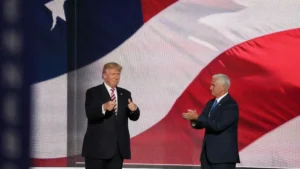
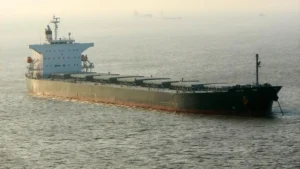
President Trump met with executives from oil and gas companies at the White House on Tuesday to discuss ways to lower American gas prices, even as renewed US strikes on Iran pushed oil prices higher for a second consecutive session, underscoring the tension between the administration’s military strategy and its domestic economic goals.
What Happened
Trump convened the meeting with energy industry executives the same day US forces struck Iranian Revolutionary Guard targets, a strike he described on social media as “large and powerful” in response to an attempted mining of the Strait of Hormuz and a missile attack on a US base in Jordan. Despite announcing that the strait was now clear of mines, oil prices rose again Tuesday, extending gains from Monday when the US first struck Iranian positions on Larak Island after a month-long pause in direct fighting.
The meeting with oil and gas executives reflects the administration’s direct engagement with industry leaders on price stabilization, though specific outcomes or commitments from the discussion were not immediately detailed. The gathering came as gas prices have remained a persistent point of political sensitivity throughout the extended conflict, with Americans facing sustained volatility at the pump tied directly to developments nearly 7,000 miles away in the Persian Gulf.
The renewed price pressure adds to an already difficult macroeconomic backdrop, with bond markets globally experiencing significant selloffs in recent days, US 30-year Treasury yields reaching levels not sustained since 2006, and Federal Reserve rate hike expectations for September climbing sharply amid the combination of war-driven oil prices and persistent inflation concerns.
Why It Matters
The juxtaposition of Trump ordering strikes on Iran while simultaneously meeting with oil executives to discuss lowering prices illustrates the fundamental tension embedded in the administration’s approach to the conflict: pursuing continued military and economic pressure on Tehran while trying to shield American consumers from the resulting energy market volatility that such pressure has repeatedly generated.
For American households, the continued upward pressure on oil prices threatens to erode any recent relief at the pump, with gas prices already having reached seasonal records earlier this summer amid the conflict’s various escalation phases, adding a tangible pocketbook impact to a war that polling has shown most Americans view skeptically.
The direct White House engagement with oil industry leadership suggests the administration recognizes gas prices as a significant political liability heading into the fall, particularly given the timing relative to November’s midterm elections and the broader affordability concerns that have dominated public opinion throughout 2026.
Context and Background
Oil prices have moved through extraordinary volatility throughout 2026 tied directly to the US-Iran conflict’s various phases, including a peak above $126 a barrel in April, a decline below $72 in July following a since-collapsed ceasefire, and now a renewed climb following this week’s resumption of direct fighting after a month-long pause.
The administration has pursued multiple parallel strategies to manage the conflict’s economic fallout, including the recently expanded Strategic Petroleum Reserve discussions, the ongoing naval blockade of Iranian ports, and now direct outreach to domestic oil producers, reflecting a comprehensive if sometimes contradictory approach to balancing military objectives against consumer price stability.
This week’s developments arrive alongside Congress’s passage of a stopgap government funding bill and continued fallout from the national debt’s recent crossing of the $40 trillion threshold, adding further complexity to the broader US economic policy environment the administration is navigating simultaneously with the Iran conflict.
Analysis
Energy policy analysts note that direct White House engagement with oil executives, while potentially useful for coordinating messaging or exploring domestic production incentives, has limited practical ability to offset the kind of geopolitical risk premium currently embedded in oil prices given the conflict’s demonstrated volatility.
Some economists point to the specific timing of Tuesday’s meeting, arriving the same day as renewed strikes, as illustrating the administration’s awareness that its own military decisions carry direct and immediate consumer price consequences, a dynamic that creates ongoing tension between strategic objectives in the Iran conflict and domestic economic messaging.
Market strategists caution that without a durable resolution to the underlying conflict, any near-term measures the administration pursues with oil executives are unlikely to meaningfully offset continued price volatility, given how repeatedly and directly oil markets have responded to shifts in the conflict’s trajectory throughout the year.
What Happens Next
Markets will continue monitoring both the trajectory of the renewed Iran conflict and any concrete outcomes from Tuesday’s meeting between Trump and oil industry executives, given the direct relevance of both factors to near-term gas price trends. Continued volatility in energy markets remains likely given the conflict’s established pattern of rapid escalation and de-escalation.
The Federal Reserve’s September policy meeting will take on further significance given this week’s oil price surge and its effect on inflation expectations, with officials likely weighing the renewed energy-driven price pressure heavily in their upcoming rate decision.