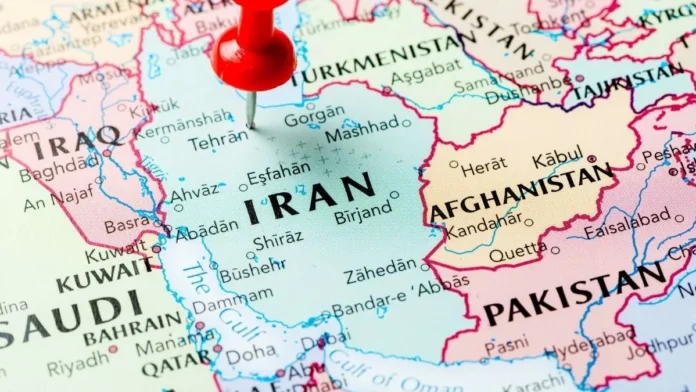

The United States and Iran exchanged direct strikes for the first time in more than a month on Sunday, after US forces hit Iranian rocket launchers on Larak Island in the Strait of Hormuz and Iran retaliated with missiles targeting American positions in Jordan and the UAE.
What Happened
US Central Command said its forces struck two Islamic Revolutionary Guard Corps rocket launchers on Larak Island on Sunday, describing the action as a “limited, precise action against IRGC minelaying forces posing an imminent threat” after determining the launchers were preparing to fire sea mines into the Strait of Hormuz. It marked the first American strike on Iranian territory publicly acknowledged by CENTCOM in 31 days. Iranian state media reported at least two people were killed and several wounded in the strike.
Iran’s armed forces responded within hours, launching ballistic missiles at US-linked bases in Jordan, including King Hussein and Al Azraq, which the IRGC said had been “used to launch and support” the Larak Island strike. Jordan’s military said it intercepted at least eight Iranian missiles, with some reported impacts but no casualties. Iran separately claimed to have struck Al Minhad Air Base south of Dubai, a claim the UAE’s Ministry of Defense denied, saying it had instead intercepted a drone over its territorial waters.
Iran’s Foreign Ministry said Tehran would “not hesitate to exercise the inherent right of legitimate defense and will respond decisively to any military aggression.” A US official told Al Jazeera Arabic that American forces intercepted the missile attack on Jordan, adding that the exchange “proves that Iran is no longer the power it once was.” Oil prices rose more than 2% following the exchange.
Why It Matters
The resumption of direct strikes ends more than a month of relative calm in a conflict that has already stretched over six months, reigniting fears of renewed large-scale escalation just as separate negotiations over reopening the Strait of Hormuz had shown intermittent signs of progress in recent weeks.
Larak Island holds particular strategic significance as the closest Iranian island to the strait, a post the IRGC has used to monitor global shipping and project military influence over the waterway, following a pattern of previous US strikes on other Iranian islands including Qeshm, Kharg, and Greater Tunb aimed at undermining Iran’s maritime authority.
The UAE’s denial of Iranian claims regarding Al Minhad Air Base, paired with Jordan’s confirmed interception of multiple missiles, illustrates the continued risk of the conflict drawing in additional US-aligned Gulf states as collateral targets, even when Iran’s retaliatory strikes are nominally directed at American forces specifically.
Context and Background
The strike comes amid escalating US economic pressure on Iran, including the recently launched “Operation Economic Outcast” sanctions campaign and the ongoing naval blockade of Iranian ports, both part of the administration’s stated strategy of sustained pressure following the collapse of the June memorandum of understanding’s 60-day negotiating window earlier this month.
Sunday’s strike also follows disclosures earlier this month that Patriot interceptor stocks in Europe have reached “beyond critical” levels due to sustained American munitions expenditure in the Iran conflict, raising questions about how much further military capacity the US has available for continued direct engagement should the current exchange escalate further.
Larak Island’s targeting fits within a broader pattern throughout the six-month war of US strikes aimed at degrading Iran’s capacity to threaten Gulf shipping specifically, reflecting the strait’s continued centrality to the conflict’s military and economic dimensions alike.
Analysis
Regional security analysts note that the specific timing of Sunday’s exchange, arriving after a full month of relative quiet, suggests both sides may have been testing whether the other’s posture had softened, with Iran’s rapid and geographically dispersed retaliation across both Jordan and the UAE indicating it had prepared contingency plans for renewed conflict despite the extended pause.
Some analysts point to the US official’s characterization of Iran as “no longer the power it once was” as reflecting genuine assessment of degraded Iranian capabilities after six months of sustained conflict, though Iran’s ability to still launch coordinated strikes against multiple countries simultaneously suggests meaningful operational capacity remains intact.
Gulf security analysts caution that continued targeting of Jordan and the UAE, even when framed as retaliation against US forces specifically, risks drawing additional regional states more directly into the conflict, complicating the broader diplomatic landscape at a moment when narrower shipping corridor negotiations had appeared to be advancing.
What Happens Next
Markets and regional governments will be watching closely for whether Sunday’s exchange represents an isolated flare-up or the start of a renewed sustained escalation, given the pattern established throughout the conflict of alternating between direct fighting and diplomatic engagement. Continued volatility in oil prices is likely given markets’ demonstrated sensitivity to any sign of renewed conflict.
The status of the narrower Oman-mediated Hormuz shipping negotiations, which had shown signs of progress in recent weeks, remains uncertain following this weekend’s exchange, with further clarity likely to emerge as both sides assess whether to pursue additional retaliation or return to the relative calm of the preceding month.