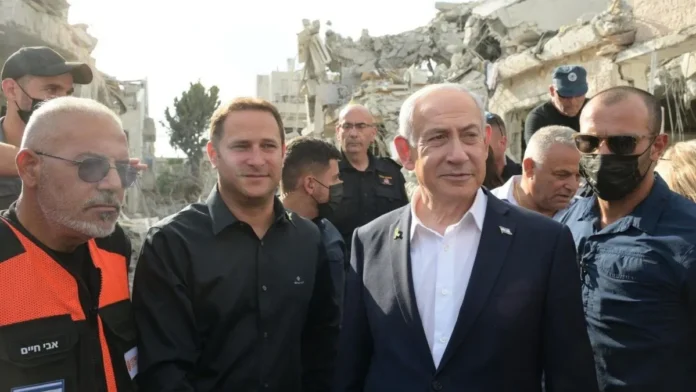

Israeli Prime Minister Benjamin Netanyahu declared Sunday that Iran’s government is “weak” and “faltering” and that “its end is near,” issuing the warning at a Rosh Hashanah cabinet toast just as concerns mount that Iran could strike Israel during the Jewish holiday season.
What Happened
“That regime in Iran, its end is near,” Netanyahu said in Hebrew remarks at the government’s pre-Rosh Hashanah gathering in Jerusalem. “It is weak. It is fighting for its life. It is faltering. There is another mission to complete, and we are determined to achieve it.” He added that if Iran “makes a mistake and attacks us, it will suffer a blow it cannot even imagine,” describing the unfinished objective as one that “will permanently change the face of the Middle East and the history of our people.”
Netanyahu credited Israel’s military campaign, conducted with US support, with having “pushed away atomic bombs and ballistic missiles” and struck “the Iranian axis with immense power,” repeating similar comments he made Thursday describing toppling the Iranian regime as Israel’s “central mission.” The remarks came the same day Iran claimed its forces had struck an unmanned US naval vessel attempting to enter the Strait of Hormuz, a claim the US military immediately dismissed as “a complete lie.”
That exchange followed a US strike a day earlier on three Iranian oil tankers, which Washington said was retaliation for Iranian ballistic missile attacks on two US Navy warships, marking a return to open confrontation after roughly a month of relative calm. Israel’s Defense Minister Israel Katz separately said the military remains prepared to strike “all of the regime’s infrastructure” if Iran attacks Israel directly.
Why It Matters
Netanyahu’s explicit framing of regime change as Israel’s remaining “mission,” rather than more narrowly defined military or nuclear objectives, signals an ambitious and open-ended set of war aims that extends well beyond the stated goal of preventing Iran from acquiring nuclear weapons, raising questions about how such an objective could realistically be achieved through continued military pressure alone.
The timing, delivered just before Rosh Hashanah begins and amid explicit Israeli concern that Iran has historically timed attacks to coincide with Jewish holidays, underscores the genuine operational anxiety within Israel’s security establishment about a potential direct Iranian strike during the holiday period, even though Israel has largely remained on the sidelines of the renewed US-Iran fighting.
The dueling claims over the naval drone incident, with Iran asserting a successful strike and the US flatly denying it occurred, illustrate the continued difficulty of establishing an agreed factual record in the conflict, a pattern that has recurred throughout the war and complicates outside assessment of the fighting’s actual intensity and trajectory.
Context and Background
Israel has remained largely outside the direct fighting since the current phase of the war resumed following a month-long pause, with Netanyahu’s government emphasizing close intelligence-sharing and coordination with Washington rather than independent Israeli military action against Iran in recent weeks, even as Israeli officials continue to publicly stake out ambitious objectives regarding the regime’s future.
The war began in late February with coordinated US-Israeli strikes that killed Iran’s Supreme Leader and other senior officials, an operation Netanyahu has repeatedly credited with degrading Iran’s nuclear and ballistic missile programs by what he has described as several years, even as US officials including Energy Secretary Chris Wright have separately acknowledged the campaign has not yet secured a formal end to Iran’s nuclear ambitions.
Rosh Hashanah, the Jewish New Year, begins at sundown the following Friday, with Israeli security officials citing historical precedent, including the 1973 Yom Kippur War launched during a Jewish holiday period, as informing heightened defensive readiness during the current holiday season.
Analysis
Regional analysts note that Netanyahu’s rhetoric regarding regime change has grown increasingly explicit in recent weeks, a shift from earlier, more narrowly framed statements about preventing Iranian nuclear weapons development toward a more sweeping vision of Iran’s political future, though the practical mechanisms by which Israel intends to help bring about such a change remain publicly unspecified.
Some Middle East observers point to the disputed naval drone incident as symptomatic of a broader information war accompanying the physical conflict, with both sides making claims difficult for outside parties to independently verify, complicating efforts to accurately assess the war’s actual battlefield dynamics from public statements alone.
Security analysts caution that heightened rhetoric from Netanyahu ahead of a period Israeli officials themselves have flagged as carrying elevated attack risk could reflect genuine intelligence-based concern, deliberate deterrent messaging, or both simultaneously, making it difficult to assess from public statements alone how imminent officials actually believe a potential Iranian strike on Israel to be.
What Happens Next
Israeli security services are maintaining heightened readiness through the Rosh Hashanah holiday period, with continued close coordination between Israeli and US forces regarding any potential Iranian escalation. Whether Iran extends its current strikes against US targets to include Israel remains the central uncertainty shaping the days ahead.
Continued statements from Netanyahu and other senior Israeli officials regarding the country’s objectives toward Iran’s government are likely as the holiday period approaches, with the ultimate test of both the regime-change rhetoric and Israel’s defensive preparations dependent on how Iran responds to the sustained US pressure campaign.