
Iranian Foreign Minister Abbas Araghchi said on Friday that Tehran has “no trust” in the US and would only be interested in negotiating with Washington if it was serious. Araghchi told reporters in New Delhi that “contradictory messages” had raised Iranian doubts about the Americans’ real intentions, adding that the Pakistani mediation process had not failed but was in “difficulty.” “But after that, we received messages again from the Americans saying that they are willing to continue the talks and continue the interaction.”
Araghchi’s BRICS statement is the most candid description of the specific mechanism of the Iran war’s diplomatic impasse to emerge from either side’s official communications in 81 days. It is not a description of substantive disagreement on the specific terms of the deal — though that exists.
It is a description of epistemological breakdown: Iran does not know what the US actually wants because what the US says publicly contradicts what it says privately, and what it says this week contradicts what it said last week.
The “Contradictory Messages” Problem
The contradiction Araghchi identifies is real and documented. Trump said publicly “zero enrichment” — then signalled OK with 20-year suspension. Vance offered 20 years at Islamabad round one — Trump then said he “wasn’t thrilled” with the 20-year offer his own VP made.
Rubio said Operation Epic Fury is “over” — then said the ceasefire “certainly holds.” Trump called Iran’s proposal “garbage” — then said Iran’s next paper was “much better.” Trump said the ceasefire was “massive life support” — then extended it at Gulf state request.
From Tehran’s perspective, these contradictions are not rhetorical slippage — they are evidence of a principal-agent problem in US policymaking: the public Trump says one thing, the private US negotiating team says another, and neither commitment is reliable because the president can override either at any moment based on his mood, his morning Truth Social reading, or a Gulf state phone call.
Araghchi said Sunday on CBS’ “Face the Nation with Margaret Brennan” that he couldn’t predict whether President Trump intends to strike Iran, “but one fact is that if they want to find a resolution for Iran’s peaceful nuclear program, the only way is diplomacy. I believe that still there is a good chance to have a diplomatic solution, which is based on a win-win game, and a solution is at our reach,” Araghchi told Brennan.
The fact that Araghchi is simultaneously saying “no trust in the US” and “a solution is at our reach” is not contradictory — it is the precise description of a negotiator who knows what deal architecture works (a win-win based on verified enrichment suspension) but cannot rely on the other side’s consistency to get there.
What Araghchi Said About Hormuz
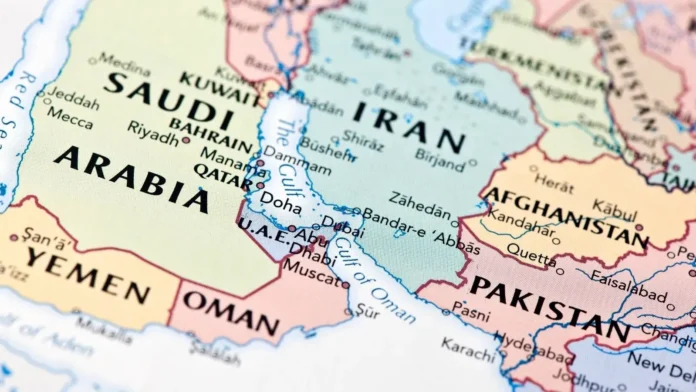
With regard to Hormuz, Araghchi claimed all vessels can pass through the Strait of Hormuz except those “at war” with Tehran, if they coordinate with Iran’s navy. He said the situation around the waterway, vital to global energy and commodities markets, was “very complicated.”
“All vessels can pass through Hormuz if they coordinate with Iran’s navy” — this is Iran’s operationalisation of its Hormuz sovereignty claim in diplomatic language. It is not “Hormuz is open for all” — it is “Hormuz is open for those who ask our permission.” The distinction is enormous: a commercial shipping lane that requires vessels to coordinate with the IRGC navy before transit is not a free-passage waterway under international law. It is an Iranian-controlled canal with Iranian-authority transit protocols.
Whether “coordinate with Iran’s navy” can be reframed as an acceptable maritime safety mechanism — rather than the sovereignty toll claim the US and China both oppose — is one of the specific language questions that the 30-day MOU negotiating period is designed to resolve.
The BRICS Signal
Araghchi’s presence at the BRICS foreign ministers’ meeting in New Delhi is itself a diplomatic signal. BRICS — which now includes Iran as a full member alongside Brazil, Russia, India, China, South Africa and others — is Iran’s most important multilateral platform for demonstrating that it has global diplomatic support that extends beyond Russia and China.
Attending the BRICS meeting as Iran’s FM, rather than being focused entirely on the Pakistan-mediated MOU track, is a deliberate message to Washington: Iran has options, relationships, and a multilateral identity that exists independently of the US-Iran bilateral.
For New Delhi specifically, Araghchi’s visit also signals India’s growing role in the Iran war’s diplomacy — India, with 20,000 seafarers stranded in Hormuz and 60%+ of its oil from the Middle East, has its own stakes in a resolution and its own leverage with both Tehran and Washington.