
Iranian officials issued a stark warning on June 9 that Tehran has not yet deployed the full power of its military and is prepared for any scenario, including direct confrontation with the United States — a statement that arrives as the Iran war enters its fifteenth week with the ceasefire deal unsigned, talks described as deadlocked, and both sides continuing to exchange fire in the Persian Gulf.
Iranian officials say they have yet to deploy the full power of their military and they are prepared for any scenario, even a direct confrontation. Talks between Washington and Tehran are hanging by a thread.
The statement is precise in its ambiguity. “The full power of our military” encompasses a range of capabilities that Iran has been careful not to deploy simultaneously: a complete shutdown of the Strait of Hormuz rather than the partial closure maintained since February; cyberattacks on Western infrastructure that Iranian cyber units have demonstrated the capability for; coordinated escalation through proxy networks in Lebanon, Iraq, Yemen, and potentially elsewhere; and strikes on Gulf state energy infrastructure at a scale beyond the ballistic missile salvos already conducted.
The warning is also precise in its framing. Iran is not saying it is about to do these things. It is saying it has not done them yet — and that it remains prepared to do them if the situation demands. In the diplomatic lexicon of the Iran war, this is an escalation threat calibrated to influence the US negotiating position rather than a declaration of intent.
But the line between a negotiating threat and an operational warning is thin, and the history of this conflict includes numerous moments when Iran’s stated intentions were followed by operational execution.
What “Full Military Power” Could Mean
Iran entered the war on February 28 in a condition that was, by its own assessment, not fully prepared for the scale of what followed. The US and Israeli strikes that opened the conflict destroyed significant elements of Iran’s military infrastructure in the first week — air force installations, naval facilities, command and control nodes, and nuclear programme elements. Iran’s supreme leader was killed.
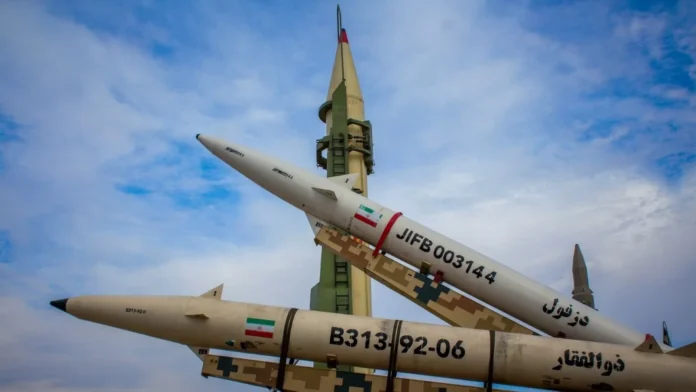
What Iran retained — and has used — is its asymmetric deterrent: ballistic missiles, drones, mine-laying capability, and proxy networks. In the 100+ days since the war began, Iran has demonstrated these capabilities repeatedly. Seven ballistic missiles at Kuwait and Bahrain. Hundreds of drones shot down near Hormuz. Commercial shipping disabled or deterred. Kuwait’s airport bombed.
What Iran has not done — and what it is implicitly flagging when it says “full power” — includes:
Full Hormuz closure. The current state of the strait is a partial closure — some traffic moves under Iranian naval escort or oversight, mostly for Iran’s preferred trading partners including China and India. A complete shutdown of all commercial traffic would significantly escalate the energy crisis.
Gulf energy infrastructure strikes at scale. Iran has struck Saudi, UAE, and Kuwaiti targets, but has not conducted a sustained campaign against the Gulf’s oil and gas production infrastructure on the scale it is capable of. Such a campaign could cause enormous economic damage.
Cyberattacks on Western infrastructure. Iran has sophisticated cyber capabilities and has previously conducted cyberattacks on Saudi Aramco, Israeli infrastructure, and US financial institutions. Activating those capabilities against critical infrastructure in the US or Europe would be a significant escalation.
Direct coordination of proxy attacks at scale. While Kata’ib Hizballah’s attacks in Europe have been documented, a coordinated campaign drawing on the full network of Iran-aligned groups across Iraq, Lebanon, Yemen, and beyond would represent a qualitatively different security challenge.
Why Iran Is Saying This Now
The timing of Iran’s escalation warning — week 15 of the war, with the MOU unsigned and talks at a deadlock — is not accidental.
Iran’s warning serves multiple strategic purposes simultaneously:
Improving Iran’s negotiating position. The MOU that negotiators drafted would reopen Hormuz and begin nuclear talks in exchange for lifting the blockade and unfreezing Iranian assets. Iran’s demonstration that it retains significant escalation options is designed to remind Washington of what a continued stalemate costs.
Domestic legitimacy. Iran’s new Supreme Leader and political establishment need to project strength to an Iranian public that has endured 100+ days of war, 87 days of internet blackout, and significant economic deterioration. Public statements of military readiness serve a domestic audience as much as an international one.
Testing Trump’s resolve. The Trump administration has repeatedly set deadlines and extended them. Iran’s calculation may be that continued pressure — including escalation threats — tests whether Trump’s “finish the job” language is operational intention or rhetorical positioning.
The State of Talks on June 10
The war with Iran is not popular in the US, and President Trump has been trying to negotiate a deal to resolve it.
The Iran war’s domestic unpopularity in the United States is measurable: the House of Representatives voted 215-208 to end it. Gas prices above $4.42 per gallon are visible at every filling station. Inflation at 3.8% appears in every grocery bill. The political cost of a prolonged war without resolution is accumulating for an administration that will face midterm elections in November.
Against this backdrop, Trump has every political incentive to sign the MOU and declare the deal a win. The impediment is the gap between what that MOU contains and what Trump has publicly promised — that Iran will give up its nuclear programme entirely, that missiles will be limited, that the full suite of Iranian threats will be addressed.
Iran’s “full military power” warning is addressed directly at that gap. It says: the current pain of the war is not the maximum pain Iran can deliver. Sign the MOU that’s on the table, or face escalation. It is leverage, deployed publicly at the moment when leverage has the most diplomatic utility.
What Week 15 Looks Like
As the war enters its fifteenth week, the ledger of costs and achievements on both sides is clear.
The US has destroyed Iran’s conventional military capacity, damaged its nuclear programme, and maintained a naval blockade that costs Iran $500 million per day. Iran has closed the world’s most critical oil chokepoint, driven oil above $100 for over 85 days, bombed the airports of two US-allied nations, and is now threatening escalation beyond what has been deployed.
Neither side has achieved what it set out to achieve. The US has not secured Iran’s nuclear disarmament — the original stated objective. Iran has not expelled US forces from the region or forced a change in US Middle East policy.
The deal on the table — 60-day ceasefire extension, Hormuz mines removed in 30 days, nuclear talks to begin — does not resolve either side’s fundamental objectives. What it does is stop the immediate bleeding at a cost both sides might be able to live with.
Whether Iran’s “full military power” warning makes that deal more or less likely depends on whether Trump reads it as leverage to be accommodated or a challenge to be defeated. His response to that question will define the next chapter of a war that, entering week 15, shows no sign of finding its ending.
LoudFact.com is an independent global news and explainer platform. This report is based on NPR’s June 5 and June 9 reporting, Al Jazeera, CBS News, CNN, and the documented record of the Iran war as covered by LoudFact from February 28 through June 10, 2026.