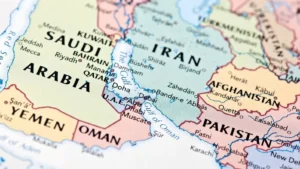
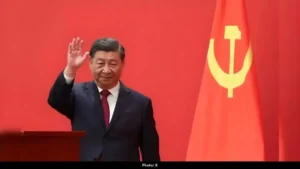
Washington is unlikely to persuade Beijing to yield to its demand of stopping Iranian oil purchases, an economic lifeline for Tehran the US desperately seeks to sever, analysts say. “I don’t believe China will give in to any US demands to stop buying Iranian oil,” Robin Mills, chief executive of Qamar Energy, said. Near-term outcomes from the Trump-Xi summit are likely limited to de-escalation signals and support for diplomacy, rather than dramatic public agreements.
Although China has had the largest volume of trade of any country disrupted by the blockade of the Strait of Hormuz, it has also built the strongest buffers against the energy shock by stockpiling reserves and diversifying imports. At the same time, China’s electrification moderates its oil and LNG consumption.
The gap between what Trump needs China to do and what China will agree to is real. But the gap between a complete Chinese oil purchase halt and a useful diplomatic outcome is large enough to contain several workable options.
What Trump Can Realistically Get
Option One: A Shadow Fleet Slowdown. China doesn’t need to stop buying Iranian oil outright. A commitment to reduce shadow fleet purchases by 20-30% over 30 days — framed as market diversification rather than sanctions compliance — would meaningfully tighten the economic pressure on Iran without requiring Beijing to formally acknowledge US sanctions authority over Chinese companies.
Option Two: A Direct Diplomatic Pressure Commitment. China agreeing to deliver a specific message to Tehran — that continued Hormuz closure is damaging China’s economy and that Beijing wants Hormuz open — carries weight that no other external actor’s message can replicate. Xi has told Araghchi publicly that a comprehensive ceasefire is urgently needed. Agreeing to deliver that message more forcefully and privately, with a specific Iranian compliance expectation, is achievable.
Option Three: A Joint Framework Statement. The two leaders issuing a joint statement on Hormuz — even a bland one acknowledging the importance of freedom of navigation and the need for a diplomatic resolution — provides Trump with something to show domestically as evidence that the Beijing summit produced results on Iran.
In the past, there has been very diplomatic messaging out of China saying that the strait is important. However, there hasn’t been “really any pressure on the Iranians to open it. But if it’s an exchange, that’s maybe the way to go,” said Bakr.
“If it’s an exchange” — that phrase identifies the mechanism that makes Chinese Iran pressure achievable: not as a unilateral concession to US demands, but as part of a broader US-China package that gives Beijing something it values. The question is whether Trump is willing to make that exchange.