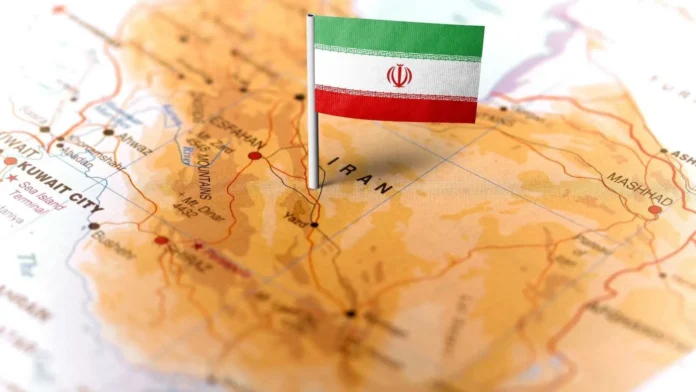

Iran and its allies in the Axis of Resistance have threatened to close the Bab al-Mandab strait — a critical Red Sea chokepoint connecting to the Suez Canal — in addition to further restricting the Strait of Hormuz. If both threats are executed simultaneously, the disruption to global maritime trade would be without modern precedent.
For three months, the world’s attention has been focused on a narrow strip of water between Iran and Oman. The Strait of Hormuz — through which 20% of the world’s oil passes — has been effectively closed since February 28, and the disruption it has caused to global energy markets and supply chains has been the defining economic story of the year.
On Monday, Iran made a threat that could double the scale of that disruption.
“Furthermore, Iran and the Axis of Resistance have resolved to pursue the complete closure of the Strait of Hormuz and activate other fronts, including the Bab al-Mandab Strait, as part of efforts to punish Israel and its supporters,” Tasnim said.
Iran and its allies are considering the “activation of other fronts,” including the Bab al-Mandab strait, in response to Israel’s attacks on Lebanon, Iranian media reported Monday. The closure of the strategic waterway could significantly disrupt global trade and further roil oil markets. Oil prices rose sharply after the news. Bab al-Mandab is located at the southern end of the Red Sea and is a critical gateway to the Suez Canal, linking Europe and Asia through one of the world’s busiest shipping routes.
What Is the Bab al-Mandab?
The Bab al-Mandab — Arabic for “Gate of Tears” or “Gate of Lamentation” — is a strait approximately 30 kilometres wide at its narrowest point, separating Yemen on the Arabian Peninsula’s southwest coast from Djibouti and Eritrea on the African coast. It connects the Red Sea to the Gulf of Aden, which opens into the broader Indian Ocean.
The strait’s strategic importance derives entirely from its geographic position: it is the gateway that ships must pass through to access the Red Sea from the south, and therefore the essential prerequisite for any vessel seeking to use the Suez Canal — the waterway that connects the Red Sea to the Mediterranean and provides the shortest sea route between Asia and Europe.
In normal times, the Bab al-Mandab handles approximately:
- 17,000 to 20,000 vessels per year — roughly 50 to 55 ships per day
- Approximately 10 to 15% of global trade by volume
- A significant portion of Europe’s oil imports from the Gulf
- The majority of container shipping between Asia and Europe
The alternative to the Bab al-Mandab route — for any vessel that cannot use it — is sailing around the southern tip of Africa via the Cape of Good Hope. That detour adds approximately 10 to 14 days to a typical Asia-to-Europe voyage, dramatically increasing fuel costs, transit times, and the overall cost of trade.
The Houthi Precedent: Already Under Attack
The Bab al-Mandab is not a new flashpoint. Iran’s Houthi allies in Yemen have been conducting drone and missile attacks on commercial shipping in the Red Sea since November 2023, in what the Houthis described as solidarity operations with Gaza.
Those attacks forced dozens of major shipping lines to reroute vessels around the Cape of Good Hope as early as December 2023, adding billions of dollars to global shipping costs and contributing to inflation in European markets throughout 2024 and 2025. The US and UK conducted counter-strikes against Houthi targets in Yemen in response, but did not fully suppress the group’s ability to threaten shipping.
What Iran is now threatening is something qualitatively different from the Houthi harassment campaign of 2023-2025. The Houthi attacks were asymmetric — drones and missiles launched against individual vessels. An Iranian-coordinated full closure of the Bab al-Mandab would involve Iranian naval assets and the full weight of what Tehran calls the Axis of Resistance — Houthis in Yemen, Hezbollah in Lebanon, militias in Iraq — operating in a coordinated campaign across multiple chokepoints simultaneously.
The Dual Closure Scenario: An Unprecedented Threat
The global economy has never faced the simultaneous closure of both the Strait of Hormuz and the Bab al-Mandab. Understanding what that would mean requires mapping how global trade and energy flows actually move.
The Strait of Hormuz is the primary exit point for oil produced in the Persian Gulf — Saudi Arabia, the UAE (before its OPEC exit), Kuwait, Iraq, and Iran itself. A closed Hormuz means Gulf oil cannot move east to Asia or west to Europe by sea.
The Bab al-Mandab is the primary gateway for everything that moves through the Red Sea and Suez Canal route — not only oil but container shipping, liquefied natural gas, dry bulk cargo, and vehicle shipments. A closed Bab al-Mandab means that the most efficient sea route between Asia and Europe is severed.
If both close simultaneously:
Oil: Gulf oil that cannot exit through Hormuz cannot be rerouted through the Red Sea to the Suez Canal either, because the Bab al-Mandab blocks that alternative. The only remaining maritime route is around Africa — adding weeks to transit and dramatically reducing the volume of oil that can physically reach global markets within any given timeframe.
Container shipping: Asian goods destined for European markets, and European goods destined for Asian markets, would all face the Cape of Good Hope rerouting — adding cost and time to the supply chains that underpin global consumer economies.
LNG: Liquefied natural gas shipments from Qatar — the world’s largest LNG exporter — would be trapped by a Hormuz closure and unable to use the Bab al-Mandab alternative either.
Food security: The Red Sea route handles significant volumes of grain and food commodity shipments to Middle Eastern and East African countries. A closure would hit food security in some of the world’s most vulnerable populations.
Oil Market Reaction
Oil prices leapt more than 7% higher following Tasnim’s report.
The immediate seven-percent surge in oil prices following Iran’s announcement reflects market understanding of the Bab al-Mandab threat’s severity. Oil markets had spent weeks partially pricing in a potential ceasefire deal that would reopen Hormuz — prices had come down from their peaks as diplomatic progress was reported. Monday’s news reversed that optimism sharply.
Oil prices rose following the reports, with Brent crude approaching $97 per barrel as traders reassessed the likelihood of a near-term diplomatic breakthrough.
If the dual closure threat is executed, the models used by energy economists to forecast price impact suggest Brent crude could exceed $120 per barrel — potentially significantly higher if the closure is sustained. That would translate into US gas prices well above $5 per gallon, a further acceleration of global inflation, and severe economic pressure on energy-importing developing economies.
How Realistic Is the Bab al-Mandab Threat?
Iran’s threat to activate the Bab al-Mandab must be assessed against both capability and intent.
On capability: Iran does not directly control the Bab al-Mandab as it controls the Strait of Hormuz. Its leverage over the Bab al-Mandab operates through the Houthis in Yemen — a relationship that is real but indirect. The Houthis have demonstrated the capability to disrupt shipping in the Red Sea; they have not demonstrated the capability to fully close the strait to all commercial traffic. A full closure would require a level of coordination and capability beyond what the Houthi campaign has achieved so far.
On intent: The Tasnim announcement represents a statement of intent that carries weight precisely because it comes from an IRGC-affiliated outlet. Iran has used Tasnim to send credible signals before. The announcement should not be dismissed as rhetoric.
The most likely scenario is not an immediate full closure of the Bab al-Mandab but a significant escalation of Houthi attacks on shipping in the Red Sea — enough to further deter commercial traffic and demonstrate that Iran’s threat has teeth, while stopping short of the full closure that would provoke the most severe US and international military response.
What Happens Next
The Bab al-Mandab threat will force the United States into a difficult calculation: how much military pressure to apply against Houthi forces in Yemen to protect Red Sea shipping, while simultaneously trying to preserve the ceasefire framework with Iran and avoid a full regional war across multiple fronts.
For global shipping companies, the announcement is a signal that the Red Sea route — which some had begun cautiously using as Hormuz rerouting made the Cape of Good Hope alternative more expensive — is now less safe, not more. Insurance premiums for Red Sea transits will rise. Some operators who had returned to the Red Sea route will withdraw again.
The world’s most critical trade routes were under pressure before Monday. After Monday’s threats, they are under existential pressure from a direction that adds a new dimension of complexity to an already-complex crisis.
The Gate of Tears has earned its name again.
LoudFact.com is an independent global news and explainer platform. This report is based on reporting from Euronews, CNN, CNBC, Quiver Quantitative, India.com, and the Washington Times as of June 1-2, 2026.