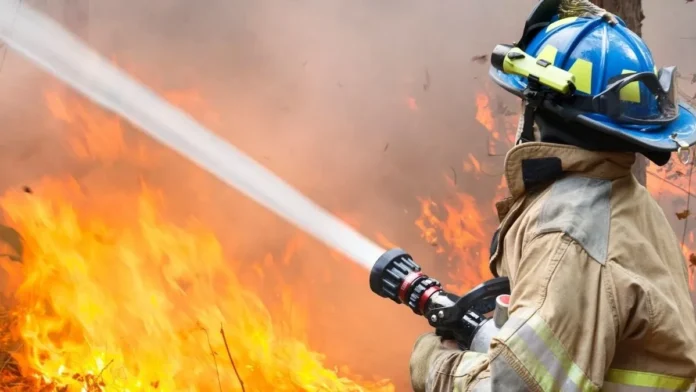

Thick smoke from hundreds of wildfires burning across Canada continued spreading into the United States this week, bringing dangerous air quality to more than 100 million Americans across the Midwest and Northeast, with forecasters warning the haze is likely to persist into August.
What Happened
The Canadian Wildland Fire Information System reported approximately 900 active wildfires burning across the country as of late July, with nearly 3,950 fires having burned more than 3.3 million hectares so far this year, a scale of activity officials describe as Canada’s second-worst wildfire season on record. Western Ontario has emerged as one of the largest sources of smoke drifting into the United States in recent weeks.
Air quality alerts have been issued across states including Minnesota, Wisconsin, Michigan, Illinois, and Indiana, with pollution levels in cities including Chicago, Detroit, and Toronto reaching what officials classified as hazardous. According to AccuWeather forecasts, prevailing weather patterns are expected to continue funneling smoke from active Ontario wildfires into the US Midwest and Northeast, with periodic episodes of haze and unhealthy air likely to persist into August.
Health officials across affected states have urged residents to limit outdoor activity during peak pollution hours, with particular concern for children, older adults, pregnant women, and people with asthma, heart disease, or other respiratory conditions, who face the highest risk from prolonged smoke exposure.
Why It Matters
The recurring nature of large-scale Canadian wildfire smoke events, now a consistent feature of recent US summers, reflects both an intensifying Canadian fire season and the way that smoke, unlike many other forms of pollution, can travel enormous distances and affect population centers far removed from the fires themselves. This year’s smoke events have periodically reached major metropolitan areas across the Great Lakes region and into the Northeast.
The long-term health toll of repeated wildfire smoke exposure is significant. A 2026 study published in the journal Science Advances estimated that exposure to wildfire-smoke fine particulate matter, known as PM2.5, contributed to approximately 24,100 deaths annually across the United States between 2006 and 2020, underscoring that wildfire smoke represents a substantial and likely underappreciated public health burden even in years without a single catastrophic fire event.
According to the American Lung Association’s most recent State of the Air report, nearly half of Americans already live in counties with failing air-quality grades due to fine-particle or ozone pollution, meaning that periodic wildfire smoke events compound an existing baseline of poor air quality for a large share of the US population.
Context and Background
This year’s wildfire activity follows a broader pattern of increasingly severe and lengthy Canadian fire seasons, though officials note that 2026’s activity remains below the extreme levels seen during Canada’s record-breaking 2023 season, when smoke reached as far as northern Europe. July and August typically represent peak fire season in North America, with the season often extending into September.
Climate researchers link the underlying fire risk directly to rising temperatures, noting that warmer air increases atmospheric “thirst,” drawing more moisture from vegetation and creating drier conditions more conducive to large, fast-spreading fires. According to Climate Central’s analysis, the extreme heat that helped fuel this year’s fires would have been highly unlikely to occur without the influence of human-caused climate change.
Smoke conditions in the US have also been affected by fires burning within the country’s own borders, with more than 3.6 million acres burned domestically this year, mostly across the western United States, compounding the impact of smoke arriving from Canada during periods when domestic and cross-border smoke sources overlap.
Expert Analysis
Atmospheric scientists tracking this summer’s smoke events note that a shift in weather patterns can cause smoke that previously remained higher in the atmosphere to sink toward ground level, sharply worsening air quality even without any increase in the fires themselves, a dynamic that has contributed to some of the more severe recent smoke episodes across the Great Lakes and Northeast.
Public health researchers emphasize that the health risks associated with wildfire smoke extend well beyond acute respiratory symptoms like coughing or eye irritation, encompassing longer-term cardiovascular strain and increased risk of heart attack or stroke among sensitive populations, even during smoke events that may not register as extreme to less vulnerable individuals.
Climate scientists describe the recurrence of major Canadian wildfire smoke events as consistent with broader projections for how climate change is expected to affect fire-prone northern forest regions, cautioning that shorter-term fluctuations between more and less severe fire seasons should not be mistaken for a reversal of the underlying long-term trend toward more frequent, extreme fire activity.
What Happens Next
Forecasters expect continued episodes of smoke-driven air quality deterioration across the US Midwest and Northeast through at least early August, contingent on Canadian fire activity and prevailing wind patterns. Some regions, including parts of the southwestern United States, may see reduced fire risk in the coming weeks as seasonal monsoon rains arrive, though this is not expected to significantly affect the Canadian fires driving the current cross-border smoke events.
Longer term, public health officials are likely to continue emphasizing the importance of monitoring local air quality indices and taking protective measures during smoke events, particularly as research continues to clarify the scale of cumulative health harm associated with recurring wildfire smoke exposure across North America.