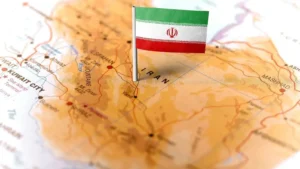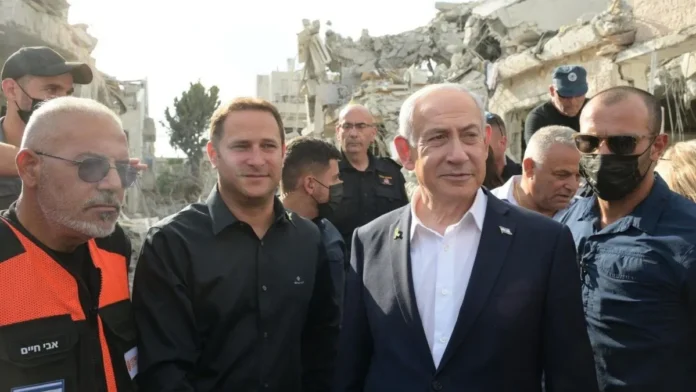

Israeli forces took control of Beaufort Castle — a Crusader-era hilltop fortress and one of the most strategically significant positions in southern Lebanon — on June 1, marking the deepest Israeli military advance into Lebanese territory since Israel’s 2000 withdrawal. The seizure, combined with Israeli evacuation orders for Beirut’s Dahiyeh suburb, triggered Iran’s suspension of all US ceasefire negotiations.
At 717 metres above sea level on a rocky promontory overlooking the Litani River valley and the hills of northern Israel, Beaufort Castle — known in Arabic as Qal’at al-Shaqif, “castle of the high rock” — has been fought over by armies for nearly a thousand years. Crusaders built the fortress in the twelfth century. Palestinians and then the PLO used it as a base. Israel seized it in 1982 during its first Lebanon invasion and held it for eighteen years before withdrawing in 2000. Hezbollah took control after the withdrawal and has controlled it since.
On Monday, June 1, 2026, the Israeli Defence Forces took it back.
Israel reportedly made its deepest incursion inside Lebanon in over two decades, seizing Beaufort Castle in Southern Lebanon. Israel planned to continue strikes in Beirut on Monday after ordering the evacuation of the Dahiyeh suburb.
The seizure of Beaufort Castle is not merely tactical. It is a statement about the nature and ambitions of Israel’s current military campaign in Lebanon — and it produced consequences that reverberated immediately through the US-Iran diplomatic track.
Why Beaufort Castle Matters Strategically
The castle’s strategic value is defined by its elevation. At 717 metres, it commands unobstructed sightlines across an enormous area: the entire length of the Litani River valley, the agricultural hinterland of southern Lebanon, the Palestinian refugee camps and towns of the south, and — on a clear day — significant portions of northern Israel’s Galilee hills.
For Hezbollah, control of Beaufort had served multiple purposes throughout the years since 2000: a forward observation post, a symbol of resistance to Israeli occupation, a position from which the Litani River region — the heartland of Hezbollah’s territory in southern Lebanon — could be monitored. It was also a position of political meaning: Hezbollah’s control of the site was a constant reminder of Israel’s 2000 withdrawal.
For Israel, the castle’s location directly above supply routes running through the Litani valley made it a priority target in any comprehensive campaign to deny Hezbollah freedom of movement in the south. Controlling the high ground above the valley limits Hezbollah’s ability to move weapons, fighters, and equipment without detection.
The seizure of Beaufort represents Israel’s assertion of control over one of the most dominant terrain features in southern Lebanon. It is consistent with a military campaign that, over the past weeks, has been steadily advancing into territory that Hezbollah has held for a generation.
The Dahiyeh Evacuation Order
The seizure of Beaufort Castle was accompanied by a second development of equal or greater significance: Israel’s order for the evacuation of Dahiyeh — the densely populated southern suburb of Beirut that functions as Hezbollah’s political, social, and institutional headquarters.
Dahiyeh — whose name simply means “the suburb” in Arabic — is home to hundreds of thousands of people. It contains the headquarters of Hezbollah’s various political and social institutions, the offices of Al-Manar television, and the residential areas of many of the organisation’s fighters, officials, and their families. It was heavily targeted in the 2006 Lebanon war, when Israel carried out extensive bombing of the area.
An evacuation order for Dahiyeh signals Israeli intent to conduct significant strikes on the suburb — strikes that would go beyond the targeted operations in southern Lebanon and mark a major escalation of the campaign into Lebanon’s capital itself. The political and humanitarian implications of large-scale Beirut strikes are enormous.
How This Broke the Diplomatic Track
The chain of causation between Monday’s Israeli military actions in Lebanon and Iran’s suspension of US ceasefire talks is direct and explicit.
Iran’s position — stated consistently since the April 8 ceasefire was agreed — is that Lebanon is an integral part of the ceasefire framework. The ceasefire, in Iran’s reading, was not merely a bilateral US-Iran military pause but a regional arrangement that required Israel to stop its operations in Lebanon as well. The United States and Israel have disputed this characterisation, treating Lebanon as a separate front.
“Considering that Lebanon was one of the preconditions for the ceasefire and that this ceasefire has now been violated on all fronts, including Lebanon, the Iranian negotiating team is suspending dialogues and exchange of texts through mediators,” Tasnim reported.
Iran’s Islamic Revolutionary Guard Corps-affiliated news agency Tasnim said: “Its violation on one front is a violation of the ceasefire on all fronts. The US and Israel are responsible for the consequences of any violation.”
The seizure of Beaufort Castle — the deepest Israeli advance in Lebanon in 25 years — followed by evacuation orders for Dahiyeh, was the action that crossed Iran’s threshold for suspending talks. Whether that was deliberate on Israel’s part — designed to prevent a US-Iran deal that Israel believes is insufficiently protective of Israeli interests — or simply the result of independent Israeli operational decisions is a question that analysts are examining closely.
Israel’s Stated Rationale
Israel’s official position is that its operations in Lebanon are directed against Hezbollah’s military infrastructure and are not subject to the US-Iran ceasefire framework. The IDF has characterised the Beaufort seizure as a military necessity — taking a position that provided Hezbollah with a significant observation and command advantage over southern Lebanon.
The evacuation order for Dahiyeh is framed by the Israeli military as a humanitarian measure to warn civilians before planned strikes on Hezbollah targets in the area. Israel has consistently used such pre-strike warnings as both a humanitarian and a legal measure, arguing that warning civilians distinguishes its operations from unlawful attacks on civilian populations.
The practical reality of Dahiyeh is, however, that Hezbollah’s infrastructure is deeply embedded in a densely civilian environment. Strikes on Hezbollah targets in Dahiyeh will inevitably affect the civilian population, regardless of evacuation warnings — a fact that has made Israeli operations in the area consistently controversial internationally.
The Broader Lebanon Context
Lebanon’s civil war is not happening in isolation from the broader US-Iran conflict. Hezbollah, which receives weapons, funding, and strategic guidance from Iran, is the most powerful non-state military actor in the Middle East. Iran’s investment in Hezbollah — accumulated over four decades — represents a form of strategic depth that Iran is unwilling to sacrifice in any peace agreement with the United States.
For Israel, allowing Hezbollah to rebuild its military capacity in southern Lebanon while Iran pursues a ceasefire deal with the US represents an unacceptable strategic risk. The current Israeli campaign is designed to degrade Hezbollah’s capabilities while the military window created by the US-Iran conflict remains open.
That window — and the tension between Israeli military objectives and US diplomatic objectives — is precisely what has produced Monday’s crisis. The US needs Israeli restraint in Lebanon to preserve the diplomatic track with Iran. Israel has military objectives in Lebanon that it is pursuing regardless.
The seizure of Beaufort Castle, the evacuation of Dahiyeh, and Iran’s suspension of talks are the visible consequences of that tension reaching its breaking point.
What Happens Next
Israel’s evacuation order for Dahiyeh suggests that strikes on Beirut’s southern suburbs are imminent or already underway as of Tuesday morning. The diplomatic question is whether the United States will press Israel to pause its Beirut operations as a condition of getting Iran back to the negotiating table — and whether Israel would accept such pressure.
The military question is whether Hezbollah’s response to the Beaufort seizure and Dahiyeh strikes will escalate — with rocket fire into northern Israel and potentially drone or missile attacks on further targets — or whether the organisation, significantly degraded since the 2024 conflict, chooses to conserve resources and wait.
And the diplomatic question — the one on which the global economy’s recovery depends — is whether Monday’s events represent a temporary breakdown in talks that can be repaired, or a structural rupture that has ended the prospect of a ceasefire deal in its current form.
LoudFact.com is an independent global news and explainer platform. This report is based on reporting from The Gateway Pundit, Euronews, CNN, CNBC, and the Washington Times as of June 1-2, 2026.