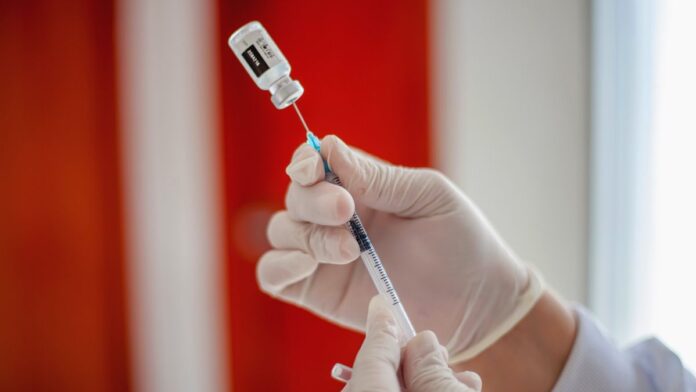

A personalised mRNA cancer vaccine combined with the immunotherapy drug Keytruda has shown dramatically effective results in preventing melanoma from recurring after surgery, according to new research presented at the American Society of Clinical Oncology annual conference on June 1 and published in the Journal of Clinical Oncology.
Connie Franciosi was eighty years old when she noticed a suspicious spot on her skin. Diagnosed with melanoma in 2020 — a late diagnosis, she was told — she underwent surgery and was informed she faced a high risk of recurrence. She was offered a place in a clinical trial testing a new vaccine. Today, she is cancer-free.
A study finds that an mRNA vaccine is highly effective at preventing recurrence of this dangerous skin cancer, when used in combination with Keytruda, an immunotherapy drug. The results of the study are being presented at the American Society of Clinical Oncology conference today and are published in the Journal of Clinical Oncology.
The results being presented at ASCO 2026 represent the most significant advance in melanoma treatment in years — and potentially the most meaningful demonstration of the real-world medical potential of mRNA technology since the COVID-19 vaccines that the technology first delivered at scale.
What the Vaccine Does and How It Works
The vaccine being studied is called intismeran. It is personalised — custom-made for each individual patient based on a genomic analysis of their specific tumour. This is the critical distinction between intismeran and conventional vaccines, which are identical for every patient who receives them.
Melanoma, like all cancers, is driven by genetic mutations. Those mutations vary from patient to patient: no two melanomas have exactly the same mutational profile. Intismeran works by identifying the specific mutations present in a particular patient’s tumour and encoding them into mRNA sequences — genetic instructions that, when injected, teach the patient’s immune system to recognise the proteins produced by those mutated cells.
The mechanism is the same as that used by the COVID-19 mRNA vaccines: the mRNA instructs the patient’s own cells to produce a protein, which the immune system learns to recognise as foreign and to attack. In the case of COVID-19 vaccines, the protein was the virus’s spike protein. In the case of intismeran, the proteins are those produced by the tumour’s specific mutations.
Researchers are also studying whether mRNA vaccines can be used to prevent the recurrence of other cancers, including lung cancer. “The results are exciting,” says Moderna’s chief development officer, Dr David Berman. The company developed the vaccine, which is called intismeran, and is collaborating with Merck, the maker of pembrolizumab, which is marketed under the trade name Keytruda. A Phase 3 trial is now underway, which includes nearly 1,000 patients. Once results are analysed in the coming months, the goal is to seek FDA approval, Berman says.
Why Melanoma Recurrence Is Such a Serious Problem
Melanoma is the most dangerous form of skin cancer. While it accounts for only about 1% of skin cancer cases, it is responsible for the majority of skin cancer deaths.
There are approximately 112,000 melanomas diagnosed in the US each year and about 8,500 deaths. The lethality of melanoma is largely a function of its ability to spread — to metastasise — to other organs. When melanoma spreads to the lungs, liver, or brain, it becomes dramatically harder to treat.
Mehnert says that predicting when melanoma will recur is difficult. “Sometimes recurrence is easily treated with surgery or radiation, but sometimes it happens in the lungs, the liver or the brain,” and then it can be challenging to treat, she says. That’s why a preventive approach makes sense. “We’re trying to harness the power of the immune system early in a patient’s disease course to optimise their outcomes,” she says.
The preventive logic is important. By vaccinating high-risk patients shortly after surgery — when the cancer has been removed but the risk of remaining cancer cells causing recurrence is high — the immune system can be primed to eliminate any residual cancer cells before they establish new tumours. This approach is, in effect, mopping up after surgery rather than waiting for a recurrence to become visible and then treating it.
Why Combining with Keytruda Matters
Intismeran does not work alone in these studies. It is combined with Keytruda — the brand name for pembrolizumab, a drug made by Merck that is one of the most important cancer treatments of the past decade.
Keytruda is a checkpoint inhibitor — an immunotherapy drug that works by releasing a brake on the immune system. Cancer cells have developed ways to hide from immune surveillance; checkpoint inhibitors like Keytruda block the signals that cancer cells use to tell the immune system to stand down. When those brakes are released, the immune system becomes more capable of attacking cancer cells.
The combination of intismeran and Keytruda is therefore a double approach: the vaccine teaches the immune system what to look for (the specific mutational proteins of the patient’s tumour), and Keytruda removes the brakes that would otherwise prevent the immune system from acting on what it has learned. Together, they produce an immune response significantly stronger than either would achieve alone.
The Clinical Response: “A Landmark Advance”
Dr Sarah Arron, a dermatologist and skin cancer surgeon in the San Francisco Bay Area who was not involved in the research, says the results are significant and demonstrate the potential of mRNA vaccines. “I think this is a landmark advance in how we treat these very advanced, high-risk melanomas,” she says.
Berman has been working on melanoma for many years, before joining Moderna, so he says this feels like a momentous step forward. “The degree of benefit was incredible,” Berman says, pointing to the significant reduction in risk of recurrence.
The language from researchers and clinicians — “landmark,” “incredible,” “momentous” — is unusually strong for the typically cautious world of clinical research. It reflects both the genuine magnitude of the results and the broader significance of demonstrating that the mRNA platform can produce effective personalised treatments for cancer, not just vaccines against infectious disease.
The Broader mRNA Cancer Horizon
The results being presented at ASCO are not the end of the story for mRNA cancer vaccines — they are closer to the beginning.
Researchers are also studying whether mRNA vaccines can be used to prevent the recurrence of other cancers, including lung cancer.
The principle that makes intismeran work for melanoma — identifying tumour-specific mutations and encoding them into a personalised mRNA vaccine — is applicable, in theory, to any cancer type that has a sufficient mutational burden for the immune system to target. Melanoma has a particularly high mutational burden, which is part of why it has been a promising early target. Lung cancer, which also tends to have high mutational burden — particularly in smokers — is a natural next candidate.
The longer-term vision is of a cancer treatment paradigm in which sequencing a patient’s tumour takes days, producing a personalised mRNA vaccine takes weeks, and treatment begins before any residual cancer cells have had time to establish. That vision is not yet clinical reality — it depends on making the personalised vaccine manufacturing process faster, cheaper, and more scalable than it currently is. But the results being published today represent the clearest demonstration yet that the underlying biology works.
What Happens Next
A Phase 3 trial is now underway, which includes nearly 1,000 patients. Once results are analysed in the coming months, the goal is to seek FDA approval, Berman says.
The Phase 3 trial — which will provide the definitive evidence base for FDA approval — is the critical next step. Phase 3 trials are the largest and most rigorous stage of clinical testing, designed to confirm that results seen in smaller earlier-phase trials hold up across a larger, more diverse patient population. With nearly 1,000 patients enrolled, the trial is substantial.
If Phase 3 confirms the results, FDA approval could be sought within months of data analysis. Approval would mean that intismeran could become part of standard treatment for high-risk melanoma patients — offering a preventive option to the approximately 112,000 Americans diagnosed with melanoma each year, particularly those identified as high-risk for recurrence.
For Connie Franciosi, 80, the clinical trial’s answer is already in: “I am cancer-free.” For the science, the answer is still being confirmed — but the direction it is pointing is one of genuine medical hope.
LoudFact.com is an independent global news and explainer platform. This report is based on reporting from NPR, KPBS, WYPR, and WVXU, drawing on research presented at the 2026 ASCO annual conference and published in the Journal of Clinical Oncology on June 1, 2026.