
President Trump intervened directly in the Lebanon conflict on Monday, cancelling planned Israeli strikes on Beirut and announcing that Israel and Hezbollah had agreed to stop fighting. Hezbollah confirmed the agreement. Israel’s defence minister denied it. Israeli strikes continued in southern Lebanon — and the broader Iran diplomatic track remains in a fragile state of partial repair.
The most dramatic diplomatic intervention of the entire US-Iran war period arrived not through a formal treaty or a ceasefire framework but through a Truth Social post and a tense phone call between two heads of government who do not always agree.
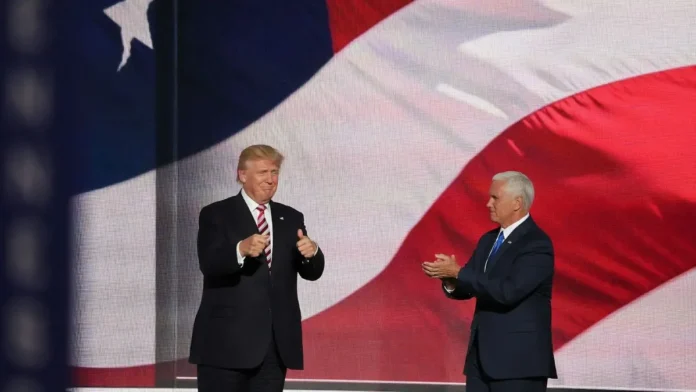
President Donald Trump secured a renewed ceasefire between Israel and Hezbollah, going on to insist that talks with Iran remain active. Reports suggest he had a tense phone call with Benjamin Netanyahu over Israel’s military action in Lebanon.
Trump in a social media post said he had a “productive” call with Netanyahu and claimed Israel and Hezbollah would stop attacking each other. He said Israeli troops would not move on Beirut.
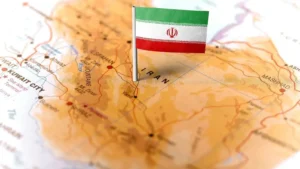
The announcement came at the most acute point in the diplomatic crisis of the past week. Iran had suspended all talks with the United States through mediators on Monday morning, citing Israeli operations in Lebanon — specifically the seizure of Beaufort Castle and the evacuation orders for Dahiyeh — as violations of the ceasefire framework. Oil prices had jumped 7% on Iran’s announcement. The entire 60-day ceasefire extension and nuclear talks framework was in danger of collapse.
What Trump Did — and What It Achieved
The sequence of events on Monday afternoon was rapid and consequential.
Qatar had been working with the United States over the weekend and into Monday to push for de-escalation in southern Lebanon and preserve the nominal ceasefire. Qatar worked with the United States over the weekend and again on Monday to push for de-escalation in southern Lebanon and help preserve a nominal ceasefire, according to a regional diplomat. Following President Donald Trump’s call with Israeli Prime Minister Benjamin Netanyahu on Monday afternoon, the United States informed Qatar that it had instructed Israel to cancel the planned strikes.
The planned strikes — on Beirut’s Dahiyeh suburb, which Israel had ordered evacuated — would have been the most significant Israeli operation in Lebanon’s capital since the intensive campaign of 2024. Their cancellation removed the immediate flashpoint that had triggered Iran’s talk suspension.
After Trump announced he spoke with Hezbollah leadership, the Iran-backed group agreed to a US proposal calling for a ceasefire with Israel, according to a statement from the Lebanese Embassy in Washington.
Hezbollah’s agreement — communicated through the Lebanese government’s Washington embassy — was a significant diplomatic achievement. It demonstrated that Trump’s engagement with the group, unusual and controversial as it was, produced a concrete response.
What Israel Said — and Did
After Trump’s announcement, Netanyahu said the Israeli military would keep striking southern Lebanon “as planned.” Defence Minister Israel Katz denied there was a ceasefire in Lebanon. But the two Israeli leaders’ statements tacitly acknowledged Trump’s ceasefire and said that Israel would not immediately attack Beirut.
The Israeli response is worth parsing carefully. Netanyahu and Katz did not confirm a ceasefire. But they also said Israel would not attack Beirut. In practice, they accepted Trump’s single most important condition — no Beirut strikes — while preserving their stated position that Israeli operations in southern Lebanon would continue.
Israel and Hezbollah exchanged fire on Tuesday, just hours after US President Donald Trump said the two sides had agreed to halt hostilities.
The image of a boy looking through a damaged room of the Jabal Amel Hospital in Tyre, after an Israeli airstrike hit a nearby building on June 1, became one of the defining images of the day — a physical reminder that announcements of ceasefire and the reality of ceasefire are different things. The hospital, serving Lebanon’s second-largest southern city, was not struck directly, but a nearby building was — and the damage to surrounding structures was visible and documented.
Why Trump Intervened When He Did
The timing of Trump’s intervention was not accidental. The Iran ceasefire diplomatic track — three months of war, seven weeks of ceasefire management, weeks of MOU negotiation — was on the verge of collapse because of the Lebanon dimension.
Iran’s position throughout the entire ceasefire period has been consistent: Lebanon must be included. The US and Israel’s position has been equally consistent: Lebanon is a separate front. That gap had been manageable as long as Israeli operations in Lebanon remained below a threshold that would trigger Iranian retaliation.
The seizure of Beaufort Castle and the Dahiyeh evacuation order crossed that threshold. Iran suspended talks. Oil surged. The 60-day deal was in danger.
The hostilities also threaten to undermine the emerging deal to extend the ceasefire in the Iran war. Trump said yesterday that indirect talks with Iran were continuing at a “rapid pace.” Tehran wants any agreement to include Lebanon.
Trump’s intervention was, at its core, an attempt to pull the Lebanon front back below Iran’s threshold for talk suspension — to give Tehran enough to point to as evidence that the ceasefire framework had some purchase on Israeli behaviour, while not actually constraining Israeli operations in southern Lebanon entirely.
Whether Iran reads Monday’s events as sufficient is the central open question.
The Washington Talks: Tuesday and Wednesday
Israel and Lebanon are scheduled to hold talks on Tuesday and Wednesday in Washington, DC.
The scheduling of Israel-Lebanon talks in Washington — with the Biden administration’s successor now mediating the next chapter of a conflict that began under Biden — represents a significant shift in the diplomatic geography of the Lebanon conflict. Washington, which had previously been largely absent from direct Lebanon-Israel diplomacy in the early phases of the current conflict, is now the venue.
The talks are expected to address the conditions under which Israeli forces would withdraw from positions in southern Lebanon, the implementation of the November 2024 ceasefire’s provisions — which were never fully executed — and the framework for a more durable arrangement that would give both countries security guarantees.
None of those issues has an easy resolution. But the fact that talks are happening in Washington, one day after Trump personally intervened to prevent Israeli strikes on Beirut, reflects a US diplomatic engagement with the Lebanon front that has been largely absent for months.
What It Means for Iran
Iran’s response to Monday’s events has been watched carefully by every party to the broader regional negotiations. The question is simple: does Trump’s intervention in Lebanon — preventing Beirut strikes, securing a Hezbollah ceasefire agreement, scheduling Washington talks — give Iran enough of what it said it needed to resume the US-Iran diplomatic track?
The Latest on Britannica as of June 2: Iran stops talking to mediators, Iranian reports say, but Trump says talks continue. Rubio is optimistic on eventual Iran nuclear talks despite congressional skepticism.
Rubio’s optimism — expressed in back-to-back Capitol Hill hearings on June 2 — suggests the administration believes the Lebanon intervention has provided Iran with sufficient cover to resume indirect communications through mediators without appearing to back down publicly. Whether that confidence is warranted will become clear in the coming days.
What Happens Next
Tuesday’s Israel-Lebanon Washington talks are the immediate diplomatic focus. If those talks produce even a preliminary framework for managing the southern Lebanon situation, Iran has more to point to as evidence of US commitment to the ceasefire’s Lebanon dimension.
If Israel resumes large-scale operations in Lebanon — particularly in Beirut — during or after the Washington talks, Iran will characterise the diplomacy as having failed and the talk suspension as justified. The IRGC’s threat to fully close the Strait of Hormuz will re-emerge as an immediate operational consideration.
The Lebanon front, the Iran war ceasefire, and the global energy market are all connected through the same thread: whether the US can hold together a diplomatic framework that requires Israeli restraint it does not control and Iranian flexibility it cannot guarantee.
Monday showed that Trump is willing to use direct intervention when the stakes are high enough. Whether that intervention holds is the question that will define the next week of this crisis.
LoudFact.com is an independent global news and explainer platform. This report is based on reporting from Fox News, CNN, Euronews, NPR, and Britannica as of June 1-2, 2026.