
Israel simultaneously maintains military control or buffer zones in three adjacent countries — Gaza, Lebanon, and Syria — following a series of conflicts that began with the October 7, 2023 Hamas attacks and has continued through the US-Iran war period. The configuration is the most expansive Israeli territorial presence since 1973 and raises questions about governance, international law, and long-term intent that remain unanswered.
After the last few years of war, Israel controls adjacent territory in Gaza, Lebanon and Syria.
That sentence, published by NPR on June 1, 2026, requires no elaboration to register as extraordinary. Step back from the daily ceasefire updates, the missile intercepts, the diplomatic announcements and the counterclaims, and what you see is a map of the Middle East that is more dramatically altered than at any point since the immediate aftermath of the 1967 Six-Day War.
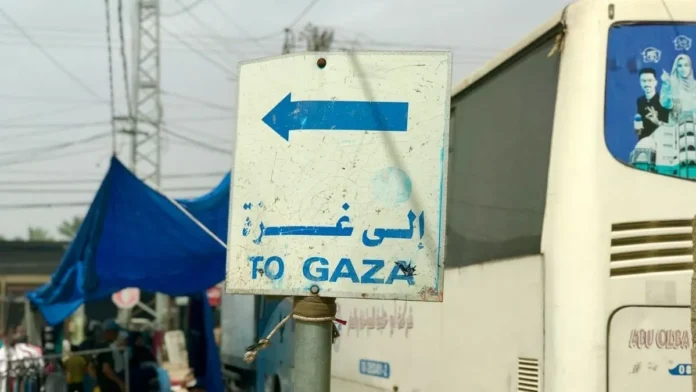
Gaza. Lebanon. Syria. Three adjacent territories, each under a different form of Israeli military control or presence, all simultaneously, all the result of wars that have unfolded over a thirty-two-month period that began on a single October morning in 2023.
How Israel Came to Be in Three Places at Once
Gaza:
The October 7, 2023 Hamas attack — which killed approximately 1,200 Israelis and took 251 hostages — triggered a military response that became the longest and most intensive Israeli military operation in decades. Israel’s stated objectives were to eliminate Hamas’s military and governing capacity and to recover the hostages.
Two and a half years later, Israel controls the “Netzarim Corridor” dividing northern and southern Gaza, maintains a buffer zone along the Gaza-Israel border, controls the “Philadelphi Corridor” along the Gaza-Egypt border, and has extensively degraded Hamas’s tunnel network, military infrastructure, and command structure. The humanitarian crisis in Gaza — with UN agencies documenting severe food insecurity, destroyed healthcare infrastructure, and massive displacement — has been the subject of intense international criticism.
Lebanon:
Israel opened a northern front in response to Hezbollah rocket fire that began on October 8, 2023 — the day after the Hamas attacks. For a year, the north was characterised by cross-border exchanges that displaced approximately 60,000 Israelis from communities near the border. In September 2024, Israel escalated dramatically, eliminating Hezbollah’s top leadership including Hassan Nasrallah, conducting an intensive air campaign, and launching a ground invasion into southern Lebanon. A November 2024 ceasefire paused the ground campaign.
Since the ceasefire, Israel has maintained positions inside Lebanese territory, has continued air strikes on what it describes as Hezbollah infrastructure, and this week seized Beaufort Castle in the deepest Israeli advance into Lebanon in over two decades. A buffer zone in southern Lebanon — running for varying distances north of the Israeli border — is under effective Israeli military control.
Syria:
Israel’s control of the Golan Heights has been a constant since 1967. The United States recognised Israeli sovereignty over the Golan in 2019. But the collapse of the Assad regime in December 2024 — accelerated by the weakening of Hezbollah and Iran’s distraction by multiple conflicts — created conditions for Israel to expand its presence into Syrian territory beyond the Golan. Israeli forces moved into the United Nations-monitored buffer zone that had separated Israeli-controlled Golan from Assad’s Syria, and established a new buffer zone extending into Syrian territory that has not been withdrawn.
The Historical Context: 1973 and What Followed
The last time Israel’s territorial footprint approached current dimensions was in the immediate aftermath of the 1967 war — when Israel controlled the Sinai Peninsula, the Gaza Strip, the West Bank, East Jerusalem, and the Golan Heights.
The October 1973 Yom Kippur War briefly saw Israeli forces cross the Suez Canal into African Egypt. The 1978 Camp David Accords led to Israeli withdrawal from Sinai. The Oslo Accords of the 1990s led to the creation of the Palestinian Authority and a partial Israeli withdrawal from West Bank cities. Israel withdrew from southern Lebanon in 2000 and from Gaza in 2005.
Each of those withdrawals was preceded by negotiated agreements, international frameworks, and US mediation. The current configuration — territory held simultaneously in Gaza, Lebanon, and Syria — has no equivalent negotiated framework governing its future.
The Legal and Governance Questions
International law is clear on the obligations of an occupying power: it must administer territory in the interest of the local population, cannot permanently alter the territory’s status, and cannot transfer its own civilian population into the occupied territory. These obligations apply whether or not Israel formally declares the territories occupied.
Gaza: Israel denies it is occupying Gaza, arguing that it withdrew in 2005 and that its current military presence is a counter-terrorism operation. International legal bodies, including the International Court of Justice, have taken different views. The ICJ’s ongoing genocide case brought by South Africa has produced provisional measures that Israel has contested.
Lebanon: Israeli forces inside Lebanese territory are in violation of Lebanese sovereignty and in tension with UN Security Council Resolution 1701, which called for Israeli withdrawal to the Blue Line and Hezbollah withdrawal north of the Litani. The current military presence — including the Beaufort Castle seizure — goes significantly beyond what Resolution 1701 envisaged.
Syria: The expanded buffer zone in Syrian territory is legally contested. Syria has not consented to Israeli presence. The post-Assad transitional government in Damascus has protested Israeli expansion but lacks the capacity to enforce its objections.
Regional and International Reactions
Arab states that had been moving toward normalisation with Israel — a process accelerated by the Abraham Accords of 2020 and continued under subsequent US administrations — have found their domestic political landscapes transformed by the past thirty months of war.
Saudi Arabia’s normalisation process, which was widely expected to be completed in 2024, has been indefinitely suspended. The Egyptian government, which has longstanding peace with Israel, has been deeply alarmed by Israeli operations along the Gaza-Egypt border, fearing the displacement of Palestinians toward Egyptian territory. Jordan, which also has a peace treaty with Israel, has expressed concern about Israeli actions in the West Bank that could accelerate Palestinian displacement toward Jordan.
Turkey has downgraded diplomatic relations and has been one of the most vocal international critics of Israeli operations in Gaza and Lebanon.
What Happens to These Territories?
The most consequential unanswered question about Israel’s current territorial configuration is also the simplest: what does Israel intend to do with it, and for how long?
Israeli officials have given different answers in different contexts. Some speak of security buffer zones that will be maintained for as long as Iran-backed threats exist. Some speak of conditions — disarmament of Hezbollah, demilitarisation of the Gaza-Egypt border — that would need to be met before withdrawal. Some do not speak of withdrawal at all.
The absence of a coherent, publicly stated exit strategy — for Gaza, for Lebanon, for the Syrian buffer zone — leaves the situation as something that has the characteristics of occupation without the formal acknowledgment of occupation. That ambiguity is unsustainable indefinitely. What fills it will shape the Middle East for a generation.
LoudFact.com is an independent global news and explainer platform. This report is based on reporting from NPR, Britannica, the UN Office for the Coordination of Humanitarian Affairs, and geopolitical analysis sources as of June 1-2, 2026.