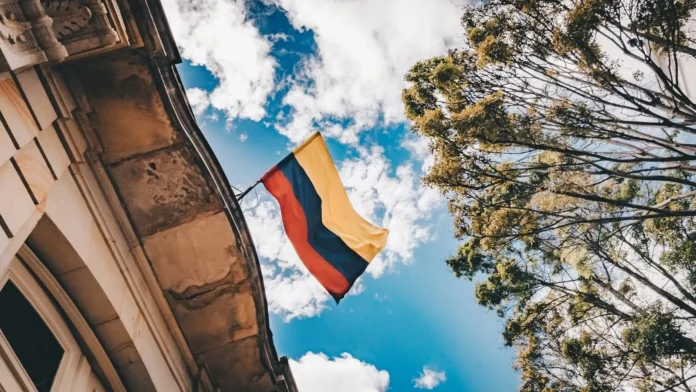

Colombia’s first-round presidential election on May 31 produced no outright winner, sending the country to a runoff vote on June 21 in one of the most significant Latin American elections of 2026 — a contest that will determine whether Colombia continues its “Total Peace” strategy or pivots sharply to a security-first approach that confronts armed groups militarily.
In Colombia’s May 31 first round, a candidate needed more than 50 percent of the vote to win outright. No candidate achieved this, sending the race to a runoff on June 21 between the two top vote-getters.
The Registrar indicated that approximately two and a half hours after the close of polls the country should have a clear trend from the preconteo, enough to determine whether any candidate has secured an outright majority or whether Colombia heads to a runoff. Both Peñagos and CNE president Cristian Quiroz indicated that by approximately 7:00 p.m., a full consolidation of first-round results should be available.
The result — a runoff between the top two candidates — was widely expected. Since January 2026, Cepeda had led in the polls but remained short of an absolute majority. A weighted average of recent polls suggests that Cepeda could narrowly lose to Valencia and tie De la Espriella in a runoff.
The Three Candidates and What They Represent
Colombia’s 2026 presidential race has been defined by a fundamental disagreement about how the country should respond to ongoing violence — a question that shapes everything from its security policy to its relationship with the United States, its approach to coca eradication, and the future of the peace process that formally ended the FARC conflict in 2016 but left dozens of successor armed groups still operating.
Iván Cepeda — Historic Pact (Left):
On the left, Cepeda offers continuity with Petro’s “Total Peace” strategy and social programs. Cepeda is a senator and human rights lawyer who made his name documenting atrocities committed by both state forces and armed groups over decades of Colombian conflict. His platform centres on extending the dialogue-based approach to armed groups that outgoing President Gustavo Petro pursued — an approach that achieved some reductions in violence with certain groups but was criticised for giving armed organisations time to rearm and expand their territorial control.
Paloma Valencia — Democratic Centre (Centre-right):
Paloma Valencia, a conservative CD senator, is a lawyer backed by former President Álvaro Uribe. Valencia has proposed a strong security plan to recapture territory from criminal groups and a counterdrug alliance with US and European officials. She has pledged to streamline government and restart private investment in oil exploration and mining.
Valencia’s candidacy represents the continuity of the political tradition associated with former president Uribe — one that favours military force against armed groups, cooperation with the United States on counter-narcotics, and a market-oriented economic agenda. She is arguably the most US-friendly of the three main candidates.
Abelardo De la Espriella — Independent (Far-right):
On the far right, De la Espriella — often compared to Argentina’s Javier Milei — favors confronting armed groups militarily before resuming any negotiations. His platform has attracted voters drawn to his anti-establishment rhetoric and promise of radical change — a constituency that has grown as frustration with both the left’s peace process and the traditional right’s management of security has deepened.
The Stakes: Peace Process or Military Confrontation
The core choice Colombia faces on June 21 is a familiar one in Latin American politics: whether to attempt to resolve deep-rooted conflicts through negotiation, social investment, and institutional reform, or to use military force to impose order before any political process begins.
Petro’s Total Peace strategy — which Cepeda would continue — attempted negotiated ceasefires with multiple armed groups simultaneously: FARC dissident factions, ELN guerrillas, and organised criminal organisations. The results were mixed. Some groups used the ceasefires to consolidate territory. Others engaged genuinely. Violence in some regions decreased; in others it increased. The policy was deeply controversial in a country that has spent sixty years trying different combinations of negotiation and force without achieving lasting peace.
The conservative position — represented most clearly by Valencia — is that negotiations without military pressure simply reinforce armed groups’ ability to operate. Her security plan calls for recapturing territory from criminal organisations before any peace talks, and for rebuilding the counter-narcotics cooperation with the United States that deteriorated under Petro.
The US Factor
US-Colombian relations have been strained under the second Trump Administration amid the Administration’s differences with President Petro. Drug policy changes, US foreign assistance cuts and tariffs, and Colombia’s decision to sign a cooperation plan with the People’s Republic of China on the Belt and Road Initiative have contributed to strained relations.
The winner of the June 21 runoff will inherit a relationship with Washington that has been under significant strain. Petro’s decision to join China’s Belt and Road Initiative, his resistance to aerial fumigation of coca crops, and his open criticism of US drug policy alienated the Trump administration. Any candidate seeking to reset that relationship will need to address those specific points of friction.
Valencia, whose platform explicitly calls for a “counterdrug alliance with US and European officials,” is positioned as the candidate most likely to restore close US-Colombia counter-narcotics cooperation. Cepeda’s continuity platform is less likely to produce that reset.
The June 21 vote will therefore have implications not only for Colombia’s domestic security but for US-Latin America relations more broadly, at a moment when Washington’s attention is overwhelmingly focused on the Middle East.
The Violence Context
Some Members of Congress have expressed concerns about political violence in Colombia since the June 2025 assassination of a presidential hopeful and threats against other candidates.
The assassination of a presidential candidate in June 2025 — a reminder of Colombia’s brutal political history — has cast a shadow over the entire 2026 campaign. Security arrangements for all three major candidates have been extensive. The June 21 runoff will take place under heightened security protocols.
Colombians head to the polls in a presidential election that will determine the conflict-ridden nation’s response to spiraling violence, either staying left and opting for dialogue or tacking right towards all-out war.
The Centrist Vote: Who Decides June 21
The centrist vote — supporters of Sergio Fajardo and Claudia López — could play a decisive role both in determining who finishes second today and in shaping coalition dynamics ahead of the June 21 runoff.
Colombia’s centrist political space — associated with the pragmatic, reform-oriented tradition of figures like Fajardo and former Bogotá mayor Claudia López — is the swing vote of the June 21 contest. These voters are uncomfortable with both Petro’s ideological left and the Uribista right’s security-first approach. Which of the two runoff candidates can make the more credible case to this centre will likely determine the next president of Colombia.
What Happens Next
Both Peñagos and CNE president Cristian Quiroz have indicated that by approximately 7:00 p.m., a full consolidation of preliminary results should be available. That figure will be based on preconteo data and will be preliminary in nature.
With first-round results confirmed and the runoff date set for June 21, the campaign now enters its most intense phase. Alliances will be negotiated. Centrist leaders will announce which candidate they are supporting. And Colombia — a country of 51 million people that has spent more of its modern history at war than at peace — will make its choice.
LoudFact.com is an independent global news and explainer platform. This report is based on reporting from AS/COA, Latin Times, Congress.gov CRS Report IN12689, and Colombia One as of June 1, 2026.