
China’s military promoted two officers to the rank of general on July 3 in what analysts described as a significant but insufficient step toward addressing a leadership vacuum at the top of the People’s Liberation Army created by an unprecedented anti-corruption purge. The shake-up, which has removed China’s most senior military officer, two Central Military Commission vice chairs and at least ten other senior officers, has left China’s highest military command body with only two of its seven seats occupied — and has raised serious questions, particularly among Taiwan analysts and US defence planners, about the operational readiness and command coherence of the world’s largest standing army.
What Happened on July 3
China’s military promoted two officers to the rank of general in what may be a precursor to a reorganisation at the top following the removal of several of its leaders in a long-running anti-corruption drive. The shake-up is believed to be part of an effort to reform the military and ensure its loyalty to China’s ruling Communist Party and its leader, Xi Jinping.
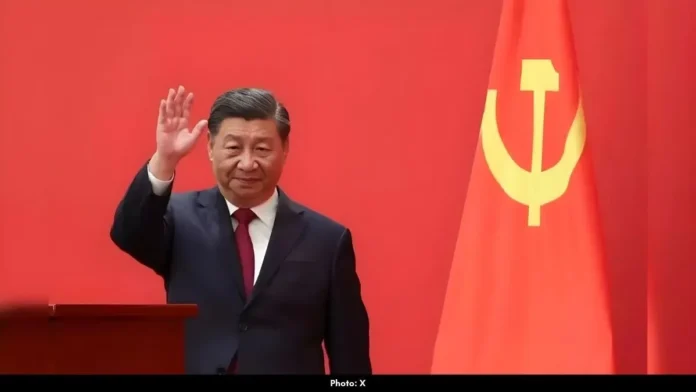
Xi, who is also head of the military, presented orders promoting Zhang Shuguang and air force commander Wang Gang to generals at a ceremony on Friday. Zhang was also named the head of the division investigating corruption at the Central Military Commission — the military’s top governing body — making him, in effect, the lead figure in continuing the very purge that created the vacancy he is now helping to manage. The promotions could put them in line to fill vacancies on the seven-member commission, which has been effectively reduced to two by the corruption investigations. Zhang in particular looks like a leading candidate, analysts said.
The commission is chaired by Xi himself. Its only other active member is Vice Chair Zhang Shengmin. Two former vice chairs, including He Weidong, the military’s most senior figure, have been removed or effectively removed.
The Purge That Created the Crisis
To understand why the promotion of two generals is significant, the scale of the purge must be understood.
Since January 2026, China’s purge of senior officials has reached into the very top of its military command structure. On January 24, the Ministry of National Defence announced that Zhang Youxia, vice chairman of the Central Military Commission, and Liu Zhenli, chief of the Joint Staff Department — the military’s operational command responsible for coordinating joint operations across China’s armed forces — had been placed under investigation for suspected serious violations of discipline and law.
On June 26, the Standing Committee of the 14th National People’s Congress revoked the delegate status of 14 officials, including Politburo member Ma Xingrui and three full PLA generals — Xu Xueqiang, Li Fengbiao and Guo Puxiao. In total, more than ten ministerial-level officials have been removed or investigated this year. Once Miao Hua was detained, according to Chinese political analysis, he quickly implicated a large number of generals, lieutenant generals and major generals who had paid bribes to him or sought his help securing promotions, including He Weidong himself — setting off a cascade of arrests among senior officers.
One general, Zhang Youxia, is alleged by unverified reports in overseas Chinese-language media to have accepted large-scale bribes of up to 1.7 billion yuan — approximately $235 million — during his military career. The scale of the alleged corruption suggests that the procurement of promotions within the PLA had become not just a personal matter but a structural one, with money systematically distorting the meritocratic processes that determine who commands China’s military.
The Loyalty-Capability Trade-Off
The strategic question that the purge raises — and that Thursday’s promotions do not resolve — is whether a military swept clean of corrupt but experienced officers is more or less capable of executing the complex joint operations that a Taiwan contingency, for example, would require.
The promotions could put them in line to fill vacancies on the seven-member commission. At the same time, the fact that only four lieutenant generals have been elevated to general in total since the purge began suggests that Xi is not in a hurry to reshuffle the leadership. As one analyst put it: “He is still watching, testing, and vetting these senior PLA lieutenant generals.”
This is precisely the trade-off that Western analysts have been examining since the purge began. Officers who have built their careers through bribery and loyalty networks rather than operational competence have been removed — which is, in principle, good for long-term military professionalism. But the removal of so many senior officers in such a short time creates operational dislocations, disrupts institutional knowledge, and leaves key command positions filled by untested officers who have not yet demonstrated the capacity to manage large-scale joint operations under pressure.
Wang Gang, the air force commander promoted on Friday, was described by one analyst as “part of a new generation of PLA Air Force elites with hard operational experience who have been delegated important roles in the Chinese military since the latest round of purges.” The emphasis on operational experience in his characterisation suggests that Xi is attempting to use the purge’s aftermath to promote officers with genuine military capability rather than merely those with political connections.
What the Timing Reveals About Xi’s Calculations
A new Central Military Commission is expected to be announced at the next Communist Party Congress in the fall of next year, when the current commission’s five-year term ends. This means Xi is managing a period of deliberate strategic ambiguity — maintaining partial opacity about who will ultimately lead the PLA through the Party Congress, while filling urgent operational vacancies with officers who have passed his loyalty and competence tests.
The timing has not gone unnoticed in Washington or Taipei. US defence planners assess that the PLA’s operational readiness for a Taiwan scenario has been affected by the purge — both in terms of the disruption to the command structure and in terms of the uncertainty about which officers would actually be in command of key joint theatre commands in a crisis. Whether that disruption is temporary or structural depends on how effectively Xi manages the reconstruction of the CMC leadership over the next 18 months.
The promotions on July 3 represent a step in that reconstruction. They are not its completion.