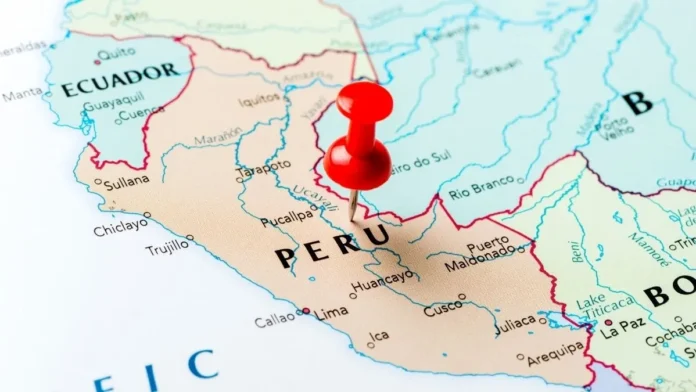

After weeks of reviewing contested ballots, fraud accusations, street protests and legal challenges, Peru’s electoral court officially declared conservative candidate Keiko Fujimori the winner of the country’s June 7 presidential runoff on Friday, July 3. She won 50.135% of the vote to leftist congressman Roberto Sanchez’s 49.865% — a margin of roughly 50,000 votes out of 18 million cast.
When she is sworn in on July 28, Peru’s independence day, Fujimori will become the country’s 10th president since 2016 — and the ninth in a decade. Her defeated rival has already vowed not to recognise the result, filed complaints with international bodies, and warned that he will rally his supporters to challenge her government through every available constitutional mechanism.
The Numbers and What They Mean
Fujimori won 50.135% of the vote in the June 7 runoff to clinch the nation’s top office in her fourth bid for the presidency, just ahead of Roberto Sanchez’s 49.865% — a difference of about 50,000 votes out of 18 million. The slim margin is a reversal from the narrow loss Fujimori suffered in 2021, when she lost by about 45,000 votes to former leftist President Pedro Castillo, who was later impeached and jailed for attempting to dissolve Congress.
The path to Fujimori’s victory was unusual. Sanchez won the most votes cast within Peru’s borders — rural areas and provincial communities that have long mistrusted the Fujimori name backed Sanchez in strong numbers. But overseas ballots — cast by the Peruvian diaspora concentrated in the United States, Europe and Japan — broke heavily for Fujimori, flipping the result.
Sanchez called for those foreign ballots to be nullified, claiming irregularities in the overseas counting process. Peru’s National Jury of Elections, in its Friday declaration, reviewed the contested ballots and found no evidence of inconsistencies, rejecting Sanchez’s appeal.
Peru’s electoral authorities confirmed the result. Electoral observers from the European Union and Peruvian authorities denied that voting irregularities had taken place.
A Deeply Divisive Dynasty
Fujimori’s victory cannot be understood without understanding the weight of the name she carries. Her father, Alberto Fujimori, governed Peru with what critics described as an iron fist from 1990 to 2000, credited with defeating the Maoist Shining Path insurgency and taming runaway hyperinflation, but also with dissolving Congress, governing by decree and orchestrating extrajudicial killings and forced sterilisations that courts later ruled as human rights violations. He served 16 years in prison before a controversial pardon in 2023, and died shortly thereafter.
Keiko, 51, spent years under investigation for campaign financing allegations, which were ultimately dropped last year. She was held in pretrial detention twice, between 2018 and 2020, spending nearly a year and a half in jail. For her supporters, particularly Lima’s business community and the overseas Peruvian diaspora, she represents economic stability, law and order, and a credible alternative to the left. For her opponents — concentrated in Peru’s poorer interior provinces — she represents an authoritarian legacy they reject.
The slim margin of her victory reflects that division precisely. A country split between a capital and an interior, between a diaspora that has prospered abroad and communities at home that have not, between those who remember the 1990s as a decade of stability and those who remember it as a decade of repression.
What Fujimori Has Promised
Fujimori has pledged to lead the transition with responsibility, humility and a profound sense of duty. Her economic programme centres on investment continuity and market-friendly policies. Moody’s issued a report on Thursday saying a Fujimori government will preserve policy continuity, bolster investor confidence and help the country sustain growth. The ratings agency added that this could help unlock delayed mining projects in Peru, which is the world’s third-largest copper producer — a sector that had been hamstrung by social conflicts and regulatory uncertainty under previous administrations.
On security — the issue that dominated the election campaign — Fujimori has promised a crackdown on the gangs and extortion networks that have devastated ordinary Peruvians. Extortion crimes increased 1,000% between 2023 and 2025, with gangs targeting schools, small businesses and transportation workers. Between 2019 and 2024, Peru’s national homicide rate grew by 200%. These figures drove security to the top of the voter agenda, and Fujimori’s hard-line approach was more credible to many voters than Sanchez’s.
The Threat That Could End Her Term Early
The most significant uncertainty surrounding Fujimori’s presidency is the constitutional mechanism that has ended so many of her predecessors’ terms: impeachment for moral incapacity, a deliberately vague provision in the Peruvian constitution that has been used — or misused — repeatedly as a political weapon.
When Fujimori assumes power on July 28, she will be the 10th president since 2016. She will succeed interim President Jose Balcazar, who took over in February after a series of presidential dismissals over accusations of corruption or abuse of power.
Peru’s Congress has returned to being a bicameral legislature — the Senate, dissolved under her father in the 1990s, has been reconstituted with 60 seats. For any impeachment to succeed, it must pass both the Chamber of Deputies and the Senate with two-thirds votes. The new Senate is roughly divided between Fujimori’s right-wing Fuerza Popular and its allies and Sanchez’s Juntos por el Peru and its allies.
“Really, the stability in this country depends on the Senate,” Al Jazeera’s correspondent in Lima noted. “The Senate is divided in two. So we will see if the Senate decides to keep Fujimori for five years, or they will impeach her and continue the decade-long political instability.”
Latin America’s Rightward Shift
Fujimori’s victory adds to an increasingly clear regional pattern. Conservative leaders in Argentina, Chile, El Salvador and Ecuador have each come to power in recent years on platforms combining hard-line security policies, market-oriented economics and cultural conservatism. US Secretary of State Marco Rubio congratulated Fujimori in a statement, saying the Trump administration looks forward to deepening cooperation on security, investment and trade — a signal of how the US views this regional shift.
Roberto Sanchez, who has said he will not recognise Fujimori’s government, has filed a complaint with the Inter-American Commission on Human Rights and vowed to lead marches against what he describes as a stolen election. Whether that becomes a sustained destabilising force — or whether the institutional result holds and Fujimori is allowed to govern — will be determined in the weeks after her inauguration on July 28.