
Every G7 summit arrives with ambitious goals. Few arrive with as many overlapping crises as the gathering taking place this year in Evian-les-Bains, France.
Leaders from the world’s largest advanced economies are meeting at a time when the global political landscape is undergoing rapid change. The war in Ukraine remains unresolved. Questions about energy security continue to influence policy decisions. Artificial intelligence is moving from a technological discussion into a geopolitical one. And concerns about global growth remain present despite signs of economic resilience.
For many observers, this summit may become one of the most significant international meetings of the decade.
What Exactly Is the G7?
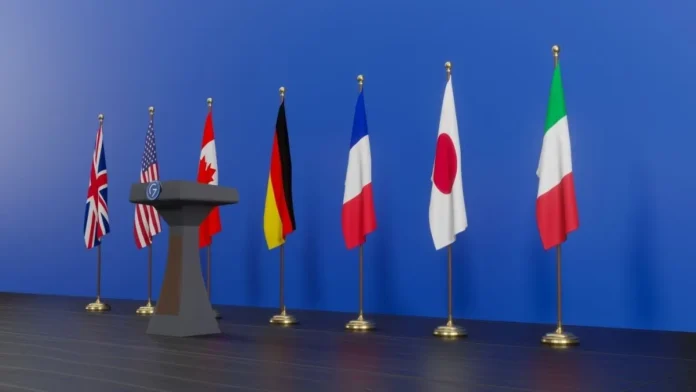
The Group of Seven consists of the United States, Canada, the United Kingdom, France, Germany, Italy and Japan. Unlike organizations built around treaties, the G7 functions primarily as a forum for coordination.
Its influence comes from the economic weight of its members rather than legal authority. Collectively, these countries remain among the most powerful economies in the world and continue to shape global financial, technological and security discussions.
Ukraine Remains at the Center
Even after years of conflict, Ukraine remains one of the summit’s defining issues. European leaders continue to view the war as a major security challenge.
President Volodymyr Zelenskiy is expected to engage directly with leaders during the summit, seeking continued support and discussing pathways toward future negotiations. The discussion is no longer simply about military assistance.
Increasingly, leaders are debating reconstruction, long-term European security architecture and the broader implications for international law.
The Economic Question
While geopolitical issues dominate headlines, economics remains at the heart of the summit. The global economy has proven more resilient than many analysts expected.
IMF Managing Director Kristalina Georgieva recently stated that there is currently no global slowdown in sight, although risks remain elevated. That assessment reflects a complicated reality.
Growth continues. But uncertainty remains high. The challenge facing leaders is not preventing collapse. It is managing instability.
Artificial Intelligence Takes Center Stage
One of the most important developments at this year’s summit is the inclusion of artificial intelligence as a major policy topic. Just a few years ago, AI was viewed primarily as a business and technology issue.
Today it has become a strategic issue. Governments increasingly recognize that AI will influence:
- Economic competitiveness
- National security
- Labor markets
- Information ecosystems
Leaders are expected to discuss regulatory frameworks and international cooperation related to emerging technologies.
Why AI Is Now a Geopolitical Issue
The AI conversation extends beyond economics.
Countries are competing for leadership in:
- Semiconductor manufacturing
- Computing infrastructure
- Data systems
- Advanced research
The nation that leads in these areas may gain significant long-term advantages. This transforms AI from a technology story into a geopolitical story.
Energy Security Still Matters
Although recent diplomatic progress has eased some immediate concerns, energy security remains a critical topic. The reopening of important trade routes and efforts to stabilize energy markets have improved confidence, but leaders remain cautious.
Energy continues to influence inflation, investment and national security planning. The summit’s discussions are expected to reflect that reality.
The Debt Challenge
Another major issue involves developing economies struggling with debt burdens. Several countries continue to face significant financial stress. The challenge is not simply economic. It is political.
Financial instability can create broader risks for global security and development. G7 leaders are expected to explore ways of supporting sustainable growth while addressing debt vulnerabilities.
Why This Summit Feels Different
What distinguishes this summit from previous gatherings is the convergence of issues.
Rarely do leaders face simultaneous challenges involving:
- War
- Technology
- Energy
- Economic growth
- Global governance
Each issue influences the others. The result is a level of complexity that few international meetings have encountered before.
The Emerging Question of Leadership
Perhaps the most important theme is leadership itself. The international system is becoming more fragmented. Regional powers are playing larger roles.
Emerging economies are asserting greater influence. Traditional alliances remain important, but they are operating within a more complicated environment. This summit may reveal how advanced economies intend to navigate that transition.
What Happens Next?
The summit will not solve every problem. No international gathering can. But it can provide signals.
Markets watch those signals. Governments watch those signals. Businesses watch those signals.
The decisions made in France this week will influence expectations about the direction of international cooperation.
Conclusion
The 2026 G7 Summit arrives at a moment when the global system is being tested by overlapping challenges. War, technology, energy and economics are no longer separate conversations. They are increasingly part of the same story. How leaders respond may shape not only the next year, but the next decade.