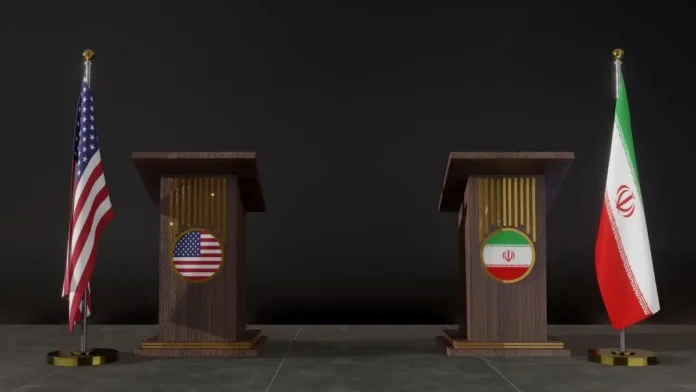

President Donald Trump and the Iranian government announced on the evening of June 15, 2026, that the United States and Iran had reached a peace deal to end 109 days of war — with the Strait of Hormuz reopening immediately, the US naval blockade lifted, military operations halted on all fronts including Lebanon, and a formal signing ceremony scheduled in Geneva for Friday, June 19.
The war is over.
After 109 days that closed the world’s most critical oil chokepoint, drove global oil prices above $115 per barrel, killed thousands of people across the Middle East, disabled commercial shipping lanes, strained the US military and the US economy, and produced the most intense episode of sustained US-Iran military conflict in the forty-seven years since the Islamic Revolution — the United States and Iran have reached a peace deal.
“The Deal with the Islamic Republic of Iran is now complete. Congratulations to all! I hereby fully authorize the toll free opening of the Strait of Hormuz, and, simultaneously herewith, authorize the immediate removal of the United States Naval blockade. Ships of the World, start your engines. Let the oil flow!” Trump said in a post on his Truth Social platform.
The announcement came in simultaneous posts from Trump and Pakistan’s Prime Minister Shehbaz Sharif on the evening of June 15. The double announcement — by the American president and the country that mediated the deal — was designed to make the moment unambiguous and irreversible. There would be no room for either side to later claim the other had mischaracterised what was agreed.
Pakistan’s Prime Minister Shehbaz Sharif announced on X: “Following intensive talks, we are pleased to announce that the Peace Deal between the United States of America and the Islamic Republic of Iran has been REACHED. Both sides have declared the immediate and permanent termination of military operations on all fronts, including in Lebanon.”
Lebanon Is Included
The single most significant element of the announcement — beyond the deal itself — is the inclusion of Lebanon.
Iran said the agreement includes Lebanon, which has been under intense Israeli attacks since March 2.
Iran’s Supreme National Security Council said the deal includes an immediate suspension of military operations on all fronts, including in Lebanon.
Throughout 107 days of negotiation, Lebanon’s inclusion had been Iran’s most insistent and most contested demand. The US and Israel consistently resisted framing the Lebanon front — a bilateral conflict between Israel and Hezbollah — as part of a bilateral US-Iran deal. Iran consistently insisted that any deal it signed must cover Lebanon.
The final resolution appears to have found a formulation that both sides can accept: Lebanon is included in the suspension of military operations. What that means in practice — whether Israel accepted constraints on its operations against Hezbollah, or whether Iran accepted that its proxy’s behaviour must change — will become clearer in the coming days.
Trump had condemned Israel’s attacks on Beirut’s suburbs, saying they should have never happened. “Israel has the right to defend itself against threats, but the attack it was responding to was very small and meaningless, nobody was hurt, injured, or killed, and should not disrupt this important process,” Trump wrote in a Truth Social post.
Trump’s rebuke of Israel — hours before the deal was announced — was the clearest public signal yet that the Lebanon issue had been resolved in a way that required Israeli restraint. An American president publicly criticising an Israeli military operation is itself significant; that the criticism came on the day the deal was announced suggests it was part of the diplomatic choreography of the announcement.
The Immediate Market Response
The price of US crude oil fell more than 4.5% to $80 per barrel, its lowest level since before the war.
The oil market’s response was immediate, precise, and exactly what energy economists had predicted. The risk premium that had been built into oil prices across 109 days — war risk, supply disruption, geopolitical uncertainty — began to collapse the moment Trump’s Truth Social post appeared. US crude falling from above $100 to $80 per barrel within minutes of the announcement is the most direct economic measure of what the war cost: $20-35 per barrel of oil, every barrel, for 109 days.
That fall will translate, over the coming weeks, into lower gasoline prices for American consumers, lower energy costs for European households, and lower import bills for energy-dependent Asian economies. US inflation — which hit 4.2% in May on the back of war-driven energy costs — will begin to reverse.
The Formal Signing: Geneva, June 19
An official signing ceremony will be on Friday, June 19, in Switzerland.
The deal, scheduled to be formally signed Friday in Switzerland, marks a major breakthrough in the conflict that set the Middle East aflame and shook the global economy.
The choice of Geneva — the city most associated with international diplomacy, the seat of the United Nations in Europe, the location of the Red Cross and dozens of international organisations — for the formal signing ceremony is deliberate. It places the Iran war’s resolution in the same geographic and symbolic space as the diplomatic agreements that have defined international order for a century.
Meeting with French President Emmanuel Macron on Monday during a G7 meeting in France, Trump said that “the deal’s all signed.”
Trump’s statement to Macron at the G7 — “the deal’s all signed” — delivered at the most prominent gathering of democratic leaders in the calendar, added the stamp of a multilateral setting to what is fundamentally a bilateral achievement.
The Mediators: Pakistan and Qatar
Qatari Prime Minister Sheikh Mohammed bin Abdulrahman bin Jassim Al Thani, who helped mediate the deal alongside Pakistan, praised the breakthrough.
US Vice President JD Vance said the newly announced ceasefire could usher in a “new era” for the Middle East. He credited Trump’s diplomacy with Gulf countries and other regional partners for helping bring about the deal. “What the president has done is create the real space to transform that region,” Vance said in an interview with Fox News. “And now, hopefully, a new era with the Iranians.”
Pakistan and Qatar’s roles as co-mediators represent one of the most significant diplomatic achievements by two relatively small nations in modern history. Pakistan provided the formal ceasefire architecture, hosted the Islamabad Talks, and provided the channel through which the most sensitive communications passed. Qatar provided back-channel contacts, hosted the Doha rounds of talks, and maintained its role as a trusted intermediary with both sides.
The diplomatic capital both countries have earned through this process is substantial and will shape their international standing for years to come.
What the Deal Contains
Based on the most current reporting at the time of publication, the deal announced on June 15 contains the following core elements:
The immediate and permanent termination of military operations on all fronts, including Lebanon. The immediate authorisation by Trump of “toll-free opening” of the Strait of Hormuz and simultaneous removal of the US naval blockade. A formal signing ceremony in Geneva on June 19. A series of pre-implementation technical meetings this week to lay the foundation for follow-on talks.
The detailed nuclear provisions — enrichment moratorium duration, inspections regime, dismantlement modalities — are expected to be the subject of the 60-day follow-on technical negotiations that begin after the Geneva signing.
What Happens Next
The formal signing in Geneva on June 19 marks the beginning of the deal’s implementation phase, not its end. The pre-implementation discussions taking place this week — between technical teams from both sides, facilitated by Pakistan and Qatar — are establishing the verification frameworks, sequencing mechanisms, and oversight arrangements that will govern the deal’s implementation.
The 30-day Hormuz reopening process — mine removal, navigation safety certification, commercial shipping resumption — begins immediately. The 60-day nuclear follow-on talks begin after Geneva.
Iran and the United States are no longer at war. That is the fact that changes everything. Everything else follows from it.
LoudFact.com is an independent global news and explainer platform. This report is based on Trump’s official Truth Social statements, Pakistan PM Sharif’s X posts, reporting from NPR, NBC News, NewsNation, Al Jazeera, and Reuters as of June 15, 2026.