
Trump’s Truth Social declaration authorising the “toll free opening of the Strait of Hormuz” represents the most economically consequential statement since the war began — triggering an immediate 4.5% fall in oil prices and setting in motion a 30-day process of mine removal, shipping resumption, and global supply chain normalisation that will define the economic recovery from the Iran war.
“I hereby fully authorize the toll free opening of the Strait of Hormuz, and, simultaneously herewith, authorize the immediate removal of the United States Naval blockade. Ships of the World, start your engines. Let the oil flow!” Trump said in a post on his Truth Social platform.
It is, in its way, one of the most extraordinary sentences ever written by an American president. “Ships of the World, start your engines. Let the oil flow.” The image it conjures — hundreds of tankers anchored in the Gulf of Oman, crews who have been waiting for weeks and months, engines turning over in the pre-dawn heat of the Persian Gulf — is not metaphor. It is the reality that begins today.
The Immediate Oil Price Response
The price of US crude oil fell more than 4.5% to $80 per barrel, its lowest level since before the war.
The 4.5% fall in crude oil prices that occurred within minutes of the announcement is the fastest and most direct economic impact of the deal. It represents the market’s immediate repricing of the three components of the war premium that had been built into oil:
The supply disruption premium — reflecting the actual reduction in oil flowing through Hormuz — begins to ease the moment commercial shipping resumes and Iranian exports can restart. This takes 30 days to fully resolve as mines are removed and routes are certified safe.
The war risk premium — reflecting the probability that any tanker transiting the Gulf could be struck, mined, or seized — collapses almost immediately on the deal announcement. Insurance underwriters will begin pricing new war risk premiums within hours, and those premiums will be a fraction of what they were during the conflict.
The geopolitical uncertainty premium — the probability that the situation could get worse — goes to near zero as both governments confirm the deal simultaneously.
US Treasury Secretary Bessent had predicted a “sharp fall” in oil prices following a deal. The 4.5% immediate fall is the beginning of a trajectory that most energy economists model reaching $75-82 per barrel over the following four to eight weeks as Hormuz shipping normalises.
The 30-Day Mine Removal Process
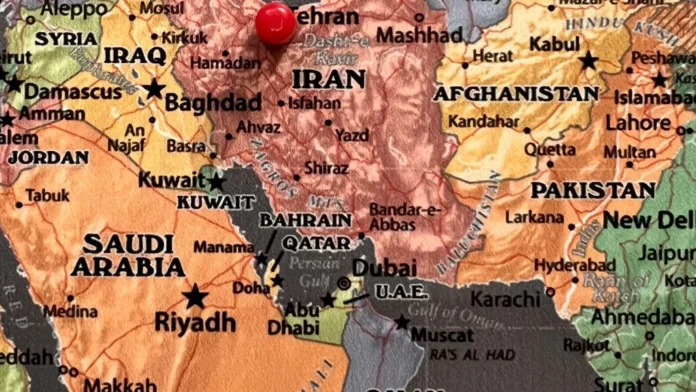
The Strait of Hormuz cannot simply be declared open and immediately used at full capacity. During the 109-day war, Iranian forces laid mines in the strait’s shipping lanes — a fact documented by CENTCOM and confirmed by multiple intelligence assessments. Those mines must be removed and the lanes certified as safe before commercial shipping can transit at pre-war volumes.
The 30-day mine removal and Hormuz normalisation process that was described in the MOU framework is now active. What that process involves:
Joint verification teams. Iran and the US agreed to a joint mechanism for verifying mine removal. International observers — likely including IAEA personnel and maritime safety authorities — will participate in the verification process.
Systematic mine-clearing. The IRGC Navy, which laid the mines, will be responsible for removing them — under international observation. Mine-clearing operations are technically demanding: mines must be identified, assessed, and either neutralised in place or removed to safe storage.
Navigation safety certification. Before commercial shipping is formally cleared to resume normal transit, the shipping lanes must be certified as safe by maritime safety authorities. That certification process involves verification of mine removal completion and confirmation that other hazards — wrecked vessels, debris from the conflict — are not navigation risks.
Gradual shipping resumption. Commercial shipping will not return to pre-war volumes overnight. Shipping companies that redirected vessels via the Cape of Good Hope route will need to assess the safety certification, renegotiate charter agreements, and reorganise voyage plans. The resumption will be gradual — likely reaching 50% of pre-war volumes within two weeks and approaching normal within 30 days.
What the 116 Redirected Vessels Do Now
One hundred and sixteen commercial vessels were redirected from Iranian ports during the blockade period. Those ships — their cargo plans disrupted, their routes extended by thousands of miles — can now return to normal operations.
For the Saudi East-West pipeline — which has been running at near-maximum capacity to provide an alternative route for Saudi oil exports — the Hormuz reopening means it can return to its normal, partial-capacity operation. The Gulf-facing loading terminals that have been unusable during the blockade can resume exports.
For Kuwait International Airport — struck twice during the war — the Hormuz deal does not immediately restore the physical infrastructure. But the security context changes immediately. Airlines that suspended Gulf routes due to war risk can begin reassessing those suspensions.
What Changes for Consumers
The chain from Hormuz reopening to household energy bills is not immediate, but it is reliable and relatively fast.
Oil prices fall on deal announcement → crude wholesale prices fall → refinery input costs fall → wholesale gasoline prices fall → retail pump prices fall.
That transmission takes approximately two to four weeks at each stage in the US market. Modelling of the post-deal price trajectory suggests:
- By late June: National US gas average falls below $4.00 per gallon as futures prices collapse
- By July: Average approaches $3.70-3.80 per gallon
- By August: Potentially in the $3.40-3.60 range if oil stabilises around $78-82
For American households that have been paying above $4.56 per gallon since late May, the relief will be visible and tangible within weeks of the deal announcement. For European households facing high energy costs, similar relief flows through LNG pricing and heating fuel markets.
The Global Shipping Recovery
Beyond oil, the Hormuz reopening affects the entire architecture of global trade that routes through the Persian Gulf.
LNG from Qatar — the world’s largest liquefied natural gas exporter, whose shipments were constrained by Hormuz uncertainty throughout the war — can return to full export volumes. Those shipments supply Europe’s gas needs and Asian power generation.
Container shipping that avoided the Gulf and Red Sea — rerouting manufactured goods via much longer Cape of Good Hope routes — can return to its normal Suez Canal pathway once the Bab al-Mandab threat assessment is also resolved by the Lebanon front’s inclusion in the deal.
War risk insurance premiums, which had reached four to five times pre-war levels, will collapse toward normal within days of the official certification that hostilities have ended and Hormuz is clear. That collapse in insurance premiums reduces shipping costs immediately — and those savings will flow through to consumer prices across the global supply chain over the following weeks and months.
What Does Not Change Immediately
The deal does not immediately resolve several connected issues:
The Lebanon front’s operational pause — announced as part of the deal — does not guarantee a durable Lebanon-Israel-Hezbollah ceasefire. The same structural problems that prevented every previous Lebanon ceasefire framework from holding remain. The deal buys time and creates political space; it does not resolve the underlying conflict.
Iran’s nuclear programme is subject to a 60-day follow-on negotiation that will be the most technically demanding diplomatic process of the post-war period. The enrichment moratorium duration, dismantlement modalities, and inspections regime details are not yet agreed.
North Korea’s nuclear expansion continues. The global terrorism threat from Iran-aligned networks in Europe, documented in the Kata’ib Hizballah prosecution, does not disappear on the day the deal is signed.
But the ships are moving. The oil is flowing. The war is over.
LoudFact.com is an independent global news and explainer platform. This report is based on Trump’s official Truth Social statements, CENTCOM documentation, NPR, NBC News, Reuters, and energy market reporting as of June 15-16, 2026.