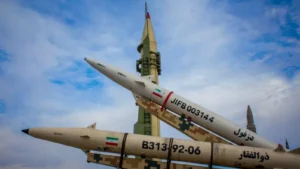

Iran fired on three commercial ships and seized two of them in the Strait of Hormuz on Wednesday morning. The world waited for the White House response. When it came, it contained a position that cuts to the heart of how the Trump administration has defined — and narrowed — the ceasefire’s scope.
What the White House Said
When asked whether Trump views Iran seizing two ships in the Strait of Hormuz as a violation of the ceasefire, press secretary Karoline Leavitt said: “No, because these were not US ships. These were not Israeli ships. These were two international vessels.”
Leavitt elaborated: “These two ships were taken by speedy gunboats. Iran has gone from having the most lethal navy in the Middle East to now acting like a bunch of pirates. They don’t have control over the strait. This is piracy that we are seeing on display, and the naval blockade that the United States has imposed continues to be incredibly effective.”
In a single statement, Leavitt called the seizures piracy — a term implying illegal and aggressive action — while simultaneously saying they don’t constitute a ceasefire violation.
The logical tension in that position is intentional: it preserves the ceasefire framework while registering condemnation of Iran’s behaviour, giving Trump the option to continue the no-deadline extension without appearing to accept Iran’s maritime aggression.
What the Ceasefire Actually Covers
The US definition of the ceasefire has always been narrow. From the first announcement on April 7, Trump and Vance were explicit: the truce covers a halt to US-Israeli airstrikes on Iran and Iranian missile strikes on Israel and Gulf states.
It was never a comprehensive maritime ceasefire. Iran’s closure of Hormuz, the US blockade of Iranian ports, and attacks on commercial shipping have all continued throughout the truce.
What the White House is now formalising is that the seizure of non-US, non-Israeli commercial ships is outside the ceasefire’s scope. This creates a situation where the ceasefire is formally intact but the Strait of Hormuz is an active war zone for international shipping.
Iran’s Position on Its Own Ceasefire
In a post on social media, Iran’s parliamentary speaker and chief negotiator Mohammad Bagher Ghalibaf said: “A full ceasefire only has meaning if it is not violated by a naval blockade and the holding hostage of the global economy.
Reopening the Strait of Hormuz is not possible under a blatant breach of the ceasefire.” He said the US and Israel “did not achieve their objectives through military aggression, and they will not achieve them through coercion either. The only path is to accept the rights of the Iranian nation.”
Iranian President Masoud Pezeshkian said Tehran wants to continue peace talks but the US “breach of commitments, blockade and threats are the main obstacles to genuine negotiations.”
The No-Deadline Ceasefire
Trump said there is “no time frame” for the conflict with Iran and rejected suggestions that political considerations are influencing his approach. He has not set a “firm deadline” for Tehran to respond, his spokesperson said. Trump is also satisfied with the economic pressure campaign.
The indefinite, no-deadline ceasefire is now defined entirely by what each side chooses to treat as a violation. The US says ship seizures aren’t violations. Iran says the blockade is a violation. Both are applying different frameworks to the same nominal agreement. That gap is not narrowing — it is widening.