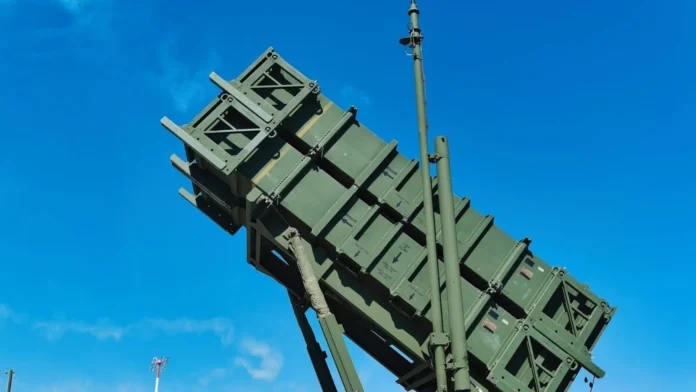

The US military’s stockpile of Patriot interceptor missiles has fallen to just 36% of pre-Iran war levels, according to defense officials, forcing the Pentagon to delay deliveries to allied nations including Saudi Arabia, Australia, Japan, and the Netherlands as it prioritizes rebuilding its own depleted inventory.
What Happened
War Department Under Secretary for Acquisition and Sustainment Michael Duffey acknowledged the strain on America’s defense industrial base, noting “these weapons are sought after around the world because we have the best weapons.” According to the Center for Strategic and International Studies, the US had roughly 2,300 Patriot missiles in inventory before the Iran conflict began, a stockpile already reduced from an estimated 2,200 before Russia’s invasion of Ukraine started in 2022, as production had managed to outpace the roughly 600 missiles transferred to Ukraine over the following years.
Mark Cancian, a retired US Marine colonel and senior CSIS adviser, said Patriot production lines have now been “maxed out” at a rate of 600 missiles annually, a ceiling reached even before accounting for the surge in demand created by the Iran war specifically. “If we take all of the Patriots for ourselves… we can refill the inventory much more quickly, but we have frozen out our allies and partners,” Cancian said, describing the difficult tradeoff facing Pentagon planners.
Raytheon, the sole US manufacturer of the Patriot system, describes it as “the foundation of integrated air and missile defense for 19 nations.” Beyond Patriot interceptors specifically, the Tomahawk cruise missile stockpile has also been affected, with new orders from Japan and the Netherlands facing delays even though the US inventory of that system remains at roughly two-thirds of its prewar level, a comparatively less severe shortage than the Patriot system faces.
Why It Matters
A senior member of the House Foreign Affairs Committee, who signs off on foreign military sales to countries including Israel and Taiwan, said the inability to deliver promised weapons on schedule “hurts our alliances” and “hurts allies’ ability to protect themselves,” a warning that carries significant weight given the number of countries relying on Patriot systems for their own national air defense.
The shortage illustrates a structural vulnerability in US defense readiness that extends well beyond the immediate Iran conflict, given that Patriot production capacity was already strained by transfers to Ukraine before the Iran war began, meaning the current 36% inventory level reflects the compounding effect of two simultaneous, multi-year conflicts drawing on the same limited manufacturing base.
For allied nations facing delayed deliveries, the disruption carries direct national security implications, particularly for countries in regions facing their own missile threats, raising broader questions about how reliably the United States can serve as both a direct combatant and a consistent arms supplier during periods of sustained global conflict.
Context and Background
The Trump administration has attributed some of the stockpile depletion specifically to weapons transferred to Ukraine, though CSIS’s independent assessment found those transfers have been a comparatively minor factor in the broader inventory decline for most systems, with the Patriot missile representing the notable exception where Ukraine-related transfers have had a more significant cumulative impact.
Patriot batteries and Tomahawk missiles, both first used in combat during Operation Desert Storm decades ago, remain foundational systems for US and allied air and missile defense, meaning any sustained disruption to their production or availability carries implications extending across multiple simultaneous global security relationships rather than being confined to a single theater.
At least four countries beyond the US have provided full Patriot missile systems to Ukraine over the course of that separate conflict, with the US remaining the only country that manufactures the actual Patriot battery and one of just two countries, along with Japan, that publicly produces the missiles themselves.
Analysis
Defense industrial base analysts note that the current shortage reflects a longer-term structural mismatch between US production capacity, which requires years to meaningfully scale given the complexity of precision-guided munitions manufacturing, and the pace at which two simultaneous major conflicts have consumed existing inventories since 2022.
Some congressional defense analysts point to the specific tension between honoring existing foreign military sales commitments and prioritizing US operational needs during an active war as reflecting a genuine policy dilemma without an easy resolution, given that both objectives carry significant strategic and alliance-management consequences.
Regional security analysts caution that delayed deliveries to countries like Saudi Arabia, Japan, and the Netherlands could have follow-on effects for those nations’ own defense planning and threat responses, particularly if the current shortage persists for the multi-year timeline that expanding US production capacity is expected to require.
What Happens Next
The Pentagon is expected to continue prioritizing domestic stockpile replenishment over new allied deliveries in the near term, given the current 36% inventory level relative to pre-war stocks. Continued congressional scrutiny of the shortage’s effect on alliance relationships is likely, particularly from lawmakers responsible for approving foreign military sales.
Defense contractors, led by Raytheon for the Patriot system, will face sustained pressure to accelerate production beyond current maximum output levels, though analysts have cautioned that meaningfully expanding manufacturing capacity for these complex weapons systems typically requires a multi-year timeline regardless of funding availability.