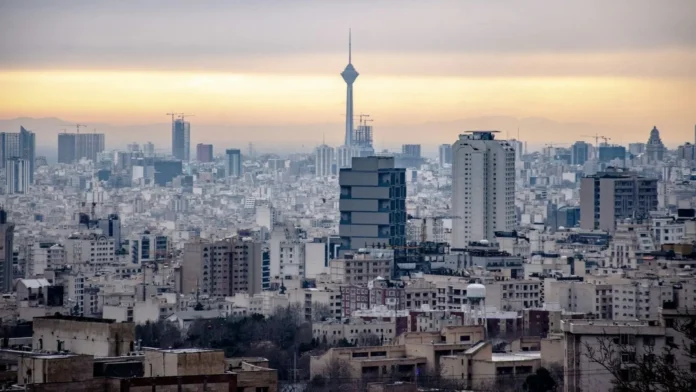

The Middle East war has crossed a threshold. In the latest escalation, Israel launched a major wave of strikes directly inside Tehran, targeting missile production sites and military infrastructure.
This is not just another exchange of attacks. It is a shift in the geography — and psychology — of the conflict.
For weeks, the war has been intense but partially contained, with strikes distributed across regions and proxies. Now, it is moving directly into the core of a sovereign state.
And that changes everything.
The Strategic Meaning of Striking Tehran
Capital cities are not just locations.
They are symbols.
Striking Tehran sends a message that goes beyond military targets:
- no area is off-limits
- escalation thresholds are collapsing
- deterrence boundaries are weakening
In strategic terms, this represents a shift from peripheral conflict → central confrontation.
Why This Escalation Matters Now
The timing is critical.
This escalation comes amid:
- stalled ceasefire talks
- increasing missile exchanges
- rising regional involvement
Even as diplomatic discussions are being reported, the reality on the ground is intensifying.
This contradiction — diplomacy vs escalation — is becoming a defining feature of the war.
Iran’s Response Capacity
Iran is not a passive actor in this scenario.
It has already demonstrated:
- sustained missile capability
- multi-country strike reach
- ability to hit both Israel and Gulf targets
Recent attacks have extended beyond Israel, hitting infrastructure in multiple Gulf states.
This suggests that escalation will not remain one-sided.
The Shift to Direct War
Historically, much of the conflict between these actors operated through proxies.
That model is breaking down.
Now, the conflict is becoming:
- direct
- visible
- harder to control
Direct war carries higher risks because:
- response times are shorter
- escalation cycles are faster
- diplomatic buffers are weaker
Civilian and Infrastructure Impact
The scale of damage is increasing rapidly.
Reports indicate:
- thousands of casualties
- widespread destruction of infrastructure
- damage to critical facilities
More than 82,000 civilian structures have reportedly been destroyed in Iran alone.
This is no longer limited warfare.
It is systemic.
Why This Phase Is More Dangerous
Three factors make this phase uniquely risky:
1. Depth of Strikes
Targets are no longer peripheral — they are central.
2. Scale of Retaliation
Each strike invites a larger response.
3. Reduced Diplomatic Control
Negotiations are not keeping pace.
Global Reactions and Risk
Global systems are already reacting:
- oil markets are volatile
- stock markets are under pressure
- governments are preparing contingency plans
The conflict is no longer regional in impact.
It is global in consequence.
What Happens Next
Three realistic scenarios:
1. Controlled Escalation: Strikes continue but remain limited.
2. Rapid Expansion: More actors enter, widening conflict.
3. Strategic Breakdown: Escalation spirals into broader war.
At this stage, the second scenario is increasingly likely.
Conclusion
The strikes on Tehran are not just another headline.
They are a signal.
A signal that the conflict has entered a new phase — one where boundaries are disappearing, and risks are multiplying.