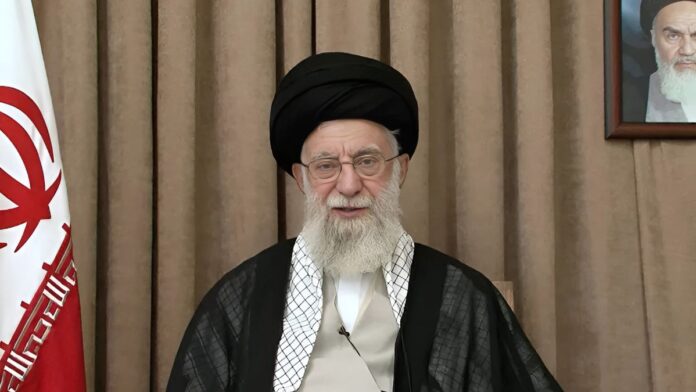

The funeral of Ayatollah Ali Khamenei — the Supreme Leader of the Islamic Republic of Iran for 36 years, killed in a joint US-Israeli airstrike on February 28 — begins on July 4, 134 days after his death. The delay, extraordinary under Islamic tradition that requires burial within 24 hours, reflected the security emergency of the war and the political complexity of staging a mass event while Iran was under active bombardment. Now, as a fragile ceasefire holds and indirect peace talks with the United States have recorded what mediators call “positive progress,” Iran is proceeding with what is expected to be the largest state funeral in its history — and one of the largest human gatherings on Earth.
The Scale of What Iran Is Planning
Iranian authorities have completed extensive preparations for Ayatollah Ali Khamenei’s funeral, with officials calling it the biggest public gathering in the country’s history. The ceremonies will span six days and cover five cities across Iran and neighbouring Iraq.
Iranian authorities say 15-20 million people and representatives from 30 countries are expected to attend. Tehran’s municipality alone is preparing to absorb close to 20 million people and nearly two million vehicles streaming into the capital. If the higher estimates hold, the funeral would surpass even the historic crowds that gathered for Ayatollah Ruhollah Khomeini’s 1989 funeral, which drew an estimated 10 million mourners.
The six-day schedule runs from July 4 through July 9. Ceremonies will take place across three major Iranian cities — Tehran, Qom and Mashhad — as well as the important Shiite holy cities in Iraq of Karbala and Najaf. Khamenei’s body will be buried in Mashhad, his hometown and Iran’s second-holiest city, on July 9. The airspace above Tehran will be completely closed during the funeral period.
The Extraordinary Delay — and Why It Happened
The roughly four-month gap between Khamenei’s death and his funeral is without precedent in Islamic tradition. Under Islamic law, the dead are traditionally buried within 24 hours — a requirement so fundamental that exceptions are only permitted in highly specific circumstances.
In this case, the exception was the war itself. Officials acknowledged that fears of an aerial strike on the funeral, or of a mass casualty crowd crush — a recurring risk at large Iranian gatherings, as seen when more than 24 people were killed in a stampede at Qassem Soleimani’s 2020 funeral — forced extreme logistical and security preparations and multiple postponements.
The funeral, initially planned for early March, was repeatedly delayed as the conflict continued. Now, against the backdrop of reports of an emerging peace agreement between Iran and the United States following months of fighting, the regime appears to feel secure enough to move forward with the massive event.
The Political Meaning of the Ceremony
The ceremony is far more than a religious observance. It is a carefully staged political event designed to serve several distinct purposes simultaneously.
First, it is an assertion of regime legitimacy and continuity. The Islamic Republic lost its supreme leader in the first hours of the war — a blow that US and Israeli officials had hoped would accelerate internal pressure on the government. By staging a massive, controlled, internationally attended funeral, Iran’s leadership is demonstrating that the regime survived.
Second, it is a mobilisation event. Iran’s chief negotiator Mohammad Bagher Ghalibaf — also the parliament speaker — called on Iranians to come out en masse to avenge Khamenei’s killing. “The nation’s call for vengeance must ring in the ears of the whole world,” he said. Iranian President Masoud Pezeshkian described Khamenei’s death as “martyrdom” and said it was “not the end of the road, but the beginning of a new chapter of unity, resilience.”
Third, it is a display of Iran’s regional and international relationships. Officials of varying seniority from more than 40 countries are expected to attend, including Pakistan’s Prime Minister Nawaz Sharif — a key mediator in the US-Iran peace talks — and senior representatives from China, India and Russia. The attendance of these delegations signals that Iran, despite having been at war with the United States, retains significant international relationships and has not been diplomatically isolated.
The Unseen Figure: Mojtaba Khamenei
The most closely watched aspect of the funeral will be whether Iran’s new Supreme Leader, Mojtaba Khamenei — the 56-year-old son and successor of the slain ayatollah — will appear publicly to lead prayers for his father.
Mojtaba Khamenei was reported to have been severely wounded in the same US-Israeli airstrike that killed his father on February 28. He also lost his wife in the strike. He has not been seen or directly heard from in public since the conflict broke out, and his ability and willingness to appear at the funeral is being closely watched by foreign intelligence agencies as a signal of his physical condition, political control and the degree of internal stability within the Iranian leadership.
The question matters enormously. A visible, publicly authoritative Mojtaba Khamenei would reinforce the message that Iran’s leadership has stabilised and that the new supreme leader is in command. His absence — or a noticeably diminished public appearance — would raise questions about the durability of the regime’s internal power structure at a critical moment in peace negotiations.
What the Funeral Means for the Peace Talks
The most immediate diplomatic consequence of the funeral is a pause in US-Iran negotiations. Qatari and Pakistani mediators confirmed that the next meetings between Iranian and US negotiators would be scheduled “at the earliest possible time” after funeral commemorations conclude. The funeral runs through July 9, meaning the next round of talks will not begin before July 10 at the earliest.
The pause arrives at an awkward moment. Trump said there was progress as US and Iranian officials resumed talks in Doha via mediators, telling reporters “the denuclearisation of Iran is moving along well.” Qatar and Pakistan also said “positive progress was made” — the first genuinely optimistic diplomatic language since the ceasefire framework was signed.
But the key issues remain largely unresolved. The 60-day negotiating window that began on June 17 is now ticking with a week’s pause built into it. Robert Murrett, a former US Navy Vice-Admiral and academic who studies Iran, told CBS News that “many of us expect that there will be extensions after the initial 60-day period” — acknowledging that the original timeline was always optimistic.
What the Funeral’s Language Tells Us
The emblem chosen for the official funeral programme — Khamenei’s closed fist alongside the slogan “We must rise” — is a deliberate framing of his death not as a loss but as a call to action. Iran’s negotiating team, which is simultaneously attending talks aimed at ending the war, must manage the tension between that mobilisation language and the requirements of diplomatic de-escalation.
That tension — between the language of vengeance and the necessity of negotiation — is the defining contradiction of Iran’s current moment. The funeral will amplify the first. Whether the peace talks, when they resume, can advance the second will determine whether the ceasefire becomes a peace.