
President Trump arrived at the G7 summit in Evian-les-Bains, France on June 15-16 within hours of announcing the Iran peace deal, and immediately signalled that Ukraine was the next diplomatic priority — with Zelensky securing a private meeting with Trump and Macron, air defence commitments being made, and Russia’s choice to bomb Kyiv on the eve of the summit providing the most brutal possible backdrop.
Leaders of the Group of Seven gathered on Tuesday to discuss Russia’s war in Ukraine and US President Donald Trump’s tentative deal to end the conflict with Iran. The first full day of the G7 summit of leading industrialized nations is being held in the French town of Evian-les-Bains.
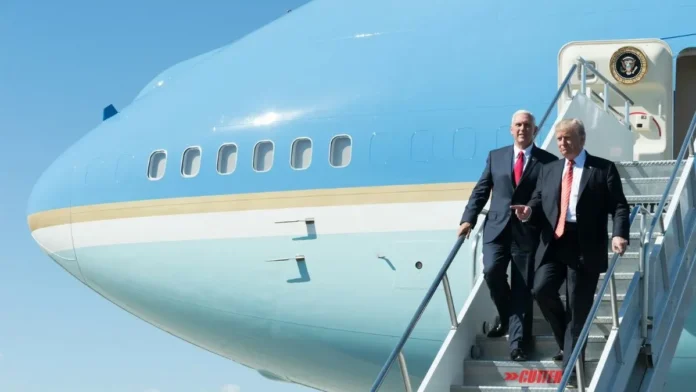
The timing of the G7 summit could not have been more consequential. Trump flew from Washington to Evian on June 15 — announcing the Iran peace deal from Air Force One and arriving at the Hotel Royal with the ink not yet dry on an agreement that had been 109 days in the making. Meeting with French President Emmanuel Macron on Monday during a G7 meeting in France, Trump said that “the deal’s all signed.”
The Iranian conflict has recently overshadowed the war in Ukraine. Now that the Iranian conflict has been addressed — at least in its most acute phase — the G7 presented the first opportunity for allied leaders to collectively redirect their attention to a war that has been killing Ukrainians for more than four years.
Trump’s Ukraine Signal
“Now that this (Iran) is finished, we’re going to be focusing on that,” Trump said, referring to efforts to end Russia’s war in Ukraine.
The statement is significant in its explicit sequencing: Iran first, then Ukraine. Throughout the 109 days of the Iran war, Trump’s administration was diplomatically consumed by the Iran crisis — the ceasefire negotiations, the MOU drafting, the escalating exchanges of strikes. Ukraine was present as a concern but was not the primary diplomatic focus.
With Iran moving — in Trump’s framing — toward the “rearview mirror,” Ukraine now becomes the primary diplomatic focus for the US. That shift has immediate implications for:
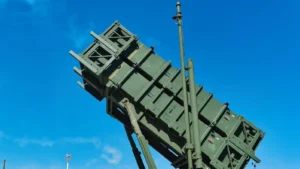
Military support. The Iran war diverted US air defence stockpiles from Ukraine. A post-Iran-war reallocation of those stocks to Ukraine is now possible. Zelensky made air defence his primary ask at the G7.
Diplomatic bandwidth. The State Department and National Security Council resources consumed by the Iran negotiations are now available for Russia-Ukraine diplomacy.
Trump’s incentives. Having achieved a major diplomatic outcome in the Middle East, Trump now has the political template and the domestic credibility to pursue a comparable outcome in Europe.
Zelensky’s G7 — From No Meeting to Private Session
Ukrainian President Volodymyr Zelensky said “everyone” at the Group of Seven summit agreed to help his country strengthen its air defenses. Zelensky made securing more air defense capabilities one of the priorities of his trip to France — and speaking after his first batch of meetings on Tuesday afternoon, he said he was positive about the outcomes.
Zelensky arrived at the G7 without a confirmed bilateral meeting with Trump — a diplomatic slight, whether deliberate or logistical, that signalled the complicated state of the US-Ukraine relationship. A hot mic picked up some of a conversation between Macron and Zelensky about today’s programme, and the fact that Zelensky didn’t have a Trump meeting scheduled. Macron appeared to offer to help fix that.
Macron’s intervention produced the meeting. President Trump met privately for a little under an hour with Ukrainian President Zelenskyy and French President Macron on the sidelines of the G7 summit. The private format — no press, no formal statements during the meeting — gave all three leaders flexibility to speak candidly.
“This is a big challenge really because the production is not so big as our needs. The production is in the United States. I raised the topic of licenses. I addressed it to President Trump. We need licenses to produce missiles,” Zelensky told Reuters.
Zelensky said his suggestion was received positively by his American counterpart. The specific ask — US production licences for missiles, enabling Ukraine to manufacture American-designed munitions domestically rather than relying entirely on US exports — is a capability multiplier that would significantly increase Ukraine’s military production capacity without requiring direct US shipments of finished weapons.
The president had what he called a “very good meeting” with Ukrainian President Zelenskyy and indicated he wants to focus on resolving Russia’s war now that he’s signed an agreement with Tehran. Iran will soon be “in the rearview mirror,” he said.
Russia’s Bombing on the Eve of the Summit
G7 allies scramble to put Ukraine back atop Trump’s agenda. Hours before the summit began, Russia fired hundreds of drones and dozens of missiles at Ukraine’s biggest cities in a barrage that killed 11 people and set fire to a religious landmark.
Russia’s choice of timing — bombing Ukrainian cities on the eve of a G7 summit where Ukraine’s security would be the primary agenda item after the Iran deal — is consistent with the Kremlin’s pattern of conducting military operations to shape the diplomatic environment. The strikes demonstrated Russia’s continuing offensive capability and its refusal to be deterred by the diplomatic context.
The damage to a historic Kyiv cathedral — not a military target, not a dual-use facility, but a religious landmark that has stood for centuries — is specifically chosen for its symbolic resonance. Orthodox Christian heritage sites carry particular meaning in the context of a war that Russia has sought to frame as a civilisational conflict.
Eleven people killed. A cathedral on fire. The G7 opening the next morning.
Trump on Israel at the G7
Trump expressed frustration over Israel’s continued hostilities with the Iranian-backed militia Hezbollah in Lebanon, telling reporters he’s “not happy with the way Israel has handled themselves with Lebanon and with Hezbollah.” “They should have been able to deal with them faster,” Trump added about Israeli operations to target Hezbollah. “It just goes on forever.”
Trump’s public frustration with Israel — “not happy,” “should have dealt with them faster,” “goes on forever” — reflects the specific tension created by the Lebanon front’s inclusion in the Iran deal. The deal commits to a cessation of military operations on all fronts, including Lebanon. Israel continues operations. That contradiction creates political discomfort for the agreement’s credibility.
Trump’s frustration is also possibly genuine: he wanted the Lebanon front resolved as part of the deal and is discovering that the gap between what the deal says and what happens on the ground is wider than he hoped.
The Qatar Emir at G7
In a bilateral meeting with the Emir of Qatar, Trump claimed the next phase of negotiations with Iran would be “easier” than the initial round that led to the recently announced memorandum of understanding.
Qatar’s Emir was present at the G7 — invited by host Macron alongside UAE President Mohammed bin Zayed — as recognition of the Gulf states’ role in both the Iran mediation and the broader regional architecture. Trump’s meeting with the Qatari Emir and subsequent meeting with the UAE leader provided the opportunity to align on next steps for the follow-on nuclear talks.
Trump’s claim that the follow-on nuclear talks would be “easier” is either optimism, diplomatic signalling, or both. The nuclear enrichment moratorium duration, dismantlement modalities, and inspections specifics that are deferred to those talks are universally regarded by analysts as harder than the MOU itself. But Trump saying they will be easier creates political conditions under which both sides have incentives to demonstrate progress.
LoudFact.com is an independent global news and explainer platform. This report is based on reporting from the Washington Post, NPR, NBC News, CNN, and AP pool reporting from Evian-les-Bains as of June 16, 2026.