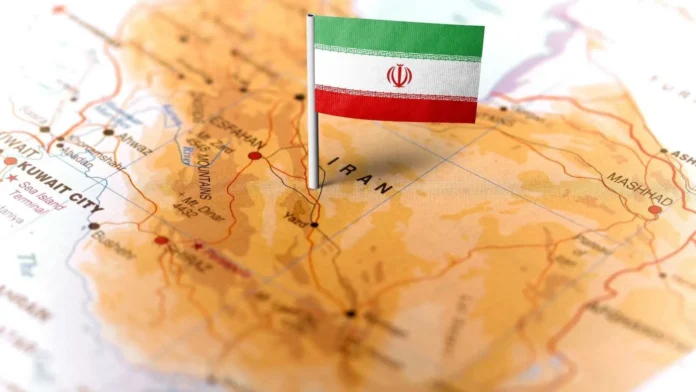

The US Treasury Department formally launched “Operation Economic Outcast” on August 24, sanctioning nearly 60 Iran-linked entities, individuals, and vessels in its opening round, while notably declining to target major Chinese banks despite China’s status as one of Iran’s largest remaining oil customers.
What Happened
Treasury Secretary Scott Bessent announced the campaign at a press conference, describing it as an “unprecedented, whole-of-government, economic campaign” against Iran and its enablers. “Around the globe, our objective is to sever every economic lifeline that sustains this tyrannical regime until Tehran stands alone,” Bessent said. The Treasury’s Office of Foreign Assets Control issued five new sectoral sanctions determinations covering Iran’s digital assets, technology, gold, aviation, and shipping industries, expanding the legal framework Washington can use to target companies operating in those areas.
The opening round designated nearly 60 entities and vessels, including brokers, shipping companies, and financial intermediaries based in the UAE, Singapore, and Hong Kong, along with five vessels identified as blocked property for allegedly transporting Iranian crude oil or petroleum products. Treasury also sanctioned Iranian cyber actors accused of compromising US critical infrastructure across energy, defense, healthcare, technology, and financial sectors, following a related Justice Department indictment of 17 Iranian cyber operatives earlier in the month.
Bessent confirmed that Treasury, State Department, and War Department teams are directly approaching foreign governments with “defined timelines” to shut down identified Iran-related activity, though the department has not disclosed those specific deadlines. Notably absent from the opening round were major Chinese financial institutions, despite China remaining one of Iran’s principal oil customers throughout the conflict.
Why It Matters
The campaign’s structure, built around secondary sanctions that can cut off non-US companies from the American financial system even for transactions with no direct US connection, represents one of the most powerful economic tools available to Washington, since access to the dollar-based global financial system remains essential for most international commerce.
The deliberate omission of major Chinese banks from the initial target list suggests the administration may be pursuing a calibrated, escalating strategy rather than an immediate maximum-pressure approach, potentially preserving that more consequential step as leverage for future stages of the campaign or as a bargaining chip in broader US-China economic relations.
For companies and financial institutions operating in the UAE, Singapore, Hong Kong, and other jurisdictions named in the initial round, the sanctions create immediate compliance obligations and reputational risk, illustrating how the campaign’s effects extend well beyond Iran’s borders to reshape business calculations across multiple global financial hubs.
Context and Background
Operation Economic Outcast primarily leverages Executive Order 13902, first signed in January 2020, which authorizes the Treasury Secretary to impose blocking sanctions on any person operating in specified sectors of Iran’s economy. The order initially covered construction, mining, manufacturing, and textiles, with the financial sector added in 2020 and petroleum and petrochemicals in 2024; this week’s action adds digital assets, technology, gold, aviation, and shipping to that list.
Five individuals named in the sanctions were also indicted by the Justice Department in an August 18 superseding indictment tied to the Mabna Institute, an Iranian entity accused of cyber operations, with cryptocurrency analysis firm TRM Labs identifying roughly $16.8 million in total funds flowing through 30 crypto addresses linked to those individuals.
The campaign follows through on Trump’s earlier declaration of “economic warfare” against Iran and Bessent’s promise of the “toughest sanctions in history,” delivered in the weeks after the collapse of the 60-day negotiating window established under the June memorandum of understanding between Washington and Tehran.
Analysis
Trade and sanctions policy analysts note the critical distinction between primary sanctions, which bar Iran-related transactions involving US persons, and secondary sanctions, which can reach non-US parties conducting business entirely outside American jurisdiction using access to the dollar as leverage, a combination that gives Operation Economic Outcast considerably broader reach than earlier, more narrowly targeted sanctions rounds.
Some geopolitical analysts point to the absence of major Chinese banks as evidence that the administration is deliberately avoiding a direct confrontation with Beijing at this stage, potentially reflecting broader strategic considerations around the ongoing US-China trade relationship that extend beyond the Iran-specific objectives of the sanctions campaign.
Sanctions experts caution that Treasury’s description of the campaign as “ongoing” rather than a single action suggests further rounds targeting additional sectors, entities, or potentially larger institutions, including Chinese banks, remain possible depending on how effectively the current phase succeeds in curbing Iran’s ability to generate oil revenue.
What Happens Next
Treasury has indicated it will continue issuing further guidance, general licenses, and enforcement announcements as Operation Economic Outcast develops, with officials describing the campaign as an ongoing effort rather than a one-time action. Countries and companies identified as facilitating Iran-related activity face the prospect of additional designations if they do not comply with the “defined timelines” Treasury has privately communicated.
Whether the campaign eventually expands to target major Chinese financial institutions will be a key indicator of how aggressively the administration intends to pursue its stated goal of fully isolating Iran’s economy, a step that would carry significantly higher diplomatic and economic stakes than the current opening round.