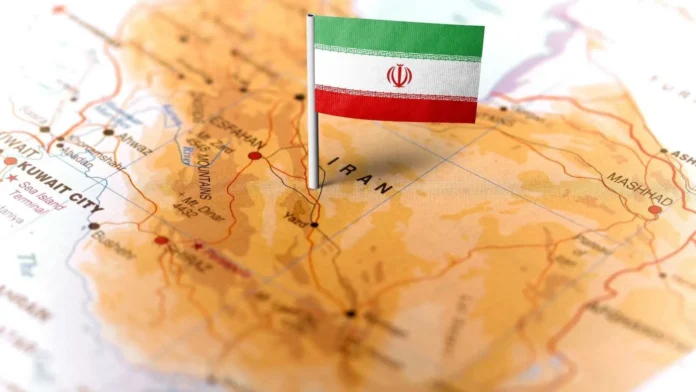

Treasury Secretary Scott Bessent said Thursday the United States will impose the “greatest coordinated economic isolation in the history of the world” on Iran, following through on President Trump’s declaration of “economic warfare” against Tehran, as Iran and China both publicly dismissed the threat within hours.
What Happened
Bessent told CNBC the administration would detail its new measures Monday, describing the coming sanctions as the toughest ever imposed on a single country and arguing the economic pressure would “collapse” Iran’s economy without requiring a return to direct combat. Vice President JD Vance said Wednesday that the war with Iran had entered a “new phase” of economic pressure, adding “we’re going to keep that going because we think that’s the best way to ultimately accomplish the final objective here.”
Asked whether the US would specifically pressure China, one of Iran’s largest remaining oil customers, Bessent said “many conversations are best to have in private” but called on Beijing to “get with the program.” Chinese Foreign Ministry spokesperson Lin Jian responded Thursday that US “sanctions and pressure will not help resolve the issue,” a rare direct pushback from Beijing on the sanctions campaign.
Iran’s regime dismissed Trump’s threat to economically crush the country, with officials arguing that years of prior US sanctions have already failed to achieve Washington’s objectives. Iran’s Islamic Revolutionary Guard Corps said Thursday it could deploy more “destructive” weapons if the war restarts, while Iran’s armed forces chief of staff warned that any “new threats” would be met with a “crushing” response of its own. Parliament Speaker Mohammad Bagher Ghalibaf said Tehran was prepared to “sacrifice our wealth” to defend the country’s “dignity and honor.”
Why It Matters
The scale of rhetoric on both sides, “toughest sanctions in history” versus threats of a “crushing” military response, marks a further hardening of positions following the collapse of the June memorandum of understanding’s 60-day negotiating window earlier this month. Bessent’s framing of economic pressure as an alternative to renewed direct combat suggests the administration currently favors sustained economic siege over further military escalation, at least for now.
China’s public rejection of the sanctions campaign carries particular significance given Beijing’s role as one of Iran’s largest remaining oil buyers throughout the conflict, raising questions about how effectively any new US sanctions regime can function without meaningful Chinese cooperation, especially as a separate Senate-passed bill threatening 100% tariffs on major buyers of Russian and Iranian oil, including China, remains pending in the House.
The announcement comes as gas prices in the US reached a seasonal record for this time of year, with the national average holding near $4 a gallon amid persistently low traffic through the Strait of Hormuz, illustrating the direct domestic economic cost Americans continue to bear from the ongoing conflict even as the administration promises new pressure on Iran specifically.
Context and Background
The economic warfare announcement follows Trump’s declaration earlier this week of a “crushing economic operation” against Iran, itself a response to the expiration of the 60-day deadline set under the June memorandum of understanding for the US and Iran to reach a comprehensive deal. That framework collapsed following renewed fighting and Trump’s subsequent call for Iran’s outright “surrender.”
The New York Times has reported that the US Navy has been helping tankers evade Iranian forces by turning off their transponders while transiting the Strait of Hormuz, an unusual detail suggesting Washington continues facilitating some commercial shipping even amid its broader pressure campaign, a nuance that complicates the simple narrative of total economic blockade.
The naval blockade of Iranian ports, first imposed in April, has already redirected dozens of commercial vessels and disabled several outright, with the Pentagon estimating it costs Iran roughly $500 million daily in lost trade revenue, providing the operational foundation upon which any expanded sanctions regime would presumably build.
Analysis
Economic policy analysts note that Bessent’s specific language, “collapse” Iran’s economy, represents a notably more aggressive framing than typical sanctions rhetoric, suggesting the administration may be pursuing a strategy explicitly designed to destabilize Iran’s government economically rather than simply pressure it toward specific negotiating concessions.
Regional analysts point to Iran’s confident public dismissal, emphasizing that years of prior sanctions have already failed, as reflecting a calculated strategy of projecting resilience regardless of the actual internal economic strain the country continues to face, a pattern consistent with Tehran’s public messaging throughout the conflict.
Trade policy experts note that China’s explicit rejection of the sanctions campaign, paired with the pending Senate bill targeting major Russian and Iranian oil buyers, sets up a potential collision course between US economic pressure strategy and its broader relationship with Beijing, a dynamic that could complicate the sanctions campaign’s effectiveness if China continues purchasing Iranian oil despite US objections.
What Happens Next
The Treasury Department is expected to detail the specific mechanisms of its new sanctions regime Monday, providing the first concrete look at what Bessent has characterized as history’s toughest sanctions campaign against a single country. Markets and regional governments will be watching closely for whether the measures specifically target China’s continued Iranian oil purchases.
Continued high oil and gas prices, tied to persistently low Hormuz traffic, are likely to remain a significant domestic political factor shaping how the administration’s economic pressure campaign is received by American consumers heading into the fall.