
The 2026 FIFA World Cup — the largest in the tournament’s history, with 48 teams competing across venues in the United States, Canada, and Mexico — kicks off on June 11 against a backdrop of simultaneous global crises, diplomatic rows over Iran team visas, a labour dispute at the Los Angeles stadium, and the simple, enduring fact that football happens regardless of what else is happening in the world.
FIFA World Cup 2026 signage is displayed at SoFi Stadium in Inglewood, California, on June 1, 2026.
In three days, a player will take the first kick of the 2026 FIFA World Cup, and approximately two billion people will be watching. The scale of that shared moment — simultaneous attention from a significant fraction of humanity — is something that almost no other event in the world produces. It happens every four years. It is happening again on Thursday, June 11, regardless of the Iran war, the bombing of Kyiv, the deaths in Lebanon, or any of the other crises that have occupied this publication’s coverage for the past fifteen days.
The 2026 tournament is different in several respects from its predecessors. It is the first to feature 48 teams — an expansion from 32 that reflects FIFA’s continued globalisation of the sport and its commercial interests. It is the first to be hosted across three countries simultaneously: the United States provides most of the venues, with additional matches in Canada and Mexico. And it is taking place in the most geopolitically charged international environment since the 1980 Moscow Olympics boycott.
The Iran Visa Crisis
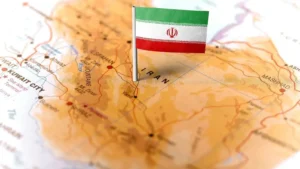
The most diplomatically significant story of the World Cup’s run-up has been straightforward in its origin and complex in its consequences: The United States has refused to grant visas to 15 members of Iran’s delegation to the 2026 World Cup, Iranian state media reported on Saturday.
Iran qualified for the 2026 World Cup through the Asian qualification process. FIFA’s rules require that host nations grant entry visas to all competing national teams and their delegations, without discrimination. The US refusal to grant visas to Iranian football officials — in the context of an active military conflict between the United States and Iran — creates a direct collision between FIFA’s rules and US immigration and sanctions policy.
Iran’s national football team will travel to Spain before heading to its World Cup base in Mexico, despite players still awaiting resolution of the visa situation. The plan — using Spain as a staging post before potentially finding a route to Mexican territory where they would be based for group stage matches — reflects FIFA’s attempt to find a practical workaround without directly confronting the US government.
The situation has produced a genuine legal and sporting crisis. FIFA cannot enforce its host country obligations against the US government’s sovereign immigration authority. Iran has not withdrawn from the tournament. The players — who are footballers, not combatants — are caught between a political conflict they did not start and a sporting event they qualified for through years of competition.
Palestine, by contrast, is making its World Cup debut — qualifying for the first time in the tournament’s history. The coexistence of Iran’s visa crisis and Palestine’s historic debut creates a layered narrative about the relationship between football and geopolitics that the tournament will carry throughout its group stage.
The Labour Dispute at SoFi
Negotiations between the union representing workers, the hospitality group at the Los Angeles stadium, and FIFA are set to continue Monday.
The labour dispute at SoFi Stadium — involving hospitality workers represented by a union seeking improved wages and conditions for one of the tournament’s marquee venues — adds a domestic dimension to the World Cup’s political backdrop. The tournament will generate enormous revenues for FIFA, its sponsors, the host cities, and the stadium operators. The workers who serve food and clean seats at those venues want a share of those revenues that reflects the scale of the event.
The dispute had not been resolved as of Sunday. Monday negotiations represent the last opportunity to reach an agreement before the tournament begins.
The US Team’s Preparations
The US men’s national team chose to play a pair of highly-ranked, super competitive teams in the final lead-up to the World Cup: Senegal and Germany.
The USMNT played Germany at Chicago’s Soldier Field on Saturday — a preparatory match that drew an enormous crowd and provided the team’s final major test before tournament play begins. The choice of Germany and Senegal as warm-up opponents reflects the coaching staff’s desire to prepare the team for the highest level of competition rather than padding statistics against weaker opponents.
The US is hosting the World Cup and will feel the enormous weight of host nation expectation. The team’s performance will be watched by millions of Americans for whom football — or soccer, as it is called domestically — is not yet the primary sporting passion, but who will be drawn in by the tournament’s scale and proximity.
What the World Cup Means in 2026
There is a question that presents itself whenever a global sporting event of this scale takes place during a period of acute international crisis: should it happen? Is it appropriate to hold a football tournament when a war is displacing millions, when oil is above $100 a barrel, when children are dying from measles in Bangladesh and from HIV in South Africa?
The answer that history consistently provides is: yes. Not because sport is more important than the crises happening alongside it, but because human beings need the experience of shared joy, shared competition, and shared narrative — and because the suspension of those experiences during crisis does not alleviate the crisis; it only adds the loss of joy to the loss of everything else.
What football at its best offers — the surprise of a Moroccan giant-killing, the elegance of an Argentine move, the raw emotion of a team from Palestine reaching the world’s largest stage for the first time — is a reminder of what human beings are capable of creating together. In a world of simultaneous crises, that reminder has unusual value.
The fans in Tehran who will watch Iran play — however they manage to find a screen in a country whose internet was blacked out for 87 days — will not be thinking about the ceasefire negotiations or the Strait of Hormuz. They will be watching their national team compete. That, too, is part of what it means to be human in June 2026.
LoudFact.com is an independent global news and explainer platform. This report is based on reporting from NPR, CBS News, Reuters, FIFA official communications, and La Malay Mail as of June 6-8, 2026.