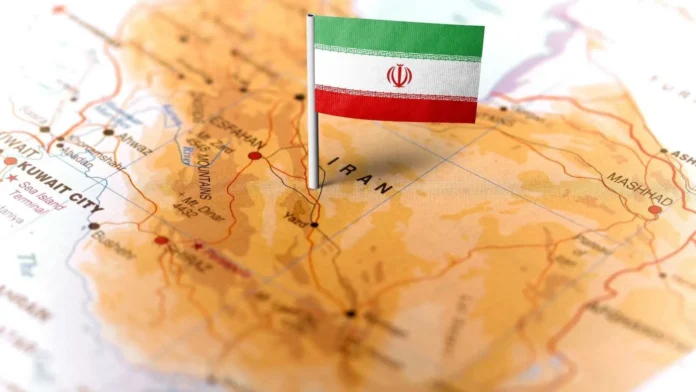

The US-Iran war turns 100 days old today, June 8, 2026. The Strait of Hormuz remains effectively closed. Seven Iranian ballistic missiles were fired at Kuwait and Bahrain on June 5. The memorandum of understanding that negotiators drafted to end the conflict has not been signed. Iran’s adviser to the Supreme Leader has called the talks a deadlock. This is the complete accounting of a war that changed the world and has not yet found its ending.
One hundred days ago, in the pre-dawn hours of February 28, 2026, US and Israeli aircraft entered Iranian airspace and struck at the heart of Iran’s nuclear and military infrastructure. The operation was planned in the highest secrecy. Iran’s Supreme Leader Ali Khamenei was killed. The conflict that followed closed the world’s most critical energy chokepoint, destabilised the global economy, and produced a cascade of crises that have occupied the front pages of every serious news organisation on earth for the quarter-year since.
Today is Day 100. The Strait of Hormuz is not open. The deal that would open it has not been signed. And Iran’s military adviser to the new Supreme Leader told CNN this week that the negotiations “are at a deadlock and Trump must break this deadlock.”
One hundred days. One deadlock. One hundred days of consequences that continue to accumulate.
The Military Picture at Day 100
The active military exchange between the United States and Iran has not stopped. The April 8 ceasefire paused the large-scale air campaign that characterised the war’s first six weeks. It did not produce a cessation of military activity.
In the past 72 hours alone: The 24-hour pause in the direct Iran-US exchange ended on 5 June: CENTCOM stated US forces shot down four Iranian one-way attack drones launched toward the Strait of Hormuz and then struck Iranian coastal surveillance radar sites at Goruk and on Qeshm Island, after which Iran fired seven ballistic missiles at Kuwait and Bahrain.
Initial assessments indicate six of the missiles launched by Iran were intercepted and a seventh did not reach its intended target. There are currently no reports of harm to US personnel, and Iranian claims of damaging US 5th fleet headquarters in Bahrain are false.
The pattern — US defensive strikes, Iranian retaliatory missile salvos, US interception, Iranian threats of wider closure — has repeated itself on most significant days since April 8. The ceasefire is not a ceasefire in any operational sense that would be recognised by the international lawyers who draft these arrangements. It is a framework within which both sides continue to conduct military operations while simultaneously pursuing a negotiated settlement that neither has yet been willing to finalise.
The Diplomatic Picture at Day 100
The memorandum of understanding that US and Iranian negotiators have drafted — 60-day ceasefire extension, Hormuz mine removal in 30 days, nuclear talks to begin — remains unsigned.
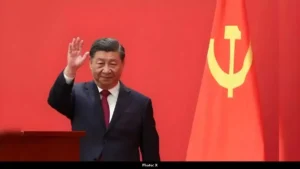
Mohsen Rezaei, a military adviser to Iranian Supreme Leader Mojtaba Khamenei, told CNN the US-Iran negotiations “are at a deadlock and Trump must break this deadlock.”
Trump, simultaneously, continues to project optimism. His Truth Social posts about the negotiations have described them as going “very well” and “at a rapid pace.” His statement that Iran has “agreed to not have a nuclear weapon” — made Thursday without elaboration — is either a description of a private diplomatic commitment or an aspiration presented as fact.
The gap between Iranian characterisation of the talks (“deadlock”) and Trump’s characterisation (“very well”) is not narrowing. Both are being said simultaneously. The diplomatic process continues in the gap between them.
The Economic Picture at Day 100
Brent crude oil has been above $100 per barrel for more than 85 of the past 100 days. The IEA has called this the most severe oil supply shock in history. US inflation is at 3.8% annually — a three-year high. US gas prices have been above $4.42 per gallon. The global shipping industry has redirected over 116 vessels from Iranian ports. Six commercial ships have been disabled by US blockade enforcement.
The April 2026 International Energy Agency Report describes the current situation as the most severe oil supply shock in history.
The world’s oil rerouting efforts — Saudi Arabia’s East-West pipeline at near-maximum capacity, the new UAE-Saudi bypass route, the Iraqi-Turkish pipeline revival — cover perhaps 25% of the volume that Hormuz normally moves. The other 75% is not moving. That gap is what oil prices above $100 per barrel represent: the cost of the missing 15 million barrels per day that the world needs and cannot get.
What the Ceasefire Framework Contains — and Why It Has Not Been Signed
The MOU’s core elements are documented:
The memorandum makes clear that Iran will not be able to impose tolls on the Strait of Hormuz and that Iran will have to remove all mines from the vital waterway within 30 days. The agreement being negotiated called on Iran to restore the number of ships transiting through the vital waterway to pre-war levels within 30 days and for the US to completely lift its blockade within the same time.
What the MOU does not contain — and what Iran’s side has not accepted and the US side has not agreed to withdraw — are the nuclear enrichment dispute and the missile programme. Iran insists on its right to enrich uranium. The US demands dismantlement. Iran refuses to negotiate its missile programme. The US wants limits. Neither position has moved in 100 days.
The sequencing question — who moves first — also remains unresolved. Iran wants the blockade lifted before it removes mines. The US wants mines removed before it lifts the blockade. That chicken-and-egg problem has not produced a solution.
The Human Picture at Day 100
Behind the statistics and the diplomatic frameworks are people. The people of Kuwait who have had their international airport struck twice. The Gulf workers and expatriates who have been unable to rely on commercial aviation for 100 days. The Iranian families who spent 87 days unable to communicate reliably with diaspora relatives. The 31 people executed inside Iran during the first 65 days of the conflict, most for political or security offences. The crew of the Lian Star, drifting disabled in the Gulf of Oman.
And beyond the immediate theatre of the war: the Ukrainian civilians killed by Russian missiles because the US air defence stockpiles meant for Ukraine were drawn down by the Iran war. The HIV patients in South Africa who lost access to clinics because PEPFAR funding was cut partly in the same budget environment that funded the war. The North Korean nuclear programme expanding because the world’s attention was elsewhere.
Wars do not stay in their boxes. 100 days has demonstrated that with painful clarity.
What Breaks the Deadlock
Mohsen Rezaei said Trump must break the deadlock. Trump said “one way or the other, it’s finished.” Trump’s statement that his goal is to prevent Iran from getting a nuclear weapon: “It’s either finished with a piece of paper, or finished a more difficult way, although you could say a much easier way.”
The “easier” military solution — eliminating Iran’s nuclear infrastructure completely through continued military action — remains on the table. The “more difficult” diplomatic solution — a negotiated framework that both sides can live with — requires both sides to move from positions they have held for 100 days.
What changes that? Military exhaustion — both sides have absorbed costs that are real and accumulating. Economic pressure — Iran’s blockade losses are severe; US inflation is politically damaging. Diplomatic momentum — Pakistan, Qatar, and Oman are still engaged; back-channels are still open. And time — every day that the Hormuz remains closed adds to the pressure on both governments to find a path out.
Day 100 is not a resolution. It is a marker — evidence that a conflict entered on the assumption of quick resolution has become something more prolonged and more consequential than either side anticipated. The next 100 days will determine whether the world waits another hundred days, or whether the deal that has been drafted is finally signed.
LoudFact.com is an independent global news and explainer platform. This report draws on CENTCOM statements, CNN, the House of Commons Library, RSIS, and the full body of LoudFact.com‘s documented Iran war coverage from February 28 through June 8, 2026.