
Vladimir Putin acknowledged on Sunday that Ukraine’s sustained drone campaign against Russian oil refineries has produced real fuel shortages across the country — the first time the Russian president has publicly detailed the domestic impact of Ukraine’s deep-strike strategy on Russian civilian and industrial infrastructure. The admission, made during a Kremlin-published interview, came as Ukraine struck two more refineries and as Russia’s own regions imposed mandatory fuel rationing, long lines formed at petrol stations from Moscow to Siberia, and Crimea declared a peninsula-wide fuel emergency.
What Putin Said
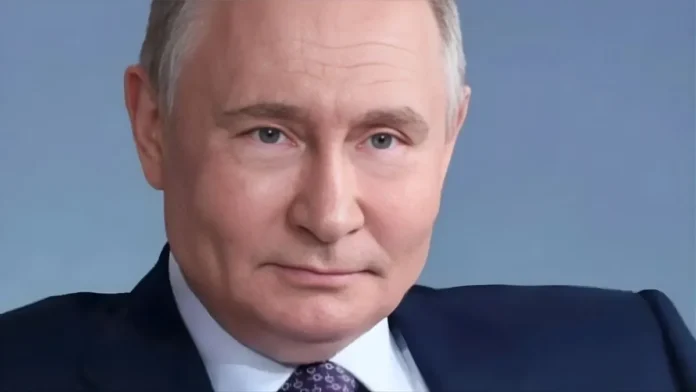
Russian President Vladimir Putin acknowledged Sunday that Russia is facing a “certain shortage” of fuel following a wave of repeated Ukrainian strikes targeting oil refineries and domestic supply lines. “As for strikes against critical infrastructure in general, and energy infrastructure in particular, of course, these attacks on our infrastructure facilities create problems,” Putin said in a Kremlin-published interview. “That’s obvious. Right now we’re observing a certain shortage, but it’s not critical.”
The Russian president’s comments during an interview with a state TV reporter on Sunday mark the first time he has detailed the extent to which Ukraine’s deep-strike success has hampered Russia’s fuel production. Putin said Russia would import more fuel and expedite repairs of oil facilities to end what he described as the “temporary deficit.” “All damaged facilities are being restored quite quickly, and the issues that arise are not critical,” Putin said.
Putin said the government’s primary focus was to improve Russian air defence system capabilities and to ensure that fuel supplies reach consumers, especially in annexed Crimea, where local authorities have declared a state of emergency.
The Scale of the Shortages
The gap between Putin’s framing and the conditions on the ground across Russia is significant.
At least 17 regions have imposed mandatory restrictions on gasoline and diesel sales, with dozens of others reporting shortages or restrictions by private fuel distributors. In Siberia, fuel is only available at government-run stations at a limit of 50 litres per vehicle per day.
The Ukrainian drone strikes have targeted oil terminals, refineries and pipelines. Long lines were reported in fuel stations in the region of Bashkortostan, one of the most oil-rich areas in the country. Many areas have also experienced blackouts. Gasoline and kerosene exports have been suspended, and a complete ban on diesel exports is under active consideration.
Russia’s central bank has forecast GDP growth of between 0.5% and 1.5% in 2026 — a projection that was already far below the 3.6% growth recorded in 2023, and which the fuel crisis will further pressure downward.
Ukraine Keeps Striking While Putin Speaks
The timing of Ukraine’s latest strikes was notable.
Ukrainian President Volodymyr Zelensky said on Sunday that Ukrainian forces struck two more Russian oil refineries — one in the Krasnodar region, estimated to be about 186 miles from the front line, and another facility in the Yaroslavl region, about 435 miles from the Ukrainian border. “Each of our long-range sanctions is a reduction in the resources working for the Russian war machine, and another step towards peace,” Zelensky said.
Hours before Putin’s speech, a Ukrainian drone strike killed one person and sparked a fire at a refinery in southern Russia’s Krasnodar region. Regional Governor Veniamin Kondratyev confirmed the strike. Ukrainian President Zelensky called the strike part of “operations that weaken Russia’s ability to wage this war.”
The 40-Day Strategy Behind the Strikes
The fuel shortage in Russia is not a by-product of random attacks — it is the intended result of a deliberate strategy that Zelensky formally approved at the end of June.
On June 25, Zelensky said he had approved a 40-day military operation by the country’s security service to “influence the aggressor state in order to push for an end to the war,” as US-backed mediation efforts appear to be faltering. Ukraine’s attacks on Russian oil refineries prompted the fuel shortages now visible across multiple regions.
The strategy has three interlocking components: strikes on Russia’s oil refinery network to degrade domestic fuel supply and export revenue; the simultaneous isolation campaign against Crimea that is severing road, rail and sea supply routes to the peninsula; and long-range strikes on military infrastructure designed to force Russia to pull air defence assets away from frontline deployments to protect strategic domestic sites.
The Crimea Supply Emergency
The most acute fuel crisis is in Crimea. The government’s primary concern is ensuring that fuel supplies reach Crimea, where local authorities have declared a state of emergency partly due to fuel shortages caused by Ukraine’s interdiction campaign against northern supply routes.
The Kerch Bridge — the main link between mainland Russia and Crimea — remains restricted for hazardous cargo including fuel tankers. The land supply corridors through occupied southern Ukraine, which had been carrying the bulk of Crimea’s fuel supply, are now under systematic Ukrainian drone attack.
What It Means for Russia’s War Capacity
Fuel is not merely a civilian commodity — it is the logistical backbone of Russia’s military operations. Tanks, artillery systems, armoured vehicles, aircraft and supply convoys all depend on reliable fuel supply chains. A sustained disruption to Russia’s refinery network does not merely inconvenience Russian civilians — it directly constrains the operational tempo of the Russian military.
Putin said he is open to a pause on long-range strikes on both sides, as proposed by Ukraine, though he acknowledged the proposition is more beneficial to Ukraine. The Russian leader said he is ready to continue negotiations “and discuss all the details.”
Whether the fuel crisis accelerates Russia’s willingness to negotiate in good faith, or whether Putin absorbs the damage and continues fighting, will be one of the central questions determining the war’s trajectory through the summer.