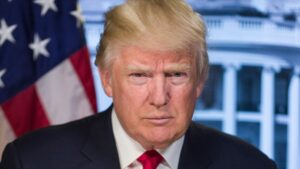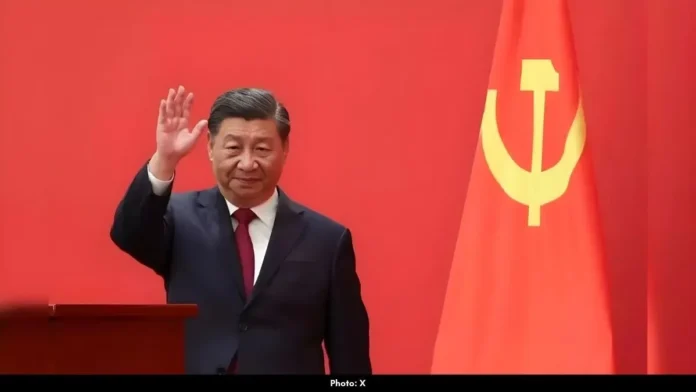

US President Donald Trump’s closely watched visit to China this week has gone a long way toward strengthening a fragile trade truce with Beijing and stabilizing the bilateral relationship. While the visit was delayed by more than a month due to the Iran war, Trump’s two-day summit with Chinese President Xi Jinping wrapped up Friday with plans for another meeting this fall.
CNBC’s analysis from Beijing identified three big takeaways from the summit. Each deserves detailed examination.
Takeaway One: Trade Stabilization — The Framework Is Now Formal
“The big word will be stabilization. The truce that the two parties negotiated will, I suspect, become a formal agreement,” Graham Allison said on CNBC. Trump’s invitation to Xi to visit the US on September 24 means the two leaders can talk in person again before the expiration of the one-year trade truce set in October 2025. The agreement lowered tariffs and rolled back rare earths restrictions after an escalation in tensions between the two countries earlier in 2025.
The trade stabilization is real in three specific dimensions. First, the Boeing, soybeans, LNG and oil purchases that Trump confirmed to Fox News provide the headline wins that both domestic audiences need — American farmers and manufacturers see tangible Chinese purchase commitments; Chinese importers see market access preservation.
Second, the September 24 Xi visit to Washington creates accountability: if China hasn’t followed through on the purchase commitments by September, the visit provides the forum to address that failure before the trade truce expires. Third, the “Board of Trade” mechanism — announced ahead of the summit — creates the working-level implementation structure that was absent from the 2017 summit’s $250 billion in commitments that never materialised.
Takeaway Two: Iran Common Ground — More Than Any Previous Moment
“More discussion on Iran highlighted that they do have common ground. The fact that both sides want to describe the meeting as a win shows goodwill, at least,” said Yue Su of the Economist Intelligence Unit. “There are limits to what China can realistically do, as the Iranian regime is operating in survival mode and will prioritize its own interests and agenda above all else.”
The Iran common ground is defined by four specific agreements: Iran can never have a nuclear weapon (co-signed bilaterally for the first time). Hormuz must remain open (co-signed). No Hormuz tolls (China opposed Iran’s demand). No Hormuz militarisation (China pushed back against US military escort approach). And Xi offered diplomatic help — “if I can be of any help at all.”
The limitation is real: Iran is “operating in survival mode.” China’s help, however genuine, cannot override an Iranian leadership that is internally divided between a civilian team willing to negotiate and an IRGC that believes only military resistance produces good deals. China is one actor in a complex Iranian internal politics that it cannot control.
“Going all-in” — as Carnegie China said Beijing will not do — would require China to threaten to cut off Iranian oil entirely, which has costs to China’s own energy security that Xi will not accept.
Takeaway Three: Taiwan Deliberately Avoided — Xi’s Warning Landed
Xi’s warning to Trump that mishandling Taiwan would put the US-China relationship into “great jeopardy,” according to official English-language state media, dominated headlines at the start of talks.
“I do think each side has delivered. There was no substantive discussion on Taiwan, though, which is not surprising,” said Yue Su.
Taiwan’s avoidance is deliberate and mutual. Xi delivered his sharpest warning — “handle it badly, the relationship holds; handle it badly, collision or conflict” — in the opening session, putting his red lines on record. Then both sides avoided substantive discussion for the rest of the summit. No formal language changes on Taiwan. No concessions on the Six Assurances. No modification of the “does not support” Taiwan independence formulation.
This is the outcome Taiwan most needed: Xi’s verbal red lines registered, Trump’s acknowledgment implicit in his silence, but no formal commitments extracted under Iran-assistance pressure. The anxiety that Taiwan’s government expressed ahead of the summit — that Trump might trade Taiwan concessions for Iranian war help — was not realised.