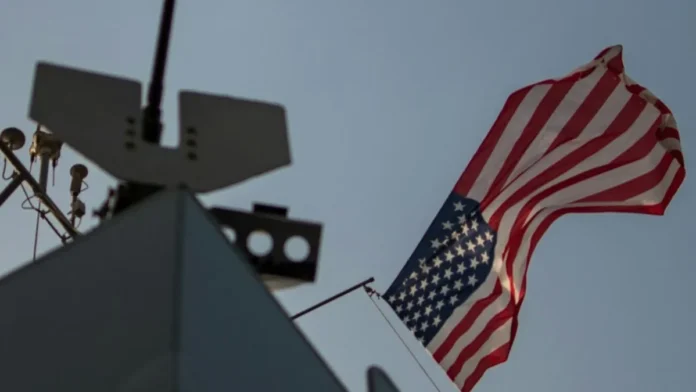

Since September 2025, the Trump administration has authorised the US military to strike alleged drug-carrying boats in the Caribbean and eastern Pacific, killing more than 200 people across at least 59 strikes. The military consistently releases video of the explosions. It almost never releases evidence of drugs. Legal experts, the United Nations, and Democratic members of Congress have raised serious questions about whether the campaign constitutes unlawful killing.
The United States military strikes on alleged drug-carrying boats transiting in Latin America have killed more than 200 people since September, when the Trump administration began an operation it has justified as necessary to stem the flow of drugs. As the strikes continue, the administration has offered little evidence to support its claims of killing “narco-terrorists.”
The pattern is consistent: US Southern Command announces a strike, releases aerial footage showing a vessel being hit and engulfed in flames, states that “intelligence confirmed” the vessel was engaged in narco-trafficking operations and operated by a designated terrorist organisation, and reports the number of people killed. It does not release drug seizure data, names of those killed, details of the intelligence used, or evidence of cartel affiliation.
More than 200 people are dead. Nine months of strikes. At least 59 vessels destroyed. And the public evidentiary record supporting the characterisation of those killed as drug traffickers and terrorists remains, for the vast majority of cases, classified.
How the Campaign Began
The programme began on September 2, 2025, when US Southern Command struck boats off the coast of Venezuela. The Trump administration justified the strikes as counter-narcotics operations targeting cartels that had been formally designated as foreign terrorist organisations by presidential order on January 20, 2025 — the first day of Trump’s second term.
In October 2025, Trump publicly declared the United States was in an “armed conflict” with drug cartels — a designation that the administration used to justify the application of laws of armed conflict rather than law enforcement norms to the strikes. Under the laws of armed conflict, enemy combatants can be targeted with lethal force without arrest, trial, or public evidence. Under law enforcement norms, lethal force is constrained by proportionality, necessity, and due process requirements.
The Trump administration produced a classified legal opinion that justified the lethal strikes against a secret list of at least two dozen cartels and suspected drug traffickers, classifying them as enemy combatants.
The classified nature of both the legal opinion and the target list means that the legal framework for the strikes cannot be independently evaluated by Congress, legal experts, or the public. The administration is, in effect, asking for trust in a process it has not disclosed.
What SOUTHCOM Releases — and What It Doesn’t
While the military’s social media announcements always include video of the attacks, this appears to be the first with the footage in colour instead of black and white. The video shows a small vessel floating in the ocean before it’s hit and engulfed in a fireball.
The video releases serve a clear purpose: they demonstrate that strikes are being conducted and that the administration is taking visible action against drug trafficking. They are effective communications tools. They are also, consistently, evidence of explosions rather than evidence of drug trafficking.
The Trump administration has provided no evidence about the type or quantity of drugs on the boats. This lack of information makes it impossible for independent verification of the administration’s central claim: that the people being killed were, in fact, drug traffickers operating for designated terrorist organisations rather than fishermen, small-scale smugglers, or others misidentified by intelligence that cannot be tested publicly.
Trump has claimed that each destroyed boat saves 25,000 American lives from drug overdoses. That claim has been rated “Pants on Fire” by PolitiFact. The administration has not provided a methodology for the calculation.
The Legal Challenge
Secretary of State Marco Rubio defended US military strikes on boats in the Caribbean Sea and Pacific Ocean during a Senate hearing June 2, saying the Defense Department determined the strikes’ legality and based its decisions on intelligence information. “Every strike has a legal officer on the deck that has to make a determination about whether the call is legal or not, and this is done by the Department of War, the way it’s been done in other theaters around the world,” Rubio said in response to a question from Sen. Tim Kaine, D-Va., about the criteria to target boats.
The “legal officer on the deck” argument is the administration’s primary legal justification. It asserts that the procedural requirement for pre-strike legal review has been met — even if the legal basis for that review is itself classified and the results of the review are not disclosed.
The strikes have come under intense scrutiny by legal experts and Democratic members of Congress who say they amount to murdering civilians since the US is not in a declared, congressionally-authorized war with drug cartels.
The constitutional argument is significant: under the US Constitution, the power to declare war belongs to Congress, not the president. The administration’s declaration of “armed conflict” with drug cartels was made by executive order, not congressional authorisation. Critics argue that conducting lethal strikes under this framework — killing more than 200 people in a non-congressionally-authorised armed conflict — is constitutionally impermissible.
The United Nations has called for the campaign to stop, stating that the killings violate international law.
The Victims: Who Are They?
This is the question that the available evidence cannot answer. The administration has characterised every person killed as a “narco-terrorist” — but that characterisation comes from the same classified intelligence that cannot be independently verified, applied to individuals who are killed before any legal process can evaluate the evidence against them.
Latin American governments — particularly Venezuela, Colombia, and Mexico — have raised concerns about the strikes targeting vessels in their territorial waters or exclusive economic zones without consent. Colombia and El Salvador have made their own drug seizures at sea during the same period, demonstrating that interdiction without lethal strikes is possible and produces evidence of drug trafficking that can be publicly presented.
The contrast is pointed: when Colombia or El Salvador seizes a drug boat, the drugs are displayed, the traffickers are arrested, and the evidence is public. When the US military strikes a boat, there are flames on video and a press release asserting guilt.
The Numbers in Context
The US military on May 30 struck another boat it said was engaged in “narco-trafficking operations” in the eastern Pacific Ocean, killing three men and increasing the total death toll to 205 people. The US military recently struck four boats that it said were involved in narcotrafficking, increasing the death toll to 205 people.
Two hundred and five people dead in nine months. In a campaign that has received a fraction of the media coverage of the Iran war, the Ukraine conflict, or the Lebanon strikes — despite its extraordinary legal, ethical, and humanitarian implications.
The relative invisibility of the programme in global media reflects several factors: the strikes happen at sea, far from cameras; the victims are unnamed and their identities unverified; the administration’s classified framing prevents detailed public scrutiny; and the broader news environment — dominated by the Iran war and multiple concurrent crises — has provided limited space for sustained coverage of a programme that is, by any measure, one of the most legally contested US military operations in recent memory.
What Happens Next
The programme continues. The US has since struck at least 59 boats in the Caribbean Sea and eastern Pacific Ocean. There is no indication from the administration that it intends to stop or modify the campaign.
Congressional pressure — primarily from Democratic senators — has produced hearings but no legislative action to constrain the strikes. The Republican majority in both chambers has not moved to restrict executive authority in this area.
For the more than 200 people killed, and the families who may or may not know what happened to them, no legal process is forthcoming. They were designated enemy combatants by an intelligence assessment that no court will ever review, killed by a military that released video of the explosion, and described in a press release as narco-terrorists.
Whether that description was accurate, in any individual case, is a question the evidence available to the public cannot answer.
LoudFact.com is an independent global news and explainer platform. This report is based on reporting from NPR, KPBS, PBS NewsHour, CBS News, PolitiFact, and CNN as of June 1-3, 2026.