
Kim Jong Un toured a new nuclear bomb fuel production facility on June 3, with state media releasing photographs showing him walking through centrifuge halls and announcing plans to expand North Korea’s nuclear arsenal “at an exponential rate.” The disclosure confirms that North Korea has more than doubled its capacity to produce weapons-grade material in five years — and makes explicit that no part of its nuclear programme is available for negotiation.
North Korea on Thursday unveiled a new facility to produce nuclear bomb fuels, with leader Kim Jong Un announcing plans to bolster the country’s nuclear forces “at an exponential rate.” The nuclear plant’s disclosure implies that Kim is eager to cement his country’s status as a nuclear power and has no intentions of placing his bomb program on a negotiating table. After visiting the site on Wednesday, Kim said he and other top officials “confirmed the order of priority for implementing the ambitious future plan designed to beef up our state’s nuclear forces at an exponential rate,” according to the official Korean Central News Agency.
The photographs released by KCNA on June 4 — taken during Kim’s facility visit on June 3 — are among the most detailed images ever released by North Korea of its uranium enrichment infrastructure. They show Kim walking through narrow aisles flanked by dense rows of silver cylindrical tubes and complex piping arrangements — the unmistakable signature of a centrifuge cascade used for uranium enrichment. A second image shows him in a meeting room with senior officials, where a partially blurred graphic depicting a cone-shaped object was spread across a table.
During a visit to the facility on Thursday, Kim said production capacity for weapons-grade nuclear material was more than double its level of five years ago, the state Korean Central News Agency reported.
What the Facility Reveals
KCNA said the facility used “more sophisticated technology” but didn’t provide further details like its location and when it began its operation.
The concealment of the facility’s location is consistent with North Korea’s operational security practices for its most sensitive nuclear infrastructure. The country has been building additional enrichment capacity beyond its known Yongbyon complex for years — a practice that made it functionally impossible for any verification regime to confirm the full scale of the programme.
Last September, South Korean Unification Minister Chung Dong-young said that North Korea was operating a total of four uranium enrichment facilities including the Yongbyon complex, and that they were running every day. The June 3 disclosure appears to represent a fifth facility — or a significant expansion of an existing one — bringing to light what intelligence agencies had long suspected but could not publicly confirm.
The centrifuge images are consistent with uranium hexafluoride gas centrifuges used for enriching uranium. Weapons-grade highly enriched uranium requires enrichment to more than 90% U-235 purity — a process that can be achieved through cascades of centrifuges running continuously. The scale visible in the photographs, though incomplete, suggests a facility capable of producing meaningful quantities of weapons-grade material.
Since going critical in 2006, North Korea has amassed fissile materials that the UN International Atomic Energy Agency deemed in April to be sufficient for “dozens” of warheads. It has also mastered most technologies required to land intercontinental ballistic missiles in the continental US, and is upgrading launch systems’ mobility and survivability.
The “Exponential” Ambition
Kim’s language — “exponential” expansion — is not merely rhetorical. It describes a trajectory: each generation of enrichment capacity enables a larger stockpile of weapons-grade material, which enables more warheads, which enables a larger and more diverse arsenal.
The North Korean leader said that his country has more than doubled its capacity to produce weapons-grade nuclear material in the past five years and that the new plant will help strengthen its nuclear war deterrent, according to the report from the Korean Central News Agency.
A doubling of capacity in five years, followed by the commissioning of additional facilities, represents a programme that is not being constrained by sanctions, diplomacy, or military deterrence. It is a programme on an upward trajectory.
Kim said the urgency for bolstering up the country’s nuclear war deterrent, both in quality and quantity, has grown because of confrontations with “the most ferocious enemies,” an apparent reference to the US and South Korea.
The “most ferocious enemies” framing is standard North Korean state media language. But its invocation in June 2026 — in the context of an active US-Iran war, a major Russian attack on Ukraine, and a US administration managing multiple simultaneous military and diplomatic challenges — reflects a real assessment that the international environment is in flux and that this moment, when adversary attention is divided, is an opportune time to accelerate.
Why Every Denuclearisation Effort Has Failed
North Korea’s relentless drive to become a nuclear power casts a glaring light on policy failures by Washington, Seoul and other actors. Every effort to stymie North Korea’s nuclear arms programs has flopped, despite endless negotiations and a UN-backed international sanctions regime.
The history of US-North Korea diplomacy is a chronicle of agreements that were not implemented, concessions that were not reciprocated, and frameworks that collapsed. The 1994 Agreed Framework. The Six-Party Talks of the 2000s. The Singapore Summit of 2018 between Trump and Kim. Each produced moments of apparent diplomatic progress. None produced verifiable denuclearisation.
A prominent South Korean argues for the nullification of the long-held denuclearisation position. “Despite the failure of numerous nuclear agreements, 250+ inter-Korean agreements, etc., the US and its allies should always strive for engagement,” one analyst said. “But Pyongyang’s repeated rejections, including of a personal letter from Trump, do not bode well.”
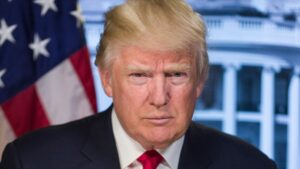
Trump’s personal letter to Kim — unreported publicly but referenced in South Korean analytical circles — apparently produced no response. The rejection of a direct communication from the US president reflects North Korea’s fundamental calculation: the nuclear programme is more valuable than any concession Washington is willing to offer in exchange for it.
Why Now: The Strategic Moment
The timing of this disclosure — in the same week that the US is managing an active Iran war, a House revolt over war powers, Russian attacks on Ukraine, and a collapsing Hormuz ceasefire — is not coincidental.
North Korea has demonstrated a consistent pattern of strategic communication: making nuclear disclosures when global and particularly US attention is most divided. The June 3 facility revelation sends multiple simultaneous messages to different audiences. To the US: your Iran-focused attention does not mean we are unobserved. To China and Russia: our nuclear programme is progressing; our value as a partner continues to grow. To the South Korean and Japanese publics: no defensive posture is sufficient without their own serious consideration of deterrence.
The photographs of Kim in a centrifuge hall are designed to be the most shareable images in global security circles this week. They have succeeded. The message they carry — North Korea is a nuclear power, it is expanding, and it has no interest in being otherwise — is one of the most consequential strategic facts in Asia.
What Happens Next
Some experts still question whether North Korea has functioning nuclear missiles that can reach the US mainland. That debate, while technically important, may be increasingly academic. North Korea’s ICBMs are mobile, survivable, and progressively tested. Its warhead miniaturisation programme has been assessed as technically advanced by multiple intelligence agencies.
The immediate policy response from the US is likely to be limited. The Biden-era Indo-Pacific framework continues to operate. US-South Korea military exercises continue. But with Iran consuming US diplomatic and military attention, North Korea’s June 3 disclosure is unlikely to produce a sharp policy response in the near term.
And that, too, is part of Kim’s calculation.
LoudFact.com is an independent global news and explainer platform. This report is based on reporting from NPR, CNN, Al Jazeera, The Washington Post, The Washington Times, Houston Public Media, and The Columbian as of June 3-4, 2026.