
Peru holds its presidential runoff election on June 7 between conservative Keiko Fujimori and leftist Roberto Sánchez in a race that polling shows is statistically tied — with an undecided vote larger than the gap between the candidates and a nation exhausted by a decade of political instability choosing between two profoundly contested figures.
Peruvians will elect their new president Sunday with polls suggesting a polarised but tight race between hard-right candidate Keiko Fujimori and leftist Roberto Sánchez.
According to the latest Ipsos poll conducted on June 3, the candidates are statistically tied — Sánchez leads slightly with 43.8 percent support to Fujimori’s 43.2, while 13 percent of voters remain undecided or intend to cast a blank ballot.
The 13% undecided — a bloc larger than the gap between the two candidates and larger than the margin of error in any poll — will determine the outcome. In a country where blank and invalid ballots have historically been significant, that figure also includes voters who may choose to reject both options rather than endorse either.
Peru has had nine presidents in the decade since 2016. The country that is voting today has cycled through political leaders at a pace that has tested the credibility and resilience of its democratic institutions in ways that few Latin American nations have matched. Today’s election is, in one sense, just the latest episode in that exhausting cycle. In another, it may be the one that finally provides some stability — or deepens the dysfunction further.
Keiko Fujimori: The Daughter, the Candidate, the Fourth Attempt
Keiko, as she’s known in Peru, is running on the legacy of her father, the late, disgraced strongman President Alberto Fujimori.
Keiko has also been a leading candidate in four consecutive presidential elections, advancing to the final round of voting in 2011, 2016, 2021 and 2026.
The persistence is remarkable. Four consecutive presidential runoffs — losing in 2011, losing in 2016, losing in 2021 by less than one percentage point to Pedro Castillo, and now running again. That persistence reflects both the genuine political base that Fujimorismo commands in Peru — approximately a third of the electorate reliably favours the political tradition her father established — and an ambition that has survived criminal investigation, pretrial detention, and the collapse of Castillo, whose 2021 victory briefly appeared to have ended her path to the presidency.
Under his rule, Alberto Fujimori undermined Peru’s democracy, engaged in widespread corruption, and ordered gross human rights violations, including forced sterilisations targeting primarily Indigenous women and forced disappearances, torture, and death squad killings.
Keiko Fujimori has never fully distanced herself from her father’s legacy, though she has at various points attempted to reframe her candidacy around economic development, security, and foreign investment attraction. For many Peruvians — particularly those with direct experience of the Fujimori era’s abuses — her candidacy represents an existential threat to democratic norms. For others, it represents stability, economic order, and a return to the growth of the 1990s stripped of its worst excesses.
Fujimori’s championing of her father’s legacy remains deeply polarising, fuelling large anti-Fujimorista demonstrations in Lima in recent days.
Roberto Sánchez: The Psychologist, the Congressman, the Castillo Connection
Roberto Sánchez, 57, was born in Huaral, a coastal, agricultural city in the outer provinces of the department of Lima, to parents from the Andean regions of southern Peru. A psychotherapist, his entry into politics was with the party of former President Pedro Castillo.
He has been campaigning in the sombrero given to him by Pedro Castillo, the leftist former president who beat Fujimori in 2021 but whose administration collapsed within 18 months amid accusations of extremism, incompetence and graft. He was eventually ousted and jailed in December 2022 after, in a failed bid to avoid corruption probes, attempting to shutter congress and the courts.
The Castillo connection is both Sánchez’s greatest asset with the left’s base and his greatest vulnerability with centrist and undecided voters. Castillo’s presidency is remembered not as a principled leftist government undermined by a hostile congress, but — across much of Peru’s political centre — as a chaotic failure that ended with an attempted autogolpe, or self-coup.
While Keiko has been offering to attract more foreign investment by cutting red tape, Sánchez initially promised to nationalise large sectors of the economy and to replace imports with local production — an economic policy reminiscent of Cuba or North Korea.
That characterisation of Sánchez’s initial platform — which he has since moderated for the runoff campaign — illustrates the range of interpretations his candidacy attracts. His supporters argue the moderation reflects pragmatic responsiveness to Peruvian economic realities. His critics argue the nationalisation plans remain his true intention and that the moderation is electoral strategy.
Why This Election Matters Beyond Peru
Peru is the world’s second-largest copper producer and among the top producers of silver, zinc, and gold. Its mining sector is the backbone of the national economy and a significant supplier to global markets — including, critically, the metals needed for renewable energy technology and battery manufacturing. The election’s outcome has implications for the regulatory environment facing foreign mining companies, the government’s approach to anti-mining community protests that have paralysed projects in recent years, and Peru’s positioning in global commodity supply chains.
Beyond mining, the election matters as a signal about the direction of Latin American politics. The continent is navigating a complex political landscape in which the “pink tide” of left-wing governments that swept through a decade ago has been followed by a diverse set of political outcomes: Milei’s radical libertarianism in Argentina, Petro’s reformist left in Colombia, Lula’s return in Brazil. Peru’s vote today will add another data point to an already varied regional map.
Peru’s 27.3 million eligible voters had just three weeks to decide between their two options in the presidential runoff this June 7.
The compressed campaign has favoured simpler messages over detailed policy elaboration. Fujimori has emphasised security — violent crime and gang activity, including incursions by Ecuadorian criminal organisations along Peru’s northern border, have been major voter concerns — and economic stability. Sánchez has emphasised social programmes, food security, and anti-corruption.
The Institutional Context: Nine Presidents in Ten Years
Any analysis of the Peruvian election must be grounded in the institutional context that has produced nine presidents since 2016. Peru’s political system has been characterised by:
A confrontational relationship between executive and legislative branches that has led to multiple presidential impeachments and congressional closures. A judiciary and prosecution system that has successfully pursued corruption cases against multiple former presidents — Kuczynski, Humala, Toledo — but has itself been accused of political motivation in some prosecutions. A political culture in which fragmentation produces large first-round presidential fields, runoffs between ideologically extreme candidates, and governing coalitions that are inherently unstable. And deep geographic and cultural divides between Lima’s urban, coastal elite and the Andean and Amazonian interior — divides that map imperfectly but visibly onto the Fujimori-Sánchez contest.
The election comes after years of political instability marked by impeachments, corruption scandals, and frequent changes in leadership.
The winner — whichever candidate emerges from today’s count — will govern with a congress in which no single party holds a majority, managing a fractious coalition while facing the same structural pressures that have brought down their predecessors. Presidential staying power in Peru has been the exception, not the rule.
What the Polls Say — and Their Limitations
The candidates are statistically tied — Sánchez leads slightly with 43.8 percent support to Fujimori’s 43.2, while 13 percent of voters remain undecided or intend to cast a blank ballot.
The undecided bloc deserves attention. In 2021, the final polls showed a similarly close race between Fujimori and Castillo, with the result not confirmed until weeks after voting due to legal challenges and disputed tally sheets. A repeat of that pattern — disputed results, fraud allegations, extended counting — is a genuine risk that both campaigns and the Electoral Commission are managing.
Many Peruvians accuse her of being a bad loser, who for months refused to acknowledge her loss in 2016 and then made unfounded accusations of electoral fraud in 2021.
Fujimori’s track record on accepting results makes the post-election period a significant question regardless of the outcome. If she wins, the legitimacy concerns will come from the left. If she loses, the concern is whether she accepts the result — or whether Peru enters another cycle of post-election legal contestation.
What Happens Next
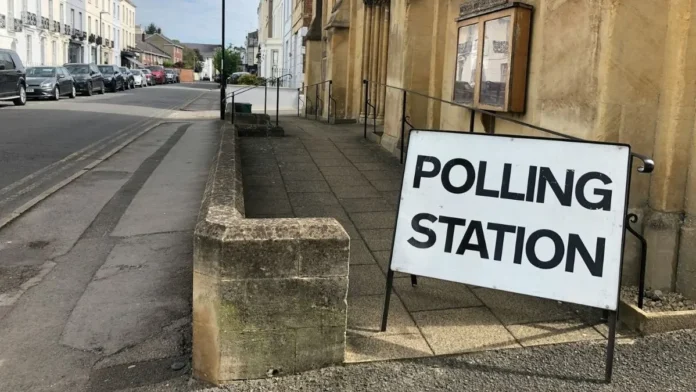
Polls closed at 7 p.m. local time. The Peruvian Electoral Commission’s quick count — the preconteo — is expected to provide a clear trend within hours of closing. Whichever candidate wins will be sworn in on July 28, Peru’s Independence Day — a tradition that connects each new president to the founding moment of the republic.
The world is watching not just for the result but for how both candidates respond to it. Peru’s democracy is resilient enough to have survived nine presidential transitions in a decade. Whether it can produce a stable government — one that holds office long enough to address the country’s genuine development challenges — depends less on which candidate wins today than on whether the institutional framework of the republic can hold them in place long enough to govern.
LoudFact.com is an independent global news and explainer platform. This report is based on reporting from NPR, Al Jazeera, Bloomberg, AS/COA, CEPR, and Britannica as of June 6-7, 2026.