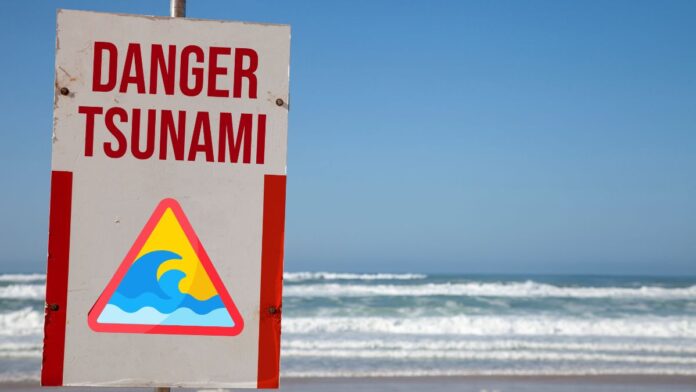

Scientists warn that a significant earthquake in the Cascadia Subduction Zone (CSZ) could trigger a devastating mega tsunami, putting millions at risk across the US Pacific Coast.
Cascadia Subduction Zone: A Major Threat
The Cascadia Subduction Zone stretches about 600 miles from Northern California to Vancouver Island. It marks the boundary where the Juan de Fuca Plate slides beneath the North American Plate, building immense tectonic stress over centuries.
According to researchers from Virginia Tech, there is a 15% chance of an earthquake of magnitude 8.0 or higher within the next 50 years along the CSZ, the UK Independent reported.
Coastal states including Washington, Oregon, and Northern California are at the highest risk, while Alaska and Hawaii could also face danger.
What Happens During a Cascadia Quake?
The Virginia Tech research team describes the Cascadia Subduction Zone as one of North America’s most dangerous fault lines.
When tectonic stress releases, it can cause:
- Abrupt land subsidence, expanding floodplains instantly
- Massive shoreline changes within minutes
- A tsunami with waves possibly reaching 1,000 feet in height
The last major earthquake here struck in 1700, sending a tsunami as far as Japan.
Impact Could Be Catastrophic Today
The research warns that a similar event today would be far more devastating because of:
- Dense coastal population
- Urban infrastructure
- Critical transportation networks
Experts note that rapid flooding could leave little time for evacuation, resulting in major human and economic losses.
Predictions include:
- Sea level drop up to 6.5 feet
- Cities like Seattle and Portland submerged within minutes
- Thousands of buildings destroyed, millions left vulnerable
Why Better Evacuation Plans Are Urgent
Virginia Tech scientists conducted tens of thousands of computer models to simulate the impact. Findings reveal:
- Existing hazard maps underestimate the threat
- More homes and infrastructure at risk than previously thought
The report calls for better evacuation plans, early-warning systems, and stronger coastal structures to minimize casualties.
Which Areas Face the Highest Risk?
According to the study, the highest flood risk zones include:
- Northern Oregon
- Southern Washington
- Northern California
While Alaska and Hawaii also face tsunami risks due to their own seismic activity, their distance from the CSZ makes them less immediately vulnerable.
Researchers estimate potential damage:
- 170,000 buildings destroyed
- 30,000 lives lost
- Over $81 billion in economic losses
Expert Warning
Lead researcher Tina Dura emphasized the scale of risk, stating: “The expansion of the coastal floodplain following a Cascadia subduction zone earthquake has not been previously quantified, and the impacts to land use could significantly increase the timeline to recovery.”