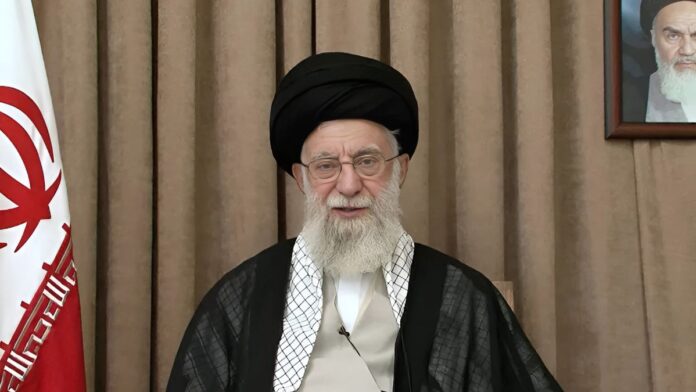

The second day of Ayatollah Ali Khamenei’s six-day state funeral saw the procession move from Tehran toward the holy city of Qom, with millions of Iranians lining roads and filling public spaces across the route to pay their respects. The day produced one development of significant geopolitical consequence that went beyond the scale of the mourning: Iran’s new Supreme Leader, Mojtaba Khamenei, appeared in public for the first time since February 28, 2026 — the day his father was killed and he was reportedly wounded in a joint US-Israeli airstrike. He appeared in a wheelchair.
The Significance of Mojtaba’s Appearance
The sight of Mojtaba Khamenei in a wheelchair — after 127 days of complete absence from public view — will be one of the most closely analysed intelligence and diplomatic data points of the week.
His appearance confirms several things that had previously been uncertain: he is alive, he is mobile enough to attend public events, and the Iranian government felt confident enough in his condition and political authority to allow him to be seen. The decision to permit his appearance at the funeral — rather than continuing the carefully managed media silence — suggests the regime assessed that his presence, even visibly impaired, strengthens rather than weakens the political message being sent by the funeral.
His appearance in a wheelchair, however, also confirms that the injuries he sustained on February 28 — in the same airstrike that killed his father, his wife and his three-year-old niece — were serious and have not fully resolved in four months. This has immediate implications for the question of who is actually exercising supreme leadership authority in Iran, and how coherently.
Foreign intelligence services in Washington, Jerusalem, London and elsewhere will be analysing every aspect of the appearance — his physical condition, his level of engagement, who was around him, what was said — for signals about the durability and capability of Iran’s post-war leadership structure.
The Scale of the Day 2 Mourning
The massive funeral for Iran’s slain supreme leader entered its second day on Sunday, with mourners chanting for revenge against the US and Israel as the procession moved toward Qom. The dayslong funeral for Ayatollah Ali Khamenei, killed in February by US-Israeli strikes, has been marked by chants for revenge.
Chants of “Death to America” and slogans calling for retaliation against Israel continued to echo through the crowds. Banners invoking martyrdom and resistance line every route the procession travels. The Iranian state media coverage — extensive and carefully choreographed — is presenting the funeral as a demonstration of national unity and Islamic Republic resilience.
But as was visible on Day 1, the public attending the funeral is not monolithic. State-orchestrated crowds and genuine mourners exist alongside Iranians who attended not out of support for the regime but out of complex loyalty to the institution of the supreme leader as a religious figure, and others who were present simply because the enormous scale of the event made it impossible to avoid.
What the Funeral Means for the Peace Talks
The funeral creates a formal diplomatic pause that runs through July 9. The next round of US-Iran indirect talks — conducted through Qatari mediators in Doha — will not resume before July 10 at the earliest. Within the original 60-day framework of the June 17 Versailles memorandum of understanding, this pause is significant. The window has already been shortened by military exchanges, precondition-setting, the competing Hormuz route dispute, and now the funeral’s natural suspension of diplomatic activity.
When talks do resume, Mojtaba Khamenei’s condition and authority will be a factor that US negotiators must weigh. If the new supreme leader is physically incapacitated or politically constrained — unable to exercise the full constitutional authority of the supreme leader’s office — then the Iranian government may lack the internal political coherence required to make the kind of binding commitments that a permanent peace agreement would require.
Conversely, if Mojtaba’s appearance in Qom is followed by a more active public role over the coming weeks, it signals that the Islamic Republic has stabilised its leadership faster than some analysts expected — and that the negotiating framework remains viable.
The Burial on July 9
The procession will continue through Qom — where Shia Islam’s most important seminaries are located and where the late Khamenei studied as a young man — before travelling to the Iraqi holy cities of Najaf and Karbala. It will return to Iran for the final burial in Mashhad on July 9. Each city on the route carries religious significance within Shia Islam, and the procession’s path is intended to reinforce the sacred dimension of the farewell — framing Khamenei not merely as a political leader but as a religious martyr.
For the peace talks that resume after July 9, the most immediate question is whether the language of martyrdom and vengeance that dominates the funeral’s public dimension translates into Iran’s negotiating posture — or whether the same government that is staging this elaborate display of resistance will simultaneously find a way to agree terms that end the conflict. That tension, unresolved at the end of Day 2, remains the defining question of the next two weeks.