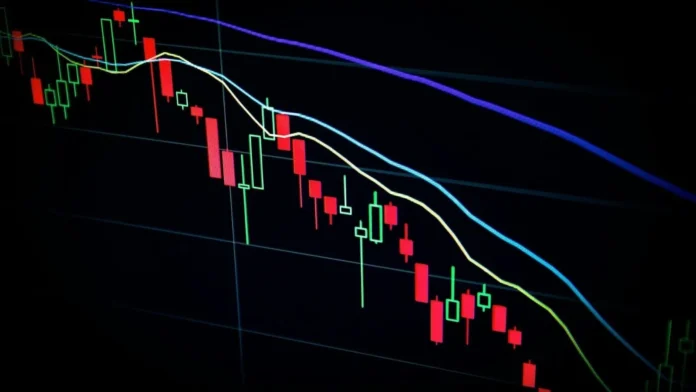

The global economy entered 2026 with cautious optimism: inflation was subsiding, interest rates were expected to fall, and supply chains disrupted by years of COVID-era disorder had largely normalised. That optimism has not survived contact with reality. Three simultaneous and partly interconnected shocks — the closure of the Strait of Hormuz, twin earthquakes devastating Venezuela, and a sweeping US tariff regime — have combined to slow global growth to levels not seen since the COVID-19 pandemic, and have redrawn trade routes, energy markets and humanitarian budgets in ways that will persist well beyond the immediate crises.
The World Bank’s Warning
Global growth is projected to slow to 2.5% in 2026, with emerging market and developing economies facing the weakest per capita income growth since the COVID-19 pandemic. Risks remain skewed to the downside, including escalating hostilities, further commodity market disruptions and persistent trade policy uncertainty.
That figure — 2.5% — sits at what economists sometimes call the “recession threshold” for the global economy: the point below which the absolute number of people living in poverty tends to rise, trade volumes contract, and financial stress in emerging market economies becomes acute. It represents a significant downgrade from the 3.1% growth that was forecast at the start of 2026, and reflects the combined weight of the year’s defining crises.
Shock One: The Hormuz Closure and Its Energy Fallout
The most economically significant shock of 2026 has been the closure of the Strait of Hormuz, through which roughly 20% of the world’s seaborne oil and LNG supply normally passes.
West Texas Intermediate crude oil futures rose from near $57 per barrel at the beginning of the year to a peak of $113 in April, driven by the closure of the Strait of Hormuz following the US-Israeli attack on Iran on February 28, before recently falling back to around $76 as a partial ceasefire deal opened some tanker traffic.
The economic cascades from that spike were significant. Higher energy prices fed directly into headline inflation across every major economy, complicating monetary policy at a moment when central banks had been preparing to cut rates. The US Federal Reserve revised its 2026 inflation forecast sharply upward to 3.6% from 2.7% in March — a revision driven primarily by energy cost pass-through across the broader economy.
Saudi Arabia could maximise throughput on the East-West crude oil pipeline to the Red Sea, and the UAE could maximise throughput on the Abu Dhabi crude oil pipeline to the Gulf of Oman, providing combined available capacity of approximately 2.6 million barrels per day. But this was insufficient to replace the roughly 20 million barrels per day that previously transited Hormuz at full operation.
Gulf producing states — the countries most dependent on Hormuz for export revenue — bore the heaviest direct economic cost. A record trade surplus of nearly $1.2 trillion was posted by China in 2025, but in 2026, China’s own import of Gulf oil via Hormuz was severely disrupted — a complicating factor for an already slowing Chinese economy.
Shock Two: The Venezuela Earthquake and Its Cascading Costs
Preliminary estimates from the USGS suggest the earthquakes could cause economic losses equal to between one and seven percent of Venezuela’s $111 billion GDP.
At a minimum, that represents a loss of over $1 billion. At the upper end of the estimate, it represents a catastrophic destruction of roughly $7.7 billion in a country already operating under severe economic and political stress. The closure of Simón Bolívar International Airport has disrupted Venezuela’s limited international commerce. The damage to La Guaira — home to Venezuela’s primary seaport — has complicated both humanitarian deliveries and what remains of the country’s export trade.
The international humanitarian response, while substantial, will itself redirect resources. International donors have pledged $500 million to the earthquake response, according to the Africa Centres for Disease Control and Prevention. Separately, the US has committed more than $150 million and is preparing an additional nine-figure package — resources drawn from humanitarian budgets that would otherwise have been directed elsewhere.
Shock Three: US Tariffs and the Reshaping of Trade
The US administration recently inaugurated an investigation into 60 countries, with the goal of potentially imposing tariffs of between 10% and 12.5% on their exports to the United States — including, notably, the European Union — setting the stage for a possible renewal of transatlantic trade tensions.
The tariff regime has already produced two significant geopolitical-economic consequences. First, it accelerated the EU-Mercosur trade deal, which entered provisional force on May 1 after 25 years of stalled negotiations — a direct response by two major trading blocs to the uncertainty created by US trade policy. Second, it has intensified China’s export diversification drive, pushing Chinese goods through Southeast Asia, Africa and Europe in volumes that are generating new trade friction in those markets.
In 2026, China is even more dependent on its export surplus for growth. A downturn in export growth would have a much larger effect, given weak domestic demand and limited scope for fiscal policy.
How the Three Shocks Are Connecting
The three shocks are not independent. They are interacting in ways that amplify each of their individual effects.
Higher oil prices from Hormuz pushed inflation higher globally. Higher inflation reduced real consumer spending, which has weakened demand for Chinese exports at exactly the moment when China needs export revenue most. US tariffs on 60 nations — partly motivated by frustration with China’s re-routing of goods through third countries — are adding further pressure to the same trade flows.
Meanwhile, the humanitarian cost of the Venezuela earthquake is placing additional fiscal pressure on governments that are already managing elevated debt levels accumulated during the COVID-era spending surge.
The World Bank notes that emerging market and developing economies face the weakest per capita income growth since COVID-19 — a dynamic that reflects the compound effect of higher energy costs, tighter financial conditions driven by US monetary policy, and reduced export demand from slowing advanced economies.
What the Rest of 2026 Holds
The trajectory of the global economy through the rest of 2026 depends primarily on two variables: whether the Strait of Hormuz can be reliably reopened — stabilising oil markets and allowing the Fed’s inflation expectations to normalise — and whether US tariff policy escalates further or plateaus.
If the Switzerland peace talks produce a durable agreement on Hormuz governance and sanctions relief, oil prices could fall toward $60 per barrel by year-end, allowing central banks globally to resume their easing cycles and providing some relief to the growth outlook. If the talks collapse, the Hormuz disruption continues, and US tariffs expand to cover the European Union, the World Bank’s 2.5% forecast may itself prove optimistic.
The world economy has navigated simultaneous shocks before. The difference in 2026 is that the shocks are arriving in a fiscal environment where governments have less room to respond, a monetary environment where interest rates are too high for comfort and too entrenched to cut easily, and a geopolitical environment where the institutions designed to manage global coordination — from the WTO to the UN Security Council — are under more strain than at any point since the end of the Cold War.