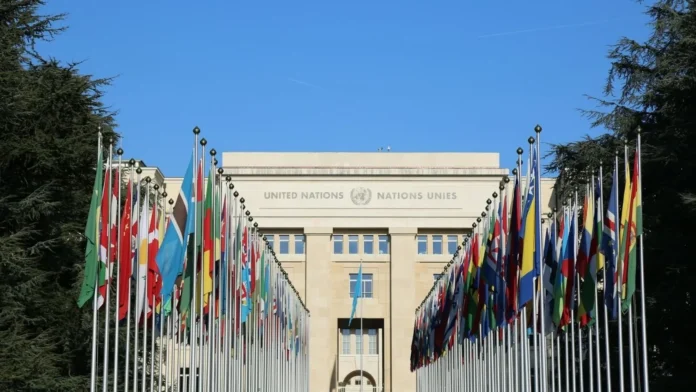

The Strait of Hormuz crisis reached the highest level of international institutional attention on Tuesday when the UN Security Council convened an emergency session — called by Bahrain and supported by dozens of nations — to formally address what the Secretary-General described in his starkest terms yet.
What the UN Secretary-General Said
United Nations chief Antonio Guterres warned the standoff could trigger a global food emergency. Dozens of countries have called for the “urgent and unimpeded reopening” of the Strait of Hormuz. Guterres also warned that shipping disruptions were hitting vulnerable countries hardest, with about 20 percent of global oil and natural gas supplies passing through the strait.
United Nations chief Antonio Guterres warned the impasse risks the “worst supply chain disruption since COVID-19 and the war in Ukraine.”
Guterres’s COVID-19 comparison is precisely calibrated to convey scale to a global audience that remembers the empty shelves, delayed shipments, and supply chain chaos of 2020-2022.
The COVID supply chain crisis took 18 months to fully resolve and produced sustained inflation across the global economy. A Hormuz crisis that the UN Secretary-General is now publicly comparing to that event is one that every government, central bank, and business leader on earth must take seriously as a structural, not temporary, disruption.
Who Called the Session
Bahrain, which requested the meeting with support from dozens of countries affected by higher fuel prices, described the closure as a violation of international law and called for attacks on ships to end. Reporting from the UN, Al Jazeera’s Kristen Saloomey said diplomats repeatedly appealed for de-escalation during a Security Council meeting.
She said speakers highlighted the disruption caused by thousands of stranded cargo vessels and tens of thousands of maritime workers unable to move through the waterway.
Bahrain’s role is significant. As a Gulf state that hosts the US Navy’s Fifth Fleet, Bahrain is one of Washington’s closest regional allies. Its decision to lead an international challenge to the Hormuz status quo at the Security Council level is a sign that even America’s closest Gulf allies are running out of patience with a closure that is damaging their economies.
The Gulf States’ Position
Gulf nations are likely to welcome Tehran’s peace proposal to end the war without negotiating a new nuclear deal, analyst Dania Thafer told Al Jazeera. “They have a different ordering of priorities… and it does align with Iran’s proposal of opening the Strait of Hormuz at the front of this negotiation.”
This is a significant diplomatic development: Gulf states — Saudi Arabia, UAE, Qatar, Kuwait, Bahrain — are publicly aligned with Iran’s Hormuz-first proposal. They want the strait opened even if nuclear talks happen later.
That alignment gives Iran’s proposal multilateral backing that it did not have when it was first floated. And it puts pressure on Washington from allies, not just adversaries.