
Amid the standoff, the blockade, and Tehran’s piracy accusations, a signal arrived on Monday afternoon that changed the tone — at least briefly. President Trump told reporters that Iranian officials had made contact and expressed interest in reviving negotiations. Pakistan simultaneously offered to host another round. Iran’s foreign minister said the two sides were closer in Islamabad than the public collapse suggested.
None of that means a deal is imminent. But it means the door is not entirely closed.
What Trump Said
The US blockade of Iran’s ports is in effect, but US President Donald Trump says Iranian officials have called and “want to work a deal.”
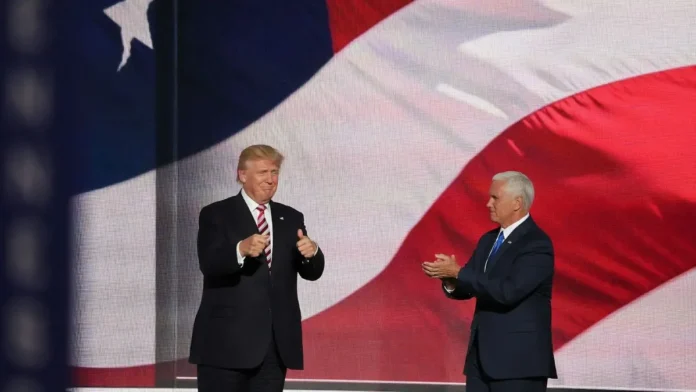
Trump said Iran had been in touch on Monday and wanted to make a deal, but that he would not sanction any agreement allowing Tehran to have a nuclear weapon. “Iran will not have a nuclear weapon,” Trump told reporters at the White House. “We can’t let a country blackmail or extort the world.”
What Iran Said
Iran’s foreign minister offered a more nuanced account of how close the Islamabad talks came.
Abbas Araghchi wrote on X: “In intensive talks at highest level in 47 years, Iran engaged with US in good faith to end war. But when just inches away from ‘Islamabad MoU’, we encountered maximalism, shifting goalposts, and blockade.”
The Iranians are saying they are interested in further rounds of negotiations. Iran’s foreign minister has been holding phone conversations with different counterparts across the region and beyond. But two to three main issues still need to be negotiated. And a cloud of mistrust remains. Among Iranian people, there is a mixture of sentiments — hope, but slim, that negotiations could end in lasting peace.
Pakistan’s Role Right Now
The Pakistanis have urged calm and restraint, and also further dialogue potentially to take place as soon as this Thursday.
A former national security adviser for Pakistan told CBS News that Pakistan is trying to get the US and Iran — either virtually or physically — back into the negotiation room. Moeed Yusuf, a senior fellow at Harvard Kennedy School, said the US is in “a position of frustration” after the talks in Islamabad because it is not quite clear how to move forward. “I think the talks were not bad. There was some chemistry in terms of both sides wanting to move forward,” he said. “Pakistan played a role of an active mediator — it was too much to ask to get a formal deal out of one day of conversations.” He said the first step would be to secure an extension to the ceasefire.
What Vance Said — “The Ball Is in Iran’s Court”
US Vice President Vance called the blockade a just response to Tehran effectively shutting the Strait of Hormuz. Vance accused Iran of “economic terrorism” and told Fox News that “two can play at that game.”
Vance said it’s up to Iran whether there are more direct talks with the US. “It’s a question that would be best put to the Iranians because the ball really is in their court,” he told Fox News. “We must have their conclusive commitment to not develop a nuclear weapon. And I think that if the Iranians are willing to meet us there, then this can be a very, very good deal for both countries.”
The 8-Day Clock
The two-week ceasefire announced on April 7 expires on April 22 — eight days from now. Every day that passes without a ceasefire extension or a new round of talks is a day closer to the moment when the pause in hostilities formally ends, with nothing agreed to replace it.
There is still no agreement to hold another round of talks in Islamabad, despite reports that American and Iranian delegations could return to Pakistan later this week, according to Iranian state news agency IRNA. “In response to claims by some Pakistani sources or Western media about holding the next round of Islamabad talks, a diplomatic source stated that there is still no information about an agreement to hold talks.”
Iran called. Trump confirmed it. Pakistan is offering a venue. The nuclear gap remains. The blockade is squeezing. And the calendar is the one variable nobody can negotiate away.