
Israeli air force jets and artillery struck multiple locations in southern Lebanon on Saturday, hitting near the strategic Beaufort Castle and villages around Nabatiyeh, as Hezbollah rockets reached northern Israeli cities. The escalation comes as Washington talks aimed at addressing the Lebanon conflict have stalled and the broader US-Iran ceasefire remains fragile.
Israeli air force and artillery strikes were reported on Saturday near the strategic mountain site of a Crusader-built castle in southern Lebanon as fighting raged in villages close to the city of Nabatiyeh. Lebanon’s state-run National News Agency reported airstrikes and artillery shelling near the Crusader-built Beaufort Castle, about 15 kilometres from the Israeli border and overlooking wide parts of southern Lebanon.
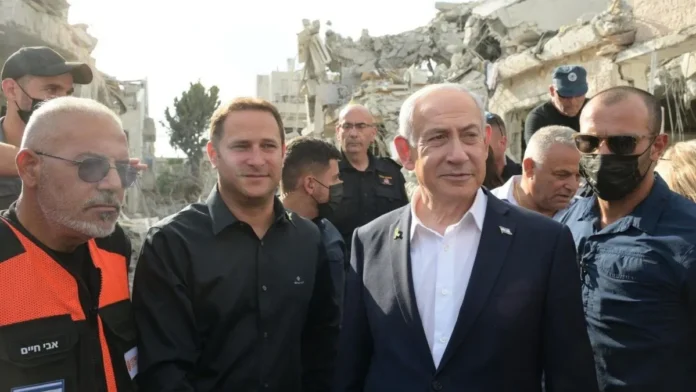
A Hezbollah rocket hit the northern Israeli city of Kiryat Shmona. Israeli security forces and civilians were at the scene of damage caused by a missile fired from Lebanon toward Israel overnight in northern Israeli cities. Schools near the Lebanon border have been closed as the Israeli Defence Forces tightened restrictions amid ongoing Hezbollah attacks.
The exchanges of Saturday — Israeli strikes from air and ground, Hezbollah rockets into northern Israel — fit a pattern that has characterised the Lebanon front throughout the broader regional conflict: neither side has committed to full-scale war, but neither has accepted the constraints that would allow for a genuine ceasefire. The result is a sustained, grinding escalation that has been claiming lives in both countries for months and that Washington has consistently failed to contain.
The Front That Never Fully Closed
When the November 2024 ceasefire between Israel and Hezbollah was agreed — brokered by the United States and France — it was presented as an agreement that would end more than a year of cross-border fighting that began after the October 7, 2023 Hamas attacks on Israel and Hezbollah’s decision to open a solidarity front from Lebanese territory.
The ceasefire was supposed to result in Hezbollah withdrawing its forces north of the Litani River, the Lebanese Armed Forces deploying to southern Lebanon, and the Israeli military withdrawing from Lebanese territory it had occupied during its ground invasion. None of these elements was fully implemented.
Israel continued to conduct strikes on what it described as Hezbollah infrastructure in southern Lebanon, arguing that Hezbollah was violating the ceasefire by maintaining weapons and fighters south of the Litani. Hezbollah maintained that Israel’s continued occupation of five Lebanese hilltop positions and its refusal to withdraw from Lebanese territory voided the ceasefire’s terms and justified retaining its armed posture. The Lebanese Armed Forces deployed to southern Lebanon but lacked the resources and, arguably, the political mandate to genuinely disarm Hezbollah.
Through the first half of 2026 — as the Iran war dominated regional attention and US diplomatic resources — the Lebanon front continued to produce casualties on both sides with a regularity that had normalised it as a background feature of the regional crisis.
The May 28 Beirut Strike and Its Consequences
Israel’s air force carried out an airstrike on a southern suburb of Lebanon’s capital on Thursday afternoon, the Israeli military said, further straining a fragile ceasefire a day before crucial negotiations in Washington.
The timing of the May 28 Beirut strike — the night before Lebanon-Israel talks in Washington were scheduled to begin — was either a deliberate signal that Israel was not willing to be constrained by diplomatic process, or a tactical decision made without full consideration of its diplomatic consequences. In either case, the effect was the same: it set the tone for Saturday’s escalation and made the Washington talks considerably harder before they began.
The raging war in Lebanon, where Israel has intensified its attacks and is killing dozens of people over the past weeks and issuing forced displacement orders for two of the largest cities in the south of the country, is another issue complicating US-Iran negotiations. The link between the Lebanon front and the US-Iran diplomatic track is not coincidental.
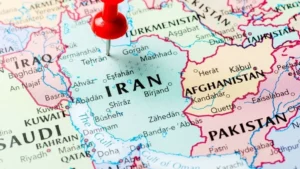
Iran’s relationship with Hezbollah is a central issue in the broader war — one that Iran has refused to place on the negotiating table. For Israel, Hezbollah’s continued military capacity represents an ongoing existential threat that cannot be addressed by a US-Iran deal that ignores the Lebanon dimension.
What Is Driving Israel’s Escalation
Israel’s intensification of operations in Lebanon in late May 2026 has several drivers that analysts have identified:
Hezbollah’s reconstitution. Despite the losses it suffered during the 2024 conflict, Hezbollah has been engaged in active reconstitution of its military infrastructure in southern Lebanon. Israel has documented weapons storage, command posts, and rocket-launching positions being rebuilt in the area south of the Litani. Israeli military doctrine holds that these capabilities must be destroyed before they reach a threshold that poses an acute threat.
The Iran war’s impact on Hezbollah’s supply lines. The Iran war and the Strait of Hormuz closure have disrupted some of the logistics networks through which Iran supplies Hezbollah. Israeli military planners may have judged that a period in which Hezbollah is more constrained in its supply is also a period in which its infrastructure can be most effectively degraded.
Domestic Israeli politics. The Netanyahu government, under significant domestic pressure on multiple fronts, has political incentives to demonstrate military decisiveness. Operations in Lebanon — which the Israeli public broadly supports — provide a visible demonstration of deterrent capacity.
The Washington factor. With the US focused on the Iran-ceasefire negotiations and Treasury Secretary Bessent emphasising the economic benefits of a deal, Israel may have calculated that a limited window exists in which it can pursue military objectives in Lebanon before any broader regional settlement constrains its freedom of action.
Lebanon: A Country Without Space to Absorb More
The impact of ongoing Israeli strikes on Lebanon cannot be understood without reference to what Lebanon was already absorbing before Saturday’s escalation.
Lebanon’s economy, which had collapsed even before the 2024 conflict, has not recovered. The infrastructure damage from fourteen months of intensive fighting — from October 2023 through the November 2024 ceasefire and continuing through 2025 and 2026 — has been enormous. Hundreds of thousands of people remain displaced from southern Lebanon. The healthcare system has been described by the WHO as operating beyond its limits. The government in Beirut, newly formed and struggling for both resources and authority, has limited capacity to enforce any ceasefire terms, let alone absorb a fresh wave of bombardment.
Earlier in the broader conflict period, Israeli strikes across southern Lebanon and Beirut killed at least 14 people in a single day, with strikes hitting Beirut’s southern suburbs killing four people while ten — including a family of six — were killed in attacks on southern Lebanon. That pattern — strikes killing civilians alongside any military targets — has been a consistent feature of the conflict that has drawn sustained criticism from the UN, international human rights organisations, and European governments.
Washington Talks: The Diplomatic Framework That Has Not Held
The United States has attempted, multiple times, to broker arrangements that would reduce the intensity of fighting in Lebanon. The November 2024 ceasefire was one such effort. The Washington talks scheduled for May 29 — focused on the Lebanon-Israel relationship within the broader regional picture — represent the latest.
Israel and Lebanon officials were set to meet on May 29 as US-Iran peace talks continued. The fact that Israel struck Beirut’s southern suburbs on May 28 — the night before those talks — illustrates the fundamental challenge: Israel does not accept the diplomatic constraints that Washington’s ceasefire efforts attempt to impose when it judges its military interests to be at stake.
The Lebanon front, the Iran war ceasefire, and the Hormuz negotiations are all connected — but they are connected in ways that make solving each one harder, not easier. A resolution of the Hormuz crisis that includes an Iran deal would remove some of Hezbollah’s material support from Tehran. But it would not disarm Hezbollah. It would not resolve the dispute over Israeli forces remaining in Lebanese territory. It would not rebuild the economic and political conditions that might allow Lebanon to function as a state capable of controlling its own territory.
What Comes Next
The trajectory in Lebanon over the coming days depends on whether the Beaufort Castle area and Nabatiyeh exchanges represent a temporary peak or the beginning of another sustained escalation. If Israeli operations expand to Beirut’s suburbs and major infrastructure targets — as they did in the summer and autumn of 2024 — the humanitarian consequences would be severe. If they remain confined to southern Lebanese villages and Hezbollah military infrastructure, the pattern of recent weeks is likely to continue.
Hezbollah’s rocket fire into Kiryat Shmona will generate Israeli domestic pressure for a stronger military response. Israel’s strikes on civilian-area-adjacent targets in southern Lebanon will generate international pressure for restraint. Neither pressure has consistently prevailed over the other in this conflict.
What is clear, looking at the full picture as of Saturday night, is that the Middle East is simultaneously managing a US-Iran ceasefire that is technically holding but practically fraying, a naval blockade being enforced with live missile fire against commercial ships, a tentative but unconfirmed 60-day deal still awaiting Trump’s approval, and an Israeli-Lebanese front that is escalating with or without a regional diplomatic framework.
The complexity is not reducible to a single narrative. But it is, at its core, about whether the region can move from the most intense period of conflict in a generation toward something that looks like stability — before the accumulated weight of these simultaneous crises becomes more than any diplomatic process can carry.
LoudFact.com is an independent global news and explainer platform. This report is based on reporting from the Washington Post, Times of Israel, NPR, Al Jazeera, and the Associated Press as of May 30, 2026.