
Three months ago today, the United States and Israel launched strikes on Iran that began the most significant military conflict in the Middle East in a generation. Here is a complete accounting, across military, diplomatic, economic, and human dimensions, of what 90 days of war have actually produced — and what remains dangerously unresolved.
On February 28, 2026, US and Israeli aircraft struck Iranian military infrastructure, nuclear facilities, and government targets in a coordinated campaign that killed Iran’s Supreme Leader Ali Khamenei and destroyed large parts of the country’s military and nuclear apparatus. Iran responded with missile and drone strikes across the region, closed the Strait of Hormuz, and launched attacks on US military installations and Gulf Arab infrastructure.
Today is the 90th day of that war. A conditional ceasefire has been in place since April 8. A tentative memorandum of understanding for a 60-day extension has been drafted. The president of the United States has not signed it. The Strait of Hormuz has not reopened. And the world is living with the consequences.
What Changed: The Military Picture
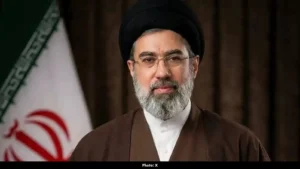
The February 28 strikes achieved their most immediate stated objective. Iran’s supreme leader — the figure who had held the Islamic Republic’s factional political system together for more than three decades and who had overseen its nuclear programme, its proxy network, and its regional military strategy — was killed. His death removed the single most powerful individual actor in Iranian politics and created a succession crisis that Iran’s political system is still managing.
Iran’s military capacity was substantially degraded. The attacks were subsequent to years of rising tension over Iran’s nuclear programme, its ballistic missiles, and its military reach across the Middle East. The conflict followed extensive damage to Iran’s military infrastructure and defences as well as to regional energy production.
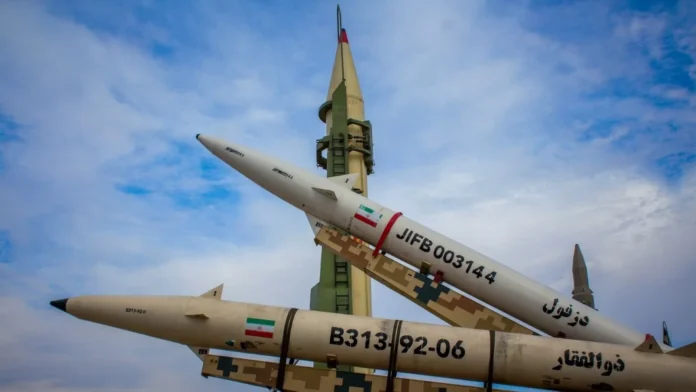
Iran’s navy, which CENTCOM describes as largely destroyed, has been significantly reduced in operational capacity. Its air force has been similarly degraded. What Iran retains — and has used throughout the ceasefire period — are ballistic missiles, drones, and the Revolutionary Guard’s capacity for asymmetric operations, including mine-laying in the Strait of Hormuz and the proxy relationships with Hezbollah in Lebanon and other armed groups across the region.
With the latest action on May 30, the US military has stopped six ships trying to breach the blockade, allowed one to proceed, and redirected another 116 ships. The naval blockade, imposed on April 13, has effectively severed Iran’s ability to export oil through normal commercial channels — at an estimated cost of $500 million per day in lost Iranian revenues.
What Changed: The Energy and Economic Picture
The Strait of Hormuz has been effectively closed to international commercial shipping since late February. The consequences have been:
Global oil prices: Brent crude rose above $100 per barrel in mid-March and has remained there for more than 75 days. It has at times exceeded $112. The closure of a waterway through which 20% of the world’s oil trade normally flows has removed a significant volume of supply from global markets and added a war risk premium on top.
US inflation: The Iran war’s energy shock has been a primary driver of US inflation rising to 3.8% annually in April — a three-year high — with core prices also rising at their fastest pace since 2021. US gas prices have been above $4.42 per gallon nationally.
Shipping costs: Vessels unable to use the Strait of Hormuz have rerouted around the Cape of Good Hope, adding weeks to transit times and significantly increasing freight costs. War risk insurance premiums have been four to five times pre-war levels.
Asian economies: Countries in South and Southeast Asia that depend heavily on Gulf oil have experienced fuel shortages, rationing, and fuel price spikes that have affected agriculture, transport, and household budgets.
US Treasury Secretary Scott Bessent predicted that the cost of oil would fall sharply if a peace deal is reached, providing relief for Americans who have been paying elevated gas prices since the conflict began.
What Changed: The Diplomatic Architecture
Talks between the US and Iran are being mediated by Pakistan, and issues under discussion include freedom of navigation through the Strait of Hormuz, Iran’s nuclear and ballistic programme, reconstruction and sanctions, and a long-term peace agreement.
The diplomatic architecture that has emerged from the conflict did not exist before it. Pakistan has established itself as the primary mediator — a role that has significantly raised Islamabad’s international profile. China has played a supporting role in the five-point peace initiative. Oman has served as a back-channel.
The ceasefire framework — initially agreed for two weeks on April 8 and extended multiple times — represents a genuine, if fragile, diplomatic achievement. It has prevented the conflict from resuming at the scale of its initial phase. It has created the space within which the MOU has been drafted.
The agreement being negotiated calls on Iran to restore the number of ships transiting through the vital waterway to pre-war levels within 30 days and for the US to completely lift its blockade within the same time.
That framework remains unsigned. The disputes over nuclear enrichment, missiles, sequencing, and verification that have prevented its finalisation reflect genuine strategic incompatibilities between the two sides that 90 days of war and seven weeks of diplomacy have narrowed but not resolved.
What Has Not Changed: The Hormuz Question
The single most consequential fact about the 90-day war is also the simplest: the Strait of Hormuz is still closed.
All of the diplomatic activity, all of the ceasefire extensions, all of the MOU drafting — none of it has produced the one outcome that would most immediately change the global economic picture. Twenty percent of the world’s oil trade still cannot flow normally through the world’s most critical maritime chokepoint.
Iran retains operational control of the strait. The IRGC has stated that conditions in the strait “will never return to its former status, especially for the US and Israel.” That statement has not been retracted. The MOU, if signed, would require mine removal within 30 days — which would begin the process of reopening but would not immediately resolve all of the operational and insurance issues that have kept commercial shipping away.
What Has Not Changed: Lebanon
Just hours after the US-Iran ceasefire announcement in early April there was disagreement among the parties on whether Lebanon was included. The IDF conducted a blitz across Lebanon that killed hundreds of people and wounded more than 1,000 others, straining the ceasefire between the United States and Iran.
Lebanon was not definitively included in the US-Iran ceasefire framework. Israeli operations in southern Lebanon — targeting Hezbollah infrastructure — have continued throughout the ceasefire period and intensified in the past week. Hezbollah rocket fire into northern Israel has continued. The Lebanon front, which opened in solidarity with Gaza in October 2023, has been running continuously for more than two and a half years.
The Human Cost: Inside Iran
The 90 days of the Iran war have produced human costs inside Iran that have received relatively little international coverage.
During a roughly 65-day period from the beginning of the war, 31 executions were carried out, including 22 political or security-related cases. In some cases, the handling of these cases has proceeded at a pace beyond usual procedures, and the interval between arrest, sentencing, and execution has decreased.
The 87-day internet blackout — lifted only on May 26 — severed Iran’s 87 million people from global communications, limiting the flow of information about conditions inside the country and reducing the ability of the Iranian diaspora to communicate with family members.
The US naval blockade, costing Iran an estimated $500 million per day, has accelerated economic deterioration in a country that was already under severe sanctions pressure before the war.
What the Next 90 Days Will Determine
The next 90 days — from June 1 through August 31 — will likely determine whether the conflict moves toward resolution or toward renewed escalation. The key variables are:
Whether Trump approves the MOU. A signature in the coming days begins the clock on Hormuz mine removal and oil market normalisation. The absence of a signature keeps the current state of managed confrontation — economically costly, diplomatically active, operationally dangerous — in place indefinitely.
Whether the IRGC maintains the ceasefire. The Revolutionary Guard has conducted retaliatory operations throughout the ceasefire period. An action of sufficient scale — a repeat of the Kuwait missile, or worse — could force the US to respond in a way that ends the diplomatic track.
Whether the nuclear talks that would begin under the MOU can find common ground. The gap between Iran’s insistence on enrichment rights and the US demand for programme dismantlement is real. Whether the 60-day window creates enough space to narrow it is unknown.
Ninety days in, the Iran war has changed the Middle East, the global economy, and the international order — in ways that are already visible and in ways that will only become clear over years. The accounting is not complete. The war is not over.
LoudFact.com is an independent global news and explainer platform. This report draws on reporting and documentation from Britannica, PBS NewsHour, CNN, the House of Commons Library, CBS News, Al Jazeera, and the Associated Press as of June 1, 2026.