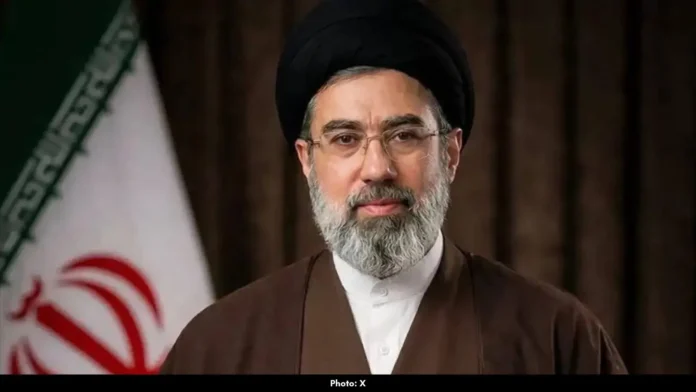

Mojtaba Khamenei — Iran’s new Supreme Leader, who succeeded his father Ali Khamenei after the latter was killed in the February 28 strikes — made his first major public statement on the war on June 12, declaring that the Strait of Hormuz will remain closed as long as the conflict between Iran and the United States continues. The statement, which contradicts the framework negotiators had been working toward, arrives as the conflict reaches its most intense phase.
Iran’s new supreme leader, Mojtaba Khamenei, announced on Thursday that the Strait of Hormuz will remain closed as long as the conflict continues.
The statement was the clearest and most authoritative articulation of Iran’s position on the strait that has been made at the highest level of the Iranian state since the war began. Previous statements about Hormuz closure came primarily from IRGC commanders and official spokespeople. A direct declaration from the Supreme Leader — the figure who holds ultimate authority over Iran’s armed forces and strategic decisions — carries different weight.
Who Mojtaba Khamenei Is
Mojtaba Khamenei — whose father, Ali Khamenei, was killed in the February 28 strikes — was not widely known internationally before the war. He had not held major formal state office, and his profile in international coverage of Iran had been limited. The succession process that installed him as Supreme Leader — necessary after his father’s death created a constitutional and political crisis — involved the Assembly of Experts, the body of senior clerics responsible for selecting and overseeing the Supreme Leader under Iranian law.
A picture of Iran’s new supreme leader Mojtaba Khamenei is displayed on a screen in Tehran, March 9.
The image of his portrait on screens across Tehran in early March captured the speed with which the succession was managed: a new Supreme Leader within days, presented to the Iranian public through the same state media channels that had served his father for more than three decades.
The complexities of the succession — the roles of the IRGC, the hardline political factions, and the Pezeshkian administration — in shaping who holds what power in Iran’s complex political system have not been fully resolved. What Mojtaba Khamenei’s June 12 statement demonstrates is that, on the central question of the war, he is making public declarations that align with the hardline IRGC position rather than the more pragmatic negotiating posture that the Pezeshkian government has at times suggested.
What the Statement Means for the MOU
The MOU framework that negotiators spent weeks building — 60-day ceasefire extension, Hormuz mines removed in 30 days, nuclear talks to begin — required Iran to reopen the strait within a month of signing. That framework was negotiated primarily through channels involving the Pezeshkian government and Iranian diplomatic officials, including Parliament Speaker Qalibaf, who led the Doha negotiations.
If the Supreme Leader has declared publicly that Hormuz will stay closed “as long as the conflict continues,” the MOU’s core provision — mines removed in 30 days — is no longer consistent with the position of the highest authority in the Iranian state. Either the Supreme Leader will walk back from this declaration when a deal is reached, or the MOU as drafted is incompatible with the Supreme Leader’s stated position and will need to be renegotiated.
This matters specifically because the question of who controls Iran’s war decisions is itself unclear. The IRGC controls the physical closure of the strait — its forces are the ones laying mines and operating in Hormuz. The Supreme Leader is the commander in chief of the armed forces under the Iranian constitution. If Mojtaba Khamenei has declared that Hormuz stays closed, his authority over the IRGC — which has not been tested in the same way as his father’s was — becomes a critical variable.
The Timing: After Kharg Island
The statement’s timing — one day after the US bombed 90 military targets on Kharg Island — is significant. It suggests that the Kharg Island strikes did not produce the diplomatic softening that Trump may have hoped for. Rather than prompting Iran to reconsider its position on Hormuz, the most intensive single military action of the recent escalation cycle has produced a public declaration of continued defiance from the Supreme Leader.
This is not entirely surprising. Governments under military pressure generally do not make public concessions immediately after being struck — doing so would be read domestically and internationally as capitulation under duress. Any genuine shift in Iran’s negotiating position that the Kharg strikes may be producing will take time to emerge, through back channels, before it appears in public statements.
But the public statement, for now, says: Hormuz stays closed. And the Supreme Leader said it.
Iran Threatens UAE
Iran on Saturday threatened retaliatory attacks on cities in the United Arab Emirates, where Iranian military officials claimed is where the strikes on Kharg Island originated from.
Iran’s threat to strike UAE cities — particularly significant given Dubai’s role as a global commercial and aviation hub — introduces a new dimension of regional risk. The UAE has been one of the most economically consequential neutral parties in the Gulf throughout the conflict, maintaining commercial relationships with Iran while hosting US military assets. A direct Iranian strike on the UAE would transform the diplomatic landscape of the Gulf in ways that would complicate every relationship in the region simultaneously.
Whether the threat is executed or remains rhetorical depends on what happens in the next 24-48 hours — specifically, whether the US continues bombing or pauses, and whether any diplomatic channel produces a signal that Iran’s essential demands can be met without the face-saving complications of a ceasefire struck under military pressure.
LoudFact.com is an independent global news and explainer platform. This report is based on reporting from Reuters, AOL News, NPR, the CFR’s Kharg Island analysis, and Iran’s state media as of June 12-14, 2026.