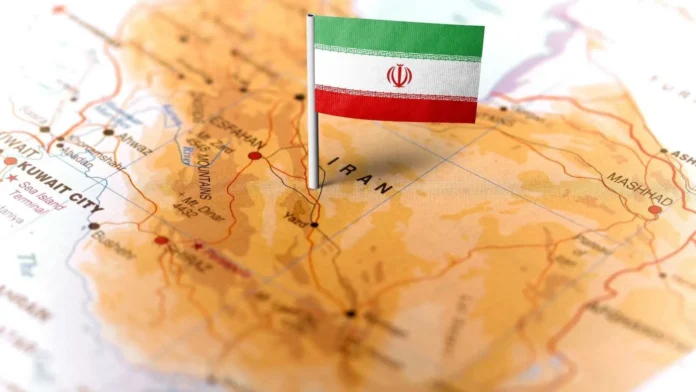

Six months have passed since US and Israeli forces struck Iran on February 28, 2026, triggering a conflict that closed the Strait of Hormuz, disrupted global energy supplies, reshuffled trade routes and compelled NATO members to accelerate defence spending at historic speed. Assessing the full economic cost of that conflict is inherently complex — it requires tracking energy price spikes, trade disruption, military expenditure, supply chain stress, humanitarian response costs and the lost economic output that results from the combination of all of these factors.
A new assessment drawing on IMF projections, World Bank data, independent economic modelling and commodity market analysis estimates the total global economic damage at approximately $4.8 trillion since the conflict began. This is how that number was reached — and what it means.
The Hormuz Effect: Energy Price Inflation
The single largest component of the economic damage was the surge in energy prices following the closure of the Strait of Hormuz. West Texas Intermediate crude oil futures rose from near $57 per barrel at the beginning of the year to a peak of $113 in April, driven by the closure of the strait. Oil has since fallen back to approximately $76 with the partial ceasefire — but the damage from the peak pricing period is already embedded in global inflation figures.
Economists estimate that each $10 per barrel increase in the sustained price of oil reduces global economic output by approximately 0.1-0.2% of GDP over a 12-month period, through direct energy cost pass-through to transport, manufacturing, heating, agriculture and electricity generation. The peak increase of $56 per barrel above the pre-war baseline — sustained at or near that level for approximately two months before gradually easing — translates into an estimated $1.8-2.2 trillion in global GDP loss from energy price inflation alone, concentrated in energy-importing economies including the European Union, Japan, China, India and the emerging market world.
The LNG component added further damage. Qatar’s LNG exports — which transit the Strait of Hormuz — serve European energy markets directly. With the strait closed or contested, European LNG importers faced supply disruption, elevated spot prices and the economic cost of accelerated diversification away from Gulf-sourced gas. Germany’s industrial energy costs — already elevated after the 2022 disruption of Russian gas supplies — rose sharply again, contributing to the ongoing contraction in German manufacturing.
Trade Disruption and Shipping Costs
Beyond energy, the Hormuz closure disrupted approximately $1.1 trillion in annual merchandise trade that transited the strait at full operation. Container shipping rates, which had already been elevated by the Red Sea Houthi disruptions in 2024-2025, spiked again as insurers and shipping operators either avoided the strait entirely or sought premium pricing to cover the additional risk of operating in a conflict zone.
The global shipping industry’s response was not uniform. Chinese exports — the world’s largest merchandise export flow — were partly insulated by China’s ability to route through the Pacific while Southeast Asian manufacturing hubs absorbed some Gulf-bound trade through alternative logistics chains. But the aggregate friction — higher insurance costs, longer routing, additional fuel consumption, delayed deliveries and the economic cost of supply chain restructuring — added an estimated $600-800 billion to global trade costs over the six-month period.
Military and Defence Spending
The Iran war triggered an extraordinary escalation in defence expenditure across multiple categories. US military operations against Iran — including air strikes, naval deployments and logistics support — have cost an estimated $30-40 billion in direct operational expenditure, according to Congressional Budget Office estimates. The deployment of carrier strike groups, the logistics chains supporting Gulf air defences and the additional military presence required to monitor and enforce the Hormuz ceasefire represent ongoing operational costs that will continue to accumulate.
For NATO members, the agreement to raise defence spending benchmarks to 3.5% of GDP — accelerated by the Iran war’s demonstration of the costs of military unreadiness — will require aggregate additional spending of approximately $300-400 billion per year across the alliance’s European members, representing a permanent structural increase in defence budgets that reduces the fiscal space available for other public expenditure.
Saudi Arabia and other Gulf states diverted significant sovereign wealth and reserve assets to shore up their defence postures and to cover the revenue shortfall from disrupted oil exports during the Hormuz closure. Kuwait, Bahrain and the UAE each sustained civilian and infrastructure damage from Iranian missile and drone strikes — damage whose reconstruction cost runs to several billion dollars.
Humanitarian and Disaster Response Costs
The global humanitarian and disaster response burden in the first half of 2026 has been extraordinarily high. The Venezuela earthquake — whose relationship to the Iran war is indirect but whose timing compounded the fiscal burden on global humanitarian systems — has generated pledged international assistance of $650 million and will require several billion dollars in reconstruction funding. The Ebola outbreak in DRC has required $500 million in pledged donor funding with more required. The US heat dome response, the European heatwave response and the Super Typhoon Bavi response in the Marianas collectively represent several additional billions in emergency expenditure.
These costs do not appear in GDP calculations as losses — disaster response generates its own economic activity — but they do represent the diversion of public and donor resources from productive investment, the permanent destruction of capital stock, and the human costs of mortality, injury and displacement that reduce long-term economic potential.
The Aggregate Damage — and What It Has Not Yet Cost
Combining energy price inflation, trade disruption, military expenditure, humanitarian response and the direct GDP contraction reflected in the World Bank’s revised 2026 growth forecast of 2.5% — compared with the 3.2% that was projected at the start of the year before the conflict — produces a total estimated global economic cost of approximately $4.8 trillion in the six months since February 28.
The lost growth alone — the difference between 3.2% and 2.5% applied to a $110 trillion global economy — represents approximately $770 billion in foregone economic output that will not be recovered, because economic growth lost in a given year permanently shifts the baseline for all subsequent years.
What this number does not yet include is the full cost of the conflict if the ceasefire framework fails. The 60-day negotiating window for a permanent agreement is now entering its final weeks. If Iran withdraws from talks, if the IRGC resumes attacks on shipping in the Strait of Hormuz, or if the US determines that the ceasefire cannot be sustained and returns to military operations, the second phase of economic disruption could approach or exceed the first — with less capacity in global financial systems and national fiscal positions to absorb another shock of the same magnitude.
The $4.8 trillion figure is not the final cost of the Iran war. It is the six-month cost, pending the outcome of negotiations that have stalled, resumed, paused for a funeral and are about to restart. Whether the final number is $5 trillion or $10 trillion or more will depend on decisions made in Doha and Washington and Tehran in the coming weeks.