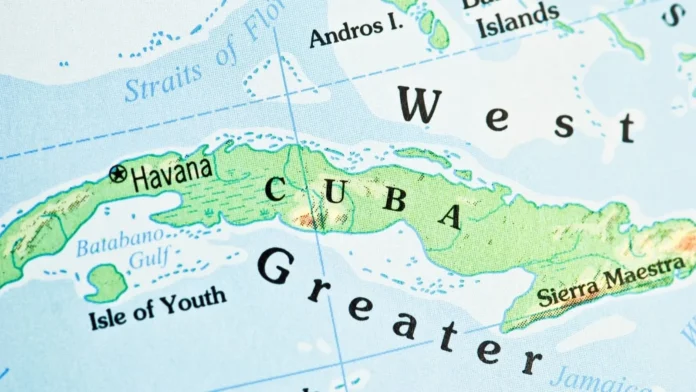

Cuba’s national electrical grid collapsed for the third time in 2026 on Monday, July 7, plunging the island of 11 million people into total darkness as temperatures exceeded 30 degrees Celsius across the island. The collapse — the third island-wide blackout of the year and the most severe so far — is the product of a cascading crisis that connects directly to the global energy disruption triggered by the US-Iran war in February: Venezuelan oil exports to Cuba, long subsidised under a political arrangement between Havana and Caracas, fell sharply when Venezuela’s own fuel supply chains were disrupted by the Hormuz closure and the country’s devastating twin earthquakes, cutting off the fuel supply that Cuba’s ageing Soviet-era power stations depend upon to generate electricity.
What Happened on July 7
Cuba plunged into its third major blackout this year as the power crisis worsens. The island’s national electrical grid collapsed, leaving millions without power after the national electrical grid failed amid acute fuel shortages.
The July 7 collapse was the most complete of the three blackouts, with the Cuban Electric Union confirming that the national system had experienced a total generation failure affecting all 15 Cuban provinces simultaneously. In previous collapses — in March and May — partial generation had been maintained in Havana and several other major cities. Monday’s collapse left the capital without power for more than 18 hours.
Cuba’s government has attributed the blackouts to a combination of fuel shortages preventing power stations from operating, maintenance deficits across an ageing generation fleet, and the accelerating physical deterioration of transmission infrastructure that has received minimal investment for decades. Emergency restoration efforts have focused on prioritising hospitals, water pumping stations and other critical facilities before residential and commercial power can be restored.
The Venezuelan Oil Connection
To understand Cuba’s power crisis, it is necessary to understand the arrangement that has sustained Cuba’s electricity system for the past two decades. Venezuela, under Hugo Chavez and then Nicolas Maduro, supplied Cuba with subsidised oil in exchange for Cuban medical and security services — an arrangement that at its peak provided Cuba with 100,000 barrels of oil per day at prices well below market rates.
That arrangement has been under strain since Venezuela’s own economic collapse accelerated under Maduro, and it has been further damaged by two developments in 2026. First, the twin earthquakes that struck Venezuela on June 24 damaged the country’s port infrastructure, disrupting its oil export logistics at a time when the country’s production was already declining.
Second, the Iran war’s disruption of global oil markets — including the closure of the Strait of Hormuz — elevated spot oil prices and complicated Venezuela’s own access to the refined petroleum products it needed for domestic use, reducing the surplus available for Cuba.
The cumulative effect has been a sharp reduction in Venezuelan oil deliveries to Cuba. Cuba receives less than 20,000 barrels per day from Venezuela now — compared with the 100,000 barrels per day it received at the peak of the arrangement. The gap between what Cuba needs to run its power system and what it can access has produced the recurring generation failures visible in this year’s three blackouts.
The Infrastructure That Cannot Cope
Cuba’s power generation infrastructure is overwhelmingly Soviet-era equipment built in the 1970s and 1980s. These thermoelectric power stations were designed to run on heavy fuel oil — a product Venezuela has historically supplied. They are old, poorly maintained due to Cuba’s lack of foreign currency and access to spare parts under US sanctions, and increasingly unreliable even when fuel is available.
The US embargo on Cuba — which the Trump administration tightened further in 2025, adding additional designations and financial restrictions — limits Cuba’s ability to purchase fuel, spare parts or modern generation equipment on international markets. The combination of aging infrastructure, reduced fuel supply and limited capacity to invest in alternatives has created a power system running far below the capacity needed to meet the island’s demand.
Cuba’s peak electricity demand is approximately 3,200 megawatts. Current installed generation capacity, accounting for units that are offline for maintenance or fuel shortages, is running well below 2,000 megawatts on most days — a deficit that requires rolling blackouts even in the best conditions. When grid failures cascade, as happened Monday, the entire system can collapse.
The Human Cost
The human impact of Cuba’s power crisis is severe and compounding. Summer temperatures across Cuba regularly exceed 30 degrees Celsius. Without electricity, air conditioning — a necessity for elderly people, infants and those with respiratory or cardiac conditions — is unavailable. Food stored in domestic refrigerators spoils during extended outages, creating both economic losses and food safety risks. Water pumping systems fail without electricity, cutting off running water in high-rise buildings. Hospitals that do not have functioning generators face life-threatening conditions for patients dependent on powered medical equipment.
The blackouts have produced a visible social response: protests in multiple Cuban cities in 2026, including demonstrations in Havana, Santiago de Cuba and Holguín — a level of public protest unusual in Cuba’s tightly controlled political environment, reflecting the depth of public frustration with conditions that have deteriorated steadily since the pandemic and accelerated sharply this year.
Cuba’s Impossible Fiscal Position
Cuba’s government has no obvious path out of the crisis. It lacks the foreign currency to purchase fuel at international market prices. It cannot access international capital markets due to its debt obligations and US financial sanctions. It cannot rapidly build alternative generation capacity without the imported equipment and technical expertise that the sanctions regime makes difficult to procure.
Renewable energy — solar and wind — could theoretically reduce Cuba’s dependence on fuel oil over the medium term. Cuba has announced ambitious solar targets, and several Spanish and Chinese companies have signed agreements for Cuban solar projects. But building meaningful renewable capacity takes years, requires capital Cuba does not have, and cannot address the immediate generation deficit that is causing this year’s blackouts.
Cuba has appealed to its remaining allies — Russia and China — for emergency fuel assistance. Russia has provided some support, but its own fuel export capacity has been constrained by Ukraine’s strikes on Russian oil refineries, which have created domestic shortages that have reduced Russian export availability. China has provided modest credit lines, but has not committed to the scale of energy assistance that would materially change Cuba’s situation.
The Iran War’s Cascading Effects on the Developing World
Cuba’s crisis is a vivid illustration of how the Iran war’s disruption of global energy markets has cascading effects well beyond the direct participants. Venezuela’s fuel supply chain disruption — itself a consequence of the Hormuz closure and the earthquake damage to its port infrastructure — has cut off the energy supply that Cuba’s Soviet-era power system depends on.
It is also not the only developing country experiencing cascading fuel and power impacts from the Iran war. Across sub-Saharan Africa, several countries that depend on Gulf oil imports have experienced fuel shortages and elevated prices. In South Asia, Pakistan’s fuel import costs have risen sharply, adding to fiscal pressure on a government already managing a difficult economic situation.
The common thread is the degree to which the global energy system’s dependence on Gulf oil flows — and on the Strait of Hormuz as the artery through which those flows move — has produced vulnerability that extends far beyond the countries directly involved in the conflict.
Cuba’s third blackout of 2026 is, in this sense, not just a story about Cuban infrastructure or Cuban politics. It is a story about how a conflict in the Strait of Hormuz, in a pattern that will repeat across dozens of countries and millions of lives, eventually turns the lights off on an island in the Caribbean.