
The Iran-US peace deal announced on June 15 is the most significant diplomatic event of 2026 — but it is important to be precise about what it changes and what it leaves unchanged. Here is the honest accounting.
The celebrations are appropriate. The Iran war caused enormous suffering — economic, human, geopolitical — and its end matters enormously. Oil is falling. Ships are moving. The guns have stopped firing in the Persian Gulf.
But peace deals do not resolve everything. They resolve the things that the parties are ready to resolve and defer the things they are not ready to resolve — hoping that the space created by the cessation of violence will produce, over time, the conditions for addressing what remains. That deferred addressing is not guaranteed.
Here is the honest map of the world after the Iran deal.
Ten Things That Change
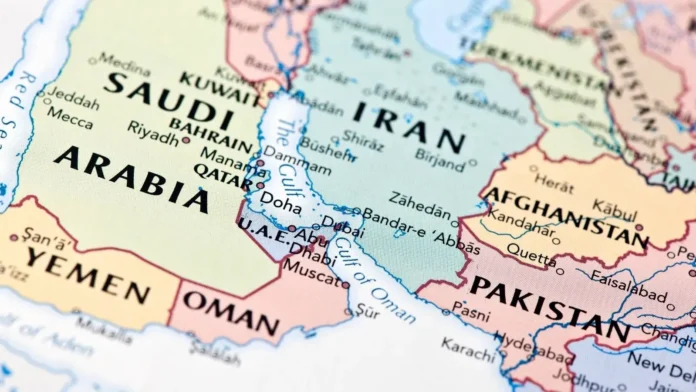
1. Oil prices. The most immediate and globally consequential change. Brent crude fell from above $115 to $80 on deal announcement day — a 30% fall in hours. The trajectory over the next four to eight weeks points toward $75-82 as Hormuz normalises. The IEA’s “most severe oil supply shock in history” ends.
2. US inflation trajectory. US inflation peaked at 4.2% in May — the highest since April 2023 — driven primarily by Iran-war energy costs. That trajectory reverses as oil falls. The June CPI data will show the beginning of the reversal. By August, the annual rate should be falling back toward 3% or below as energy costs unwind.
3. US gas prices. Above $4.56 per gallon on the week of the deal. Heading toward $3.50-3.75 by August. Visible at every filling station. The most politically salient economic indicator for the Trump administration between now and the November midterms.
4. Global shipping. The Cape of Good Hope rerouting ends as Hormuz normalises. Ships that added 10-14 days to transit times return to normal routes. War risk insurance premiums collapse. Freight costs fall. Supply chain costs reduce. Consumer prices globally begin to reflect the normalisation.
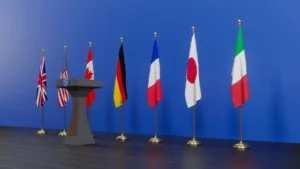
5. US diplomatic focus. Trump explicitly stated at the G7 that Ukraine is now the primary focus. The State Department and NSC bandwidth consumed by Iran is now available for Russia-Ukraine diplomacy. That reallocation is significant and immediate.
6. Ukraine air defence supply. US Patriot interceptors and other air defence systems diverted to the Persian Gulf can be reallocated to Ukraine. That reallocation will take weeks to months to physically execute — but the decision to reallocate can be made immediately. Zelensky secured assurances at the G7.
7. Iran’s nuclear constraints. Iran has committed to never seeking nuclear weapons, an enrichment moratorium, IAEA snap inspections, and no underground nuclear facilities. These constraints — whatever the follow-on talks produce — are a real change from the pre-war status quo, in which Iran’s nuclear programme was advancing with limited verification.
8. The Hormuz architecture. The MOU establishes a joint mechanism for verifying mine removal and ensuring freedom of navigation. This architecture — if it holds — creates a new baseline for Hormuz governance that differs from the pre-war situation. The strait is no longer simply a geopolitical vulnerability; it is now subject to a bilateral agreement on access.
9. Pakistan’s international standing. Pakistan mediated the ceasefire and the peace deal. Its prime minister announced the deal before either protagonist. That achievement is permanent. Islamabad’s role in ending the most significant military conflict of the decade elevates its international standing in ways that a generation of Pakistani foreign policy aspired to.
10. Global economic growth projections. The IEA and UN had been revising global growth downward throughout the conflict. The end of the war removes the single largest negative shock to those projections. Growth forecasts for the second half of 2026 and 2027 will be revised upward.
Five Things That Don’t Change
1. Lebanon. The deal commits to a cessation of military operations on all fronts, including Lebanon. But Hezbollah has not formally confirmed acceptance of the ceasefire. Israeli forces continue to operate in southern Lebanon. The structural problems that have prevented every previous Lebanon ceasefire framework from holding remain: Hezbollah’s refusal to disarm, the absence of a Lebanese state capable of enforcing southern Lebanon, Israel’s security requirements in the north.
The Lebanon front is quieter than it was. It is not resolved. Trump expressed frustration about Israel’s Lebanon operations at the G7 — “I’m not happy,” “it just goes on forever” — but frustration from the American president has not, throughout this conflict, produced durable change in Israeli operational behaviour.
2. North Korea’s nuclear expansion. Kim Jong Un unveiled a new nuclear fuel facility on June 3. He announced plans to expand his arsenal “exponentially.” Xi visited in June 8-9. None of this changes with the Iran deal. North Korea has been expanding its nuclear programme throughout the entire 109 days of the Iran war, in the silence that the war’s dominance of global attention created.
The follow-on nuclear talks between Iran and the US — which begin in the next 60 days — will consume the diplomatic resources that might otherwise be directed at North Korea. Kim’s programme continues.
3. Sudan’s drone war. One thousand Sudanese civilians were killed by drone strikes in the first five months of 2026. The UN announced this on June 15 — the same day as the Iran deal. Sudan’s war is in its fourth year with the world’s largest humanitarian crisis. The Iran deal changes nothing about the RSF’s drone campaign, the SAF’s drone campaign, or the world’s willingness to act.
4. Iran’s missile programme. The MOU does not address Iran’s ballistic missile programme. Iran refused to put it on the table throughout the negotiations and the US was unable to change that position. The missiles that fired at Kuwait, Bahrain, Jordan, and other Gulf states remain in Iran’s inventory, under IRGC control, capable of being launched again if a future confrontation occurs.
The missile programme is the most significant unresolved security concern for US allies in the Gulf, for Israel, and for the long-term credibility of the agreement’s constraints on Iran. If Iran’s nuclear programme is constrained but its missile programme is unconstrained, Iran retains a conventional military deterrent that shapes every future engagement.
5. The follow-on talk risk. The 60-day follow-on negotiations will address the enrichment moratorium duration (US wants 20 years, Iran proposed 5, current estimate 12-15), dismantlement modalities, underground facility prohibitions, and the detailed inspections architecture. These are harder issues than the ones the MOU itself resolved. The 2015 JCPOA collapsed. The Trump-Kim Singapore summit produced nothing durable. Follow-on negotiations fail.
If the follow-on talks collapse — leaving Iran with a partially constrained nuclear programme, a restored missile capability, and no comprehensive peace framework — the deal’s legacy will be significantly more ambiguous than the celebrations of June 15 suggested.
The Honest Verdict
The Iran deal is a genuine achievement. It ends an active military conflict that was killing people, closing a global trade route, and sending oil prices to historic highs. It commits Iran to nuclear constraints that go beyond the 2015 JCPOA. It elevates Pakistan and Qatar as mediating powers. It creates the space for a post-war relationship between the US and Iran that did not exist before.
It also defers the hardest issues, leaves Lebanon unresolved, leaves North Korea unaddressed, leaves Sudan to its drone war, and creates a follow-on process that could fail.
The world after the Iran deal is better than the world during it. It is not the world before it — the world before it contained the conditions that produced the war. And it is not the world that the deal’s best-case scenario describes, in which the follow-on talks produce a durable nuclear framework and a genuine regional security architecture.
The work is not done. The relief is real. Both things are true.
LoudFact.com is an independent global news and explainer platform. This Day 24 analysis draws on the full body of LoudFact’s 24-day documented coverage, verified reporting from NPR, Al Jazeera, the Washington Post, NBC News, and all primary sources cited throughout that coverage.