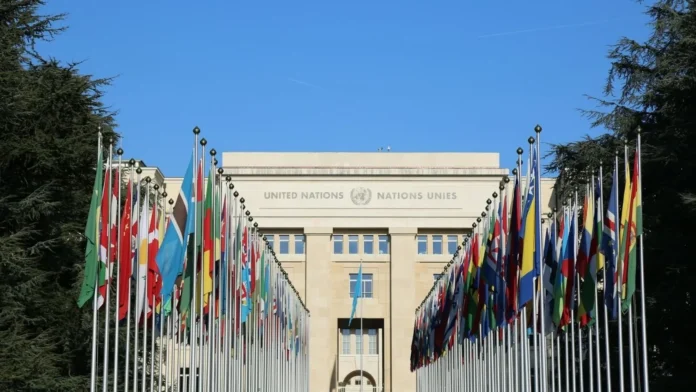

The United Nations has launched an evacuation operation for an estimated 11,000 seafarers who remain stranded aboard commercial vessels in and around the Strait of Hormuz, even as oil prices fell sharply on June 23 following the memorandum of understanding signed between Washington and Tehran — a stark reminder that the human costs of the Iran war are still being actively resolved, weeks after the conflict’s formal diplomatic conclusion.
UN launches Hormuz evacuation for 11,000 stranded seafarers.
The brevity of that headline belies the scale of human displacement it describes. Eleven thousand individual people — sailors, engineers, deckhands, and crew of every rank — have spent an extended period of the recent war, and apparently weeks beyond its formal diplomatic conclusion, unable to safely leave the vessels on which they were working when the Strait of Hormuz closure and US naval blockade first disrupted normal commercial shipping operations.
The Gap Between Diplomatic Timelines and Human Timelines
LoudFact has tracked, across multiple days of coverage, the steady physical and commercial normalisation of Strait of Hormuz shipping traffic in the days following the June 15 peace deal announcement and the June 21-22 Bürgenstock talks that produced a further roadmap toward a final agreement. US officials cited concrete figures — 67 ships transiting on a single Saturday, 19 million barrels of oil moving through the strait in a day — as evidence that physical, commercial shipping activity was rapidly approaching pre-war levels.
What those aggregate shipping-volume figures do not capture is the individual, human dimension of seafarers who were already aboard vessels at the moment the crisis began, and who have, in many cases, remained there — unable to disembark for shore leave, crew rotation, or simple repatriation — for months, even as the broader diplomatic and commercial picture around them has measurably improved. The UN’s decision to formally launch an evacuation operation, this many weeks into the post-deal period, is itself evidence that the practical, individual human logistics of un-stranding 11,000 people lag considerably behind the macro-level shipping and oil-price recovery that dominates most coverage of the conflict’s resolution.
The Same Day, the Oil Markets Moved
The move follows a memorandum of understanding signed by Washington and Tehran on 17 June and could give Iran greater access to US dollars after years of restricted oil sales. Oil prices fell on the announcement, with Brent crude dropping more than 3.5 percent to $77.7 a barrel. US Vice President JD Vance said the talks had laid a good foundation for a final deal, but Iranian Foreign Ministry spokesperson Esmaeil Baghaei said Tehran had made no new nuclear commitments.
This $77.70 figure represents a continuation of the steady decline LoudFact has documented since the deal’s announcement — from above $115 per barrel at the peak of the Kharg Island strikes, through the initial $80 level reported immediately after the June 15 announcement, and now further down toward levels not seen since well before the war’s outbreak. Each successive data point in this decline represents real, material relief for households and economies around the world that had been absorbing the energy cost shock of the war’s nearly four-month duration.
Yet Baghaei’s specific clarification — that Tehran has made “no new nuclear commitments” as part of whatever access to US dollars this latest development provides — is a useful, sobering corrective to any temptation to read each successive piece of post-deal good economic news as evidence that the underlying, harder diplomatic questions are also resolving in parallel. The nuclear file, as LoudFact’s coverage of the Bürgenstock talks made clear, remains the subject of ongoing, separate technical negotiation — distinct from, and considerably more difficult than, the financial and shipping normalisation that is generating the more immediately visible headlines.
Why Stranded Seafarers Matter to This Story
The population of seafarers working aboard the kind of large commercial vessels — oil tankers, LNG carriers, bulk cargo ships — that have been most directly affected by the Hormuz disruption is drawn overwhelmingly from a specific demographic: migrant maritime workers, predominantly from countries across South and Southeast Asia, including India, the Philippines, and Pakistan, working under international maritime labour contracts that place them, almost by definition, far from home and dependent on functioning international shipping and labour logistics systems to eventually get them back.
That same demographic recurs across multiple stories LoudFact has covered throughout this conflict: the three Indian sailors killed when a tanker was struck during the most intense phase of the war’s final escalation; the Indian and Pakistani workers who made up the entirety of the 13 fatalities at Qatar’s Ras Laffan gas plant explosion this same week. The human infrastructure that keeps global energy and shipping markets functioning is disproportionately staffed by workers whose individual welfare and safety rarely feature in the geopolitical and financial coverage of the crises that put them at risk.
What the Evacuation Operation Means
A formal UN-led evacuation operation, launched at this scale, suggests an organised, internationally coordinated logistical effort — likely involving the International Maritime Organization, flag states, and the shipping companies and labour unions responsible for these vessels’ crews — to actually move 11,000 individual people off ships and back to their home countries, a task considerably more complex than simply declaring that commercial shipping traffic has resumed.
That this operation is only now being formally launched, weeks after the war’s diplomatic conclusion and amid genuinely positive commercial shipping recovery data, illustrates a consistent pattern across this entire conflict’s resolution: macro-level diplomatic and economic indicators recover on one timeline, while the granular, individual human consequences of a 109-day war take considerably longer to fully resolve — and require their own dedicated, deliberate institutional intervention to actually bring to a close.
LoudFact.com is an independent global news and explainer platform. This report is based on reporting from Euronews and 10 Things Global News as of June 23, 2026.